SELF ASSESSMENT REPORT (SAR)
of
DEPARTMENT OF BIOMEDICAL ENGINEERING
for
UNDERGRADUATE ENGINEERING PROGRAMS (TIER-II)
FIRST TIME ACCREDITATION
Submitted to
NATIONAL BOARD OF ACCREDITATION
New Delhi -110003
Dhanalakshmi Srinivasan Engineering College
(Approved by AICTE, New Delhi & Affiliated to Anna University Chennai,
Accredited with ‘A’ Grade by NAAC &
An ISO 9001:2008 Certified Institution)
Perambalur - 621 212
Tamilnadu
SAR CONTENTS
Serial Code &
Link to the
Item
Page No
Item
PART A
Institutional Information
1
PART B
Criteria Summary
9
Program Level Criteria
1
Vision, Mission and Program Educational Objectives
10
2
Program Curriculum and Teaching - Learning Processes
20
3
Course Outcomes and Program Outcomes
89
4
Students’ Performance
139
5
Faculty Information and Contributions
172
6
Facilities and Technical Support
202
7
Continuous Improvement
213
Institute Level Criteria
8
First Year Academics
228
9
Student Support Systems
253
10
Governance, Institutional Support and Financial Resources
288
PART C
Declaration by the Institution
329
Program Outcomes (POs) & Program Specific Outcomes
Annexure - I
330
(PSOs)
NBA-SAR
Institutional Information
PART A: Institutional Information
1.
Name and Address
of the Institution
:
Dhanalakshmi Srinivasan Engineering College,
Thuraiyur Road, Perambalur - 621 212
Tamil Nadu, India
2.
Name and Address
of the Affiliating University
:
Anna University, Chennai -
600 025
3.
Year of establishment
of the Institution
:
2001
4.
Type of the Institution
:
University
Deemed University
Government Aided
Autonomous
Affiliated
5.
Ownership Status
:
Central Government
State Government
Government Aided
Self-financing
Trust
Society
Section 25 Company
Other
DSEC-BME
1
NBA-SAR
Institutional Information
6. Other Academic Institutions of the Trust/Society/Company etc., if any:
S.
Year of
Name of the Institution(s)
Programs of Study
Location
No
Establishment
UG Programme
B.A.(English, Psychology)
B.B.A.
B.B.A.(Aviation Management)
B.C.A.
B.Com.
B.Com.(CA)
B.Lit. Tamil
B.Sc., (Biochemistry, Biotechnology,
Chemistry, Computer Science,
Information Technology, Mathematics,
Microbiology, Physics, Nutrition &
Dhanalakshmi Srinivasan
Dietetics, Fashion Technology &
College of Arts and
Costume Designing, Hospital
1
Science for women
1996
Administration, Food Technology &
( Autonomous)
Quality Control, Forensic Science)
PG Programme
M.A.(Tamil, English)
M.B.A.
M.C.A.
Perambalur
M.Com. (CA)
M.Sc.(Biochemistry, Biotechnology,
Chemistry, Computer Science,
Information Technology, Mathematics,
Physics, Bio-Informatics, Microbiology )
M.Phil. (Commerce, Tamil, Chemistry,
Microbiology, Biotechnology,
Mathematics)
Mechanical Engineering
Electrical & Electronics Engineering
Electronics & Communication
Dhanalakshmi Srinivasan
Engineering
2
1998
Polytechnic College
Computer Engineering
Civil Engineering
Architect Assistantship
DSEC-BME
2
NBA-SAR
Institutional Information
S.
Year of
Name of the Institution(s)
Programs of Study
Location
No
Establishment
UG Programme
B.A., (English, Economics, Library and
Information Science, Journalism & Mass
Communication)
B.B.A.
B.Com.,(CA)
B.C.A.
B.Lit., Tamil
B.Sc.,( Biotechnology, Chemistry,
Computer Science, Hotel Management &
Catering Science, Information
Technology, Mathematics,
Microbiology, Physics)
Srinivasan College of Arts
3
2004
PG Programme
and Science
M.A., English
M.B.A.
M.C.A.
M.Com.
M.S.W.
Perambalur
M.Sc.(Biotechnology, Chemistry,
Computer Science, Hotel Management &
Catering Science, Information
Technology, Mathematics,
Microbiology, Physics)
M.Phil.(Management Studies,
Commerce, Microbiology, Computer
Science)
Dhanalakshmi Srinivasan
4
Matriculation Hr. Sec.
1994
Higher Secondary
School
Dhanalakshmi Srinivasan
5
2004
Higher Secondary
Hr. Sec. School
B.E. Aeronautical Engineering
Srinivasan Engineering
6
2006
B.E. Computer Science and Engineering
College
B.E. Mechanical Engineering
B.E. Aerospace Engineering
Dhanalakshmi Srinivasan
B.E. Robotics and Automation
7
2012
College of Engineering
B.Tech. Chemical Engineering
B.Tech. Food Technology
Dhanalakshmi Srinivasan
8
2017
B.Sc., Agriculture (Hons)
Agriculture college
DSEC-BME
3
NBA-SAR
Institutional Information
S.
Year of
Name of the Institution(s)
Programs of Study
Location
No
Establishment
Dhanalakshmi Srinivasan
9
Matriculation Hr. Sec.
2004
Higher Secondary
Trichy
School
Table A.6
7. Details of all the programs being offered by the institution under consideration.
Increase
Year of
S.
in
Year of
AICTE
Accreditati
Program Name
Establis
Intake
No
intake, if
Increase
Approval
on Status
hment
any
B.E., Biomedical
Applying
1.
2005
60
120
2005
Yes
Engineering
First Time
B.E., Civil
120
2009-10
Eligible but
2.
2008
60
Yes
Engineering
180
2014-15
not applied
Accredited
60
2002-03
B.E., Computer
in the Year
3.
Science and
2001
45
90
2008-09
Yes
12.09.2007
Engineering
-
120
2011-12
11.09.2010
Accredited
90
2005-06
B.E., Electrical and
in the Year
4.
Electronics
2002
60
Yes
10.07.2009
60
2007-08
Engineering
-
120
2011-12
09.07.2012
Accredited
90
2004-05
B.E., Electronics and
in the Year
5.
Communication
2001
60
120
2007-08
Yes
12.09.2007
Engineering
-
180
2012-13
11.09.2010
60
2002-03
Accredited
30
2004-05
in the Year
B.Tech., Information
6.
2001
45
60
2006-07
Yes
10.07.2009
Technology
120
2012-13
-
60
2014-15
09.07.2012
90
2008-09
B.E., Mechanical
120
2009-10
Eligible but
7.
2004
60
Yes
Engineering
180
2012-13
not applied
240
2014-15
Master of Computer
Eligible but
8.
2004
60
120
2007-08
Yes
Applications
not applied
DSEC-BME
4
NBA-SAR
Institutional Information
Increase
Year of
S.
in
Year of
AICTE
Accreditati
Program Name
Establis
Intake
No
intake, if
Increase
Approval
on Status
hment
any
Master of Business
Eligible but
9.
2004
60
120
2007-08
Yes
Administration
not applied
M.E.,
Eligible but
10.
Communication
2006
18
36
2010-11
Yes
not applied
Systems
M.E., Computer
Eligible but
11.
Science and
2006
18
36
2010-11
Yes
not applied
Engineering
Eligible but
12.
M.E., CAD/CAM
2011
18
-
-
Yes
not applied
M.E., Power
Eligible but
13.
Electronics and
2011
18
-
-
Yes
not applied
Drives
M.E., Computer
Science and
Eligible but
14.
Engineering (With
2012
18
-
-
Yes
not applied
Specialization in
Networks)
M.E., Embedded
Eligible but
15.
2012
18
-
-
Yes
Systems
not applied
Table A.7
8. Programs to be considered for Accreditation vide this application:
S.No
Program Name
1
B.E., Biomedical Engineering
2
B.E., Electrical and Electronics Engineering
3
B.E., Electronics and Communication Engineering
Table A.8
DSEC-BME
5
NBA-SAR
Institutional Information
9.
Total number of employees in the institution:
A. Regular Employees (Faculty and Staff):
2018-19
2017 - 2018
2016 - 2017
Items
Min
Max
Min
Max
Min
Max
M
190
192
189
Faculty in
Engineering
F
98
96
99
Faculty in Maths,
M
44
42
45
Science &
F
20
21
19
Humanities
M
27
27
29
Non-teaching staff
F
21
21
18
Table A.9a
B. Contractual Staff Employees (Faculty and Staff): (Not covered in Table A):
(Not applicable)
10.
Total number of Engineering Students:
Under Graduate
Item
2018-19
2017 - 2018
2016 - 2017
Total no. of boys
2108
1586
1839
Total no. of girls
975
893
1119
Total no. of students
3083
2479
2958
Table A.10a
Post Graduate
Item
2018-19
2017 - 2018
2016 - 2017
Total no. of boys
2
4
13
Total no. of girls
39
36
53
Total no. of students
41
40
66
Table A.10b
DSEC-BME
6
NBA-SAR
Institutional Information
MBA
Item
2018-19
2017 - 2018
2016 - 2017
Total no. of boys
58
51
56
Total no. of girls
80
70
58
Total no. of students
138
121
114
Table A.10c
MCA
Item
2018-19
2017 - 2018
2016 - 2017
Total no. of boys
23
26
37
Total no. of girls
74
87
107
Total no. of students
97
113
144
Table A.10bd
11.
Vision of the Institution
An active and committed centre of advanced learning focused on research and training
in the fields of Engineering, Technology and Management to serve the nation better.
12.
Mission of the Institution
To develop eminent scholars with a lifelong follow up of global standards by offering
UG, PG and doctoral programmes.
To pursue professional and career growth by collaborating mutually beneficial
partnership with industries and higher Institutes of research.
To promote sustained research and training with emphasis on human values and
leadership qualities.
To contribute solutions for the need based issues of our society by proper ways and
means as dutiful citizen
DSEC-BME
7
NBA-SAR
Institutional Information
13. Contact Information of the Head of the Institution and NBA coordinator, if
designated:
i.
Head of the Institution
Name
: Dr. S. Durairaj
Designation
: Principal
Mobile No
: +91 9585594580
E-mail Id
: principal@dsengg.ac.in
ii.
NBA Coordinator
Name
: Mrs.B.Karthiga
Designation
: IQAC Coordinator
Mobile No
:
+9443412750
E-mail Id
: iqacdsec@gmail.com
DSEC-BME
8
NBA-SAR
Institutional Information
PART B: Criteria Summary
Name of the program: B.E., Biomedical Engineering
Mark/
Criteria No
Criteria
Weightage
Program Level Criteria
1
Vision, Mission and Program Educational Objectives
60
2
Program Curriculum and Teaching - Learning Processes
120
3
Course Outcomes and Program Outcomes
120
4
Students’ Performance
150
5
Faculty Information and Contributions
200
6
Facilities and Technical Support
80
7
Continuous Improvement
50
Institute Level Criteria
8
First Year Academics
50
9
Student Support Systems
50
10
Governance, Institutional Support and Financial Resources
120
Total
1000
DSEC-BME
9
NBA- SAR
Criterion 1
VISION, MISSION AND PROGRAMME EDUCATIONAL
CRITERION 1
60
OBJECTIVES
1. VISION, MISSION AND PROGRAMME EDUCATIONAL OBJECTIVES
1.1. State the Vision and Mission of the Department and Institute
Vision of the Dhanalakshmi Srinivasan Engineering College
An active and committed centre of advanced learning focused on research and
training in the fields of Engineering, Technology and Management to serve the nation better.
Mission of the Dhanalakshmi Srinivasan Engineering College
To develop graduates with a lifelong follow up of global standards by offering UG,
PG and doctoral programme.
To pursue professional and career growth by collaborating mutually beneficial
partnership with higher research institutes.
To promote advanced research and training with emphasis on human values and
leadership qualities.
To contribute solutions for the need based issues of our society by proper ways and
means as dutiful citizen.
Vision of the Biomedical Engineering
Emergence of advanced learning, research and training to strengthen technologies in
biomedical engineering for human welfare and Nation needs.
Mission of the Biomedical Engineering
The mission of the Biomedical Engineering Department is to construct a platform for
bridging engineering principles, science and medicine
M1: To engage with the specific to generic community for knowledge dissemination and
career development.
M2: To update, analyze and impel the knowledge in the multi-disciplinary fields to
strengthen technologies in biomedical engineering.
DSEC- BME
10
NBA- SAR
Criterion 1
M3: To encourage the students to be aware of engineering principles in medicine for welfare
of society.
M4: To expertise the students both in engineering and technical fields related to competitive
medical technology in research and continuing education.
Consistency of Institute Vision and Department Vision
To be an integral part in the development of a learning and research centre for
meeting the global standards through implementation of department vision by developing
highly competent Biomedical engineers to serve the nation.
Consistency of Institute mission and Department mission
There are four foundation stones of our department’s mission that are shared with our
Institute mission such as technical education, lifelong learning skills, leadership and ethical
exposure.
In the first mission statement, the consistency is realized by developing graduates
with technical education, to be a successful engineer in industry, research and higher
education.
In the second mission statement, the consistency is realized by producing graduates
having lifelong learning skills adaptive to changes in society, industry and research.
In the third mission statement, the consistency is ensured to train the professionals
with good communication and leadership qualities in medicinal field for the societal
welfare.
In the fourth mission statement, the consistency is ensured to produce graduates with
strong technical knowledge, to be a successful engineer in advanced medical research
field oriented towards biomedical norms.
DSEC- BME
11
NBA- SAR
Criterion 1
1.2
State the Programme Educational Objectives (PEOs)
PEO 1: The graduates of the programme will have ability to improve the technologies by
combining the design and problem solving skills for enhancing health care products.
PEO 2: Graduates of the programme will function as productive team member and leader
who act as bridge between engineering and biology.
PEO 3: Graduates will be outstanding professionals by enhancing their advanced learning
techniques in the field of biomedical engineering to face the global challenges.
PEO 4: Nurture responsible engineers with ethical values to serve the society and to learn
and excel in higher education.
1.3
Indicate where the Vision, Mission and PEOs are published and disseminated
among stakeholders.
The Vision, Mission and PEOs are discussed, articulated and disseminated among the
internal and external stakeholders by two methods
(i) Display and
(ii) Discussion/
Dissemination.
Display: The Vision, Mission and PEOs are conveyed through college website
(www.dsengg.ac.in ). Further Vision, Mission and PEOs are printed and displayed at
following prominent places where the faculties and students gather frequently;
HOD Room
Laboratories
Faculty Rooms
Seminar Hall
Library
Notice Boards
Classrooms
Vision,Mission and PEOs are printed and circulated to stakeholders by the following ways;
Record-note wrapper pages
Hand-outs at regular meetings
Placement brochures
Correspondence to Parents, Industry and other colleges
DSEC- BME
12
NBA- SAR
Criterion 1
Discussion/Dissemination: To ensure through consciousness about Vision, Mission and
PEOs, the following are regularly/periodically addressed;
Student orientation programme
Faculty meeting
Alumni meeting
Parent’s meeting
Association activities such as Conference / Seminar / Workshop / Symposium.
The process of publication and dissemination of Vision, Mission and PEOs are shown
in Figure 1.1.
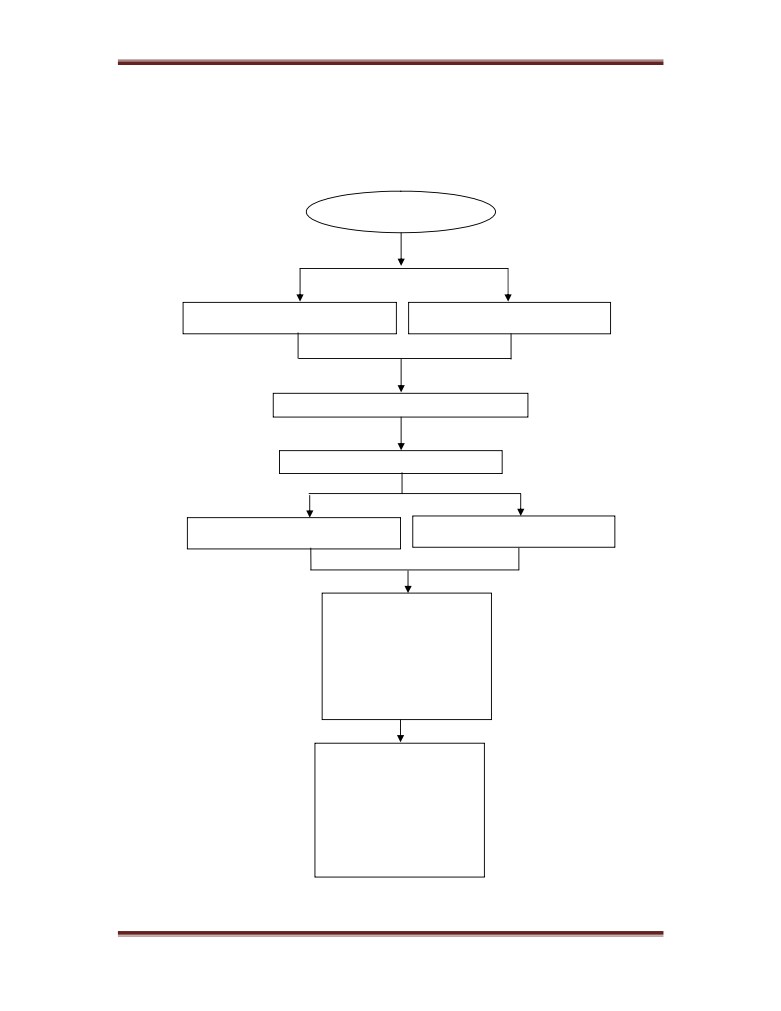
Publication and Dissemination of Vision, Mission and PEOs
Display
Department Vision,
Institute Vision, Mission
Discussed periodically during,
Mission & PEOs
o Orientation programme
o Parent’s meeting
Printed and displayed at,
Printed and circulated through,
o HOD Room
o Faculty meeting
o HOD Room
o Faculty Rooms
o Faculty Rooms
o Alumni meeting
o Library
o Classrooms
o Association activities
o Record-note wrapper
o Laboratories
o Seminar Hall
o Placement brochures
o Hand-outs at regular
o Notice Boards
meetings
o Correspondence to
o Correspondence to Parents,
Parents, Industry and
other colleges
Industry and other colleges
Figure 1.1 Process of Publication and Dissemination of Vision, Mission and PEOs.
DSEC- BME
13
NBA- SAR
Criterion 1
1.4
State the process for defining the Vision and Mission of the Department, and PEOs
of the programme
Process for Establishing Vision and Mission of the Department:
A Department Advisory Committee is formed to establish Vision and Mission of the
Department. The committee consists of Head of the Department, Programme coordinator,
Faculty members, and representatives comprising of parents, alumni, employers and eminent
academicians. The committee pursues with the following activities to establish the Vision and
Mission;
The Strength, Weakness, Opportunity and Challenges (SWOC) analysis is
performed.
Vision and Mission of the Institution are considered.
Views/suggestions from the management, administrators and faculty are collected
and analyzed.
Opinions from the students are collected and reviewed.
Recommendations from the recruiters, academicians and industrial experts are
collected and scrutinized.
After framing the preamble of Vision and Mission, the alignment is checked / verified
with the Vision and Mission of the Institution. The appropriateness is validated by experts
from academics and industry. The Vision and Mission of the department gets approval from
principal. The Vision and Mission are further published and disseminated among the
stakeholders. The above mentioned process is depicted in Figure 1.2.
DSEC- BME
14
NBA- SAR
Criterion 1
Frame the Department Advisory Committee
Collect and analyze the following to establish Vision and Mission
o Strength, Weakness, Opportunity and Challenges (SWOC)
o Vision and Mission of the Institution
o Views/suggestions from stakeholders
Frame preamble of Vision and Mission
Check alignment with
Vision and Mission of the
Institution& Department
No
Yes
Validated by
Academicians and
Industry experts
No
Yes
Get approval from
the Principal
No
Yes
Establish the Vision and Mission
Publish, Display and Discuss periodically among stakeholders
Figure 1.2 Process for Establishing Vision and Mission of the Department.
DSEC- BME
15
NBA- SAR
Criterion 1
Process for Establishing PEOs:
A Department Advisory Committee is formed to establish PEOs. The committee
consists of Head of the Department, Programme coordinator, Senior Faculty members, and
representatives from parents, alumni, employers and eminent academicians. The committee
engages with the following activities to establish the PEOs;
The profile of our department and its programme is collected.
Vision and Mission of the Department are considered.
Views/suggestions/opinions/recommendations from the stakeholders are collected
and analyzed.
Details of the current status of department in terms of student admission quality,
Teaching-Learning process, faculty and their research activities, placement
activities, and other facilities are collected and reviewed.
Data about industries, research organizations and higher educational Institutions
relevant to the programme are collected and scrutinized.
After establishing/framing the PEOs, the consistency of the PEOs with the mission
statements of the Department is checked / verified. The defined PEOs are compared with
PEOs of similar category Institutions. The appropriateness of PEOs is validated with the
requirements and expectations of employers. The PEOs are further published and
disseminated among the stakeholders. The above mentioned process is depicted as flowchart
in Figure 1.3.
DSEC- BME
16
NBA- SAR
Criterion 1
Frame the Department Advisory committee
Collect and analyze the following to establish PEOs
Profile of department and its programme
Mission and Vision of the Department
Data from stakeholders
Current status of department
Frame preamble of PEOs
Check consistency
with Mission of the
Department
No
Yes
Compare with PEOs
of other institutions
No
Yes
Validate with
employers’
requirements
No
Yes
Establish the PEOs
Publish, Display and Discuss periodically among stakeholders
Figure 1.3 Process for Establishing PEOs of the department
DSEC- BME
17
NBA- SAR
Criterion 1
1.5. Establish consistency of PEOs with Mission of the Department
In the Table B.1.5a the consistency of PEOs with mission of the department is shown
as matrix (Mission - PEOs). The relevance/correlations are assigned as following numerical
weights: high correlation (3), medium correlation (2) and low correlation (1).
PEO
Graduates will be able to:
M1
M2
M3
M4
Strengthen technologies by combining the design
PEO 1
and problem solving skills for enhancing health care
1
3
2
1
products.
Function as productive team member and leader to
PEO 2
2
1
3
1
fill the gap between engineering and biology.
Enhance their advanced learning techniques in the
PEO 3
field of biomedical engineering to face the global
3
3
1
1
challenges.
Nurture responsible engineers with ethical values to
PEO 4
serve the society and to learn and excel in higher
3
1
2
3
education.
Table B.1.5a PEOs correlations with department mission
DSEC- BME
18
NBA- SAR
Criterion 1
The Table B.1.5b demonstrates the consistency of PEOs and Mission statements.
Mission
PEO
Consistency
statements
The deliberate accentuation is given through industry institute
interaction to make the students excel in their career with good
M2
academic and engineering breadth to solve the problems in health care
PEO 1
sector.
Promotion of research and training to enhance societal servicing
M3
qualities by applying engineering principles in medical applications.
Educate the fusion between engineering and biology through life long
M1
follow up of global standards.
PEO 2
Providing good academic environment which helps to be skilled at
M3
research and training to emphasis leadership qualities of biomedical
engineer.
Strongly train the students with analytical and design culture for
M1
enhancing their advanced learning techniques in the field of biomedical
PEO 3
engineering.
The graduates will be outstanding professionals in their career growth
M2
by benefitting mutually in industry/technical profession.
Excellent preparation of students to excel in competitive examination /
M1
post graduate programme / advanced education.
To inculcate the students professional and ethical attitude by
M3
PEO 4
educating human values of medical welfare society
By encouraging and empowering students to take up unconventional and
M4
real time projects to carry out research programme to suit the demands
of the industry and nation.
Table B.1.5b PEOs consistency of department mission
DSEC- BME
19
NBA-SAR
Criterion 2
PROGRAM CURRICULUM AND TEACHING -
CRITERION 2
120
LEARNING PROCESSES
2. PROGRAM CURRICULUM AND TEACHING - LEARNING PROCESSES
2.1. Program Curriculum
2.1.1. State the process used to identify extent of compliance of the University
curriculum for attaining the Program Outcomes and Program Specific Outcomes as
mentioned in Annexure I. Also mention the identified curricular gaps, if any
Program Outcomes (PO):
PO1: Engineering knowledge. Apply the knowledge of mathematics, science,
engineering fundamentals, and an engineering specialization to the solution of complex
engineering problems.
PO2: Problem analysis. Identify, formulate, review research literature, and analyze
complex engineering problems reaching substantiated conclusions using first principles of
mathematics, natural sciences, and engineering sciences.
PO3: Design/development of solutions. Design solutions for complex engineering
problems and design system components or processes that meet the specified needs with
appropriate consideration for the public health and safety, and the cultural, societal, and
environmental considerations.
PO4: Conduct investigations of complex problems. Use research-based knowledge and
research methods including design of experiments, analysis and interpretation of data, and
synthesis of the information to provide valid conclusions.
PO5: Modern tool usage. Create, select, and apply appropriate techniques, resources,
and modern engineering and IT tools including prediction and modeling to complex
engineering activities with an understanding of the limitations.
PO6: The engineer and society. Apply reasoning informed by the contextual knowledge
to assess societal, health, safety, legal and cultural issues and the consequent
responsibilities relevant to the professional engineering practice.
DSEC-BME
20
NBA-SAR
Criterion 2
PO7: Environment and sustainability. Understand the impact of the professional
engineering solutions in societal and environmental contexts, and demonstrate the
knowledge of, and need for sustainable development.
PO8: Ethics. Apply ethical principles and commit to professional ethics and
responsibilities and norms of the engineering practice.
PO9: Individual and team work. Function effectively as an individual, and as a member
or leader in diverse teams, and in multidisciplinary settings.
PO10: Communication. Communicate effectively on complex engineering activities
with the engineering community and with society at large, such as, being able to
comprehend and write effective reports and design documentation, make effective
presentations, and give and receive clear instructions.
PO11: Project management and finance. Demonstrate knowledge and understanding of
the engineering and management principles and apply these to one’s own work, as a
member and leader in a team, to manage projects and in multidisciplinary environments.
PO12: Life-long learning. Recognize the need for, and have the preparation and ability
to engage in independent and life-long learning in the broadest context of technological
change.
Program Specific Outcomes (PSO):
PSO1: Bio- Analysis. Apply mathematical analysis for human paradigm, to problems,
thereby to interface engineering and life science.
PSO2: Data Interpretation and Problem Solving. Make measurements on and interpret
data from physiological systems and decipher the problems associated with the
interaction between living and nonliving materials and systems.
Our college adheres to curriculum and syllabi as prescribed by Anna University,
Chennai. The syllabi comprises of multifaceted courses covering theory, practical and
DSEC-BME
21
NBA-SAR
Criterion 2
project. The Table: 2.1.1 shows the regulations which are being followed in yesteryears and
regulations which are underway.
Regulation
University
S. No
Batch
1.
2011-2015
R-2008
2.
2012-2016
3.
2013-2017
4.
2014-2018
Anna University, Chennai.
R-2013
5.
2015-2019
6.
2016-2020
7.
2017-2021
R-2017
8.
2018-2022
Table: 2.1.1 Regulation details
2.1.1 State the process used to identify the extent of compliance of University
Curriculum for attaining the Program outcomes and Program Specific Outcomes as
mentioned in Annexure I. Also mention the identified the curricular gaps, if any.
Curriculum compliance is systematic analysis of curriculum, prescribed by
University, to identify the degree of competency of syllabi and its contents for attaining the
Program Outcomes and program specific outcomes. In this regard, Department Advisory
Committee (DAC) is framed which comprises of Head of the Department, Programme
coordinator, Senior faculty members, and representatives from parents, alumni, employers
and academicians. The Department advisory committee carries out the study/investigation to
reveal whether the syllabi and its contents intentionally and systematically provide students
with opportunities to attain the appropriate knowledge, skill and attitudes. This process helps
to identify the gap between University curriculum and Program Outcomes. The
identification leads to rectification / remediation.
The procedural training towards outcome based education (OBE) was imparted to the
course instructors. Relevant courses are collected based on its contents and grouped them as
modules. For each course, the knowledge level of course contents is identified using revised
Bloom’s taxonomy and corresponding course outcomes are formulated. Curriculum
DSEC-BME
22
NBA-SAR
Criterion 2
compliance may be verified by organizing the information into a matrix
(course-PO
matrix) which maps each one to the other. Mapping involves making collective judgments’,
by department advisory committee, about the link between the course outcomes (COs) and
the program outcomes
(POs). Mapping not only provides the information of whether
curriculum meets the academic and/or professional benchmark requirements (POs) but also
manifests the way and possible level of attaining the POs by curriculum. The same process is
extended to course-PSOs matrix. From mapping curricular gaps are identified. The entire
process is presented as flowchart Figure 2.1
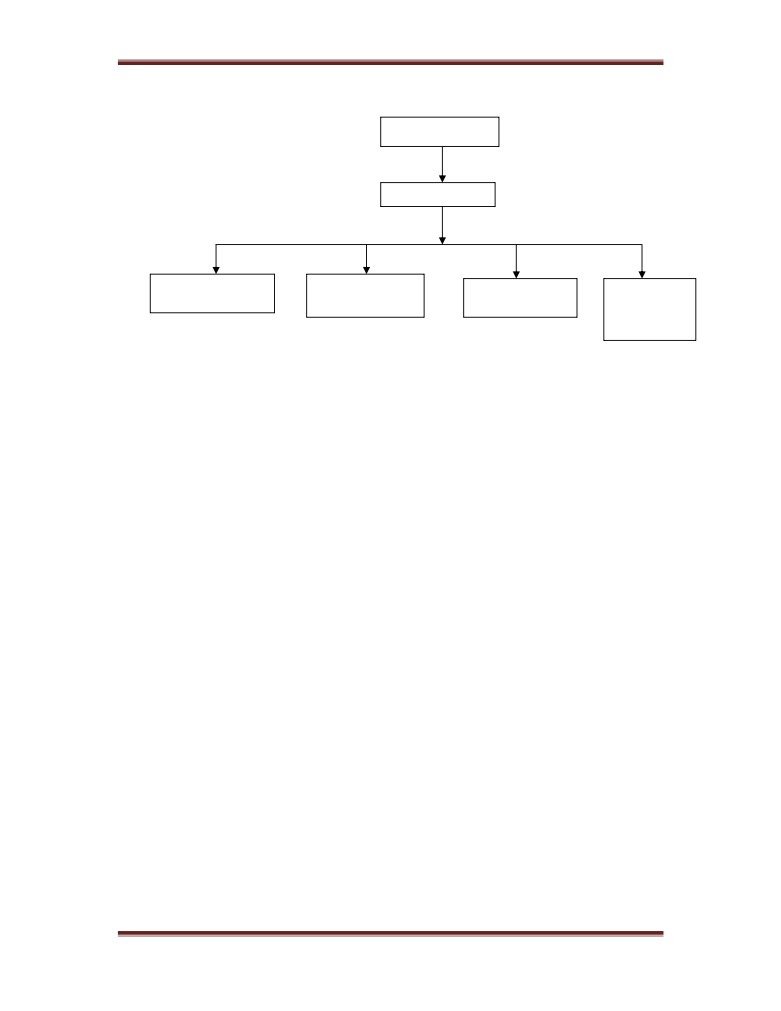
Anna University
curriculum
Collect the relevant courses and classify in Modules:
Module 1: Biomedical Instrumentation and Signal Processing
Module 2: Clinical Management
Module 3: Medical Electronics
Module 4: Computer Programming Skills
Frame Course Outcomes (COs) for each course
POs and PSOs
Map COs with POs and PSOs
Identify the compliance of COs with POs and
PSOs
Indicate the curricular gap
Articulate additional COs which helps to attain
POs and PSOs
Identify relevant content beyond syllabi for the
attainment of POs and PSOs
Figure 2.1 Flow chart for curricular gap identification process
DSEC-BME
23
NBA-SAR
Criterion 2
Program
Number of
S.
Curriculum
subjects
POs, PSOs
No
based on
R-
R-
R-
R-2008
R-2013
R-2017
Course content
2008
2013
2017
Humanities And
POs (1, 2, 3, 4,
POs (1, 2, 3, 4,
POs (1, 2, 3, 4,
1
Social Sciences
3
3
3
5, 6, 8, 10)
5, 6, 8, 10)
5, 6, 8, 10)
(HS)
Basic Sciences
POs (3, 4, 5, 6,
POs (3, 4, 5, 6,
POs (3, 4, 5, 6,
2
6
6
7
(BS)
7, 8, 9, 10, 11)
7, 8, 9, 10, 11)
7, 8, 9, 10, 11)
Engineering
3
4
4
5
POs (5, 6, 8)
POs (5, 6, 8)
POs (5, 6, 8)
Sciences (ES)
Professional
POs (4, 5, 6, 7,
POs (4, 5, 6, 7,
POs (4, 5, 6, 7,
4
Core Courses
19
20
21
8, 9, 10, 11,12)
8, 9,10, 11,12)
8, 9, 10, 11,12)
(PC)
Professional
POs (3, 6, 7, 8,
POs (3, 6, 7, 8,
POs (3, 6, 7, 8,
5
4
4
4
Electives (PE)*
9, 10, 11)
9, 10, 11)
9, 10, 11)
Project /
Employability
POs (3, 6, 7, 8,
POs (3, 6, 7, 8,
POs (3, 6, 7, 8,
6
-
-
-
Enhancement
9, 10, 11)
9, 10, 11)
9, 10, 11)
Courses (EEC)
Open
POs (3, 6, 7, 8,
7
-
-
2
-
-
Elective(OE)
9, 10, 11)
Table :2.2
Curricular gap identification relevant to PO,PSO:
2.1.2. State the delivery details of the content beyond the syllabus for the attainment of
POs and PSOs
The curricular gaps are meted out by adequate activities and non-attainment of
Program outcomes and Program specific outcomes are fulfilled by framing additional course
outcomes. Content beyond syllabi relevant to additional COs are established. Course
outcomes of activities are mapped with POs and PSOs. Adequate attention is devoted to
implement the content beyond syllabi through additional course, self learning materials and
other appropriate activities. The appropriateness of activity and mode of its delivery is
decided by the knowledge level of additional course contents in Bloom’s taxonomy. The
identified curricular gaps are compiled and disseminated to DAC which comprises
information about additional course contents for the identified curricular gap.
DSEC-BME
24
NBA-SAR
Criterion 2
The revised Anna University curriculum regulation 2017 has revealed the Program
curriculum grouping of courses. The curricular gap identification is reformulated by insisting
the course instructors to identify the content beyond the syllabi for each course in their course
plan respectively. The delivery details of content beyond the syllabus for attainment of POs
and PSOs are given below:
2017-2018
%
Date-
of
S.
Action
Resource Person
Relevance to
Subject Name
Gap
Month-
Stu
No
taken
with Designation
POs and PSOs
Year
den
ts
Design of
Biomedical
Dr.Raja
Biomedical
Bio-med
POs(1,2,3,6, 8)
1.
equipment
19.02.18
Jayakumar.M
100
Instrumentation
Demo
PSOs(1,2)
methodologi
Physiologist
es
Filters in
Prof. Rekha
POs(1,2,3,4,5,8,9
Digital Signal
Digital
Guest
2.
09.2.18
Associate
100
,12)
Processing
Signal
Lecture
professor
PSOs(1,2)
Processing
Sensors And
Sensors and
Invited
Dr R.Ganesan
POs(1,2,3,5,7)
3.
19.03.18
100
Measurement
Transducers
talk
Professor
PSOs(1,2)
Handling
Dr.T.Neelakandan
Hospital
POs(1,2,4,9,12)
4.
biomedical
Seminar
22.07.18
Medical
100
Training
PSOs(1,2)
Instruments
superintendent
Hands-on
training on
Hospital
equipment
Dr.J.Ranganathan
POs(1,2,3,6,7,8)
5.
Workshop
22.07.18
100
Management
Maintenance
Dean
PSO1
and
calibration
DSEC-BME
25
NBA-SAR
Criterion 2
2016-2017
Date-
% of
Relevance
S.
Action
Resource Person
Subject Name
Gap
Month-
Stude
to POs and
No
taken
with Designation
Year
nts
PSOs
Anatomy And
Engineering
POs(1,2,5,8,
Human
Dr.K.Ganesan
1.
on medicine
Invited talk
21.3.17
100
9, 12),
Physiology
Physiologist
and biology
PSOs(1, 2)
Lab
Mr.D.Murugan
POs(1, 2, 3,
Hospital
Role of BME
2.
Seminar
01.02.17
Biomedical
100
6, 7,8)
Management
in Health Care
consultant
PSO1
Intellectual
Intellectual
Property
Dr.Kandha Babu
POs(1,2,5,
3.
Property
Workshop
11.02.17
100
Rights and
Director,CIPR
12), PSO2
Rights
Innovations
Pathology
Pathogensis -
Dr.Amrithajothi
POs(1,2,5,8,
4.
And
Human body
Seminar
01.03.17
Shanmugam
100
9,12),
Microbiology
Interaction
Physiologist.
PSOs(1,2)
Hospital
management
POs(1,2,3,
Hospital
Guest
Mr.Venkatraman
5.
and quality
01.03.17
100
6,7, 8),
Management
lecture
Managing director
assurance of
PSO1
the equipments
Telehealth
IOT medical
Dr.S.Mythili
POs(1,2,3,6,
6.
Seminar
21.03.17
100
Technologies
Devices
Professor
7, 8), PSO1
Diagnostic
Recent trends
Mr.A.Subramanian
POs(1,2,3,
And
7.
in Biomedical
Seminar
15.07.16
Senior research
100
6,8),
Therapeutic
Engineering
fellow.
PSOs(1,2)
Equipment
2015-2016
Date-
% of
Relevance to
S.
Subject
Action
Resource Person
Gap
Month-
Stude
POs and
No
Name
taken
with Designation
Year
nts
PSOs
Biomaterial
Biomaterials
Guest
Ms.A.V.Anupa
POs(1,2,3),
1.
And Artificial
08.03.16
100
Implants
Lecture
Research Assistant
PSO1
Organs
Medical
Dr.K. Manoharan
Medical
Invited
POs(1,2,3),
2.
applications of
08.03.16
Physician
100
Physics
talk
PSO1
radioisotopes
Modes of Ultra
Mr.M .Vignesh
Medical
Guest
POs(1,2,3),
3.
sound
10.08.15
Senior Biomedical
100
Physics
Lecture
PSO1
Scanning
Engineer
DSEC-BME
26
NBA-SAR
Criterion 2
2015-2016
Date-
% of
Relevance to
S.
Subject
Action
Resource Person
Gap
Month-
Stude
POs and
No
Name
taken
with Designation
Year
nts
PSOs
Patten
MIMICS -
Mr.R.Santhosh
Recognition
POs(1,2,3,5,6,
4.
physiological
Workshop
19.08.15
Kumar
100
And Neural
12), PSO1
modelling
Team leader
Network
Object
DBMS for
Mr.M.Shankar
POs(1,2,3,6,7,
5.
Oriented
Seminar
19.08.15
100
clinical Data
Assistant Professor
8), PSO1
Programming
Mr.M.Rajesh
Rehabitation
POS(1,2,3,5,
6.
Elastography
Seminar
16.09.15
Key accounts
100
Engineering
6,12), PSO1
manager
Table B.2.1.2 Delivery details of the content beyond the syllabus for the past three
academic years.
2.2.1. Describe Processes followed to improve quality of Teaching & Learning
The Program Educational Objectives (PEOs) are established to guide the programme
and prepare the graduates to achieve career and professional accomplishments. The PEOs are
further transformed into specific student performance and behaviors that demonstrate student
learning and skill development as Program Outcomes
(POs). POs are clearly and
unambiguously defined. As our college is affiliated to Anna University, We follow the
curriculum prescribed by Anna University. All courses have their own course outcomes. Each
course outcome is mapped to relevant POs and PSOs. Achieving course outcomes is the
direct way of accomplishing program outcomes. In this context, the teaching-learning process
and assessment methods are implemented in such a way to achieve the COs.
Teaching-Learning process is crucial part of outcome based education and
implements/employs as the set of activities engaging with students to enable them to acquire
the knowledge, skills and attitudes. Student-centered and practical oriented lectures, tutorials,
collaborative learning, independent learning, peer teaching approaches with integration of
appropriate teaching aids, and teaching materials are the educational strategies selected to
support the learning outcomes.
DSEC-BME
27
NBA-SAR
Criterion 2
Formulate Academic Calendar
Allocation of course and framing of time table
Construct course plan (Both theory and
Prepare learning material
Prepare lab manual
Approval from Learning Material Verification (LMC) committee
Content delivery
Conduct of test
Collect feedback through CCM, Student feedback, Counseling
Analysis of attainment level
Analyze by DAC
Evaluation
No
Recommend to
Yes
Is any
modify Teaching
inconsistency
methodology & to
Identification of Slow learners
?
attend FEP, FDP
and Fast learners
Slow learner:
Fast learner:
Peer teaching
Motivates to continue Excellency
Counseling
Encourage to participate in co-
Intimation to
curricular & extra-curricular
parents
activities
Institute level
Self learning
Coaching class
Awards
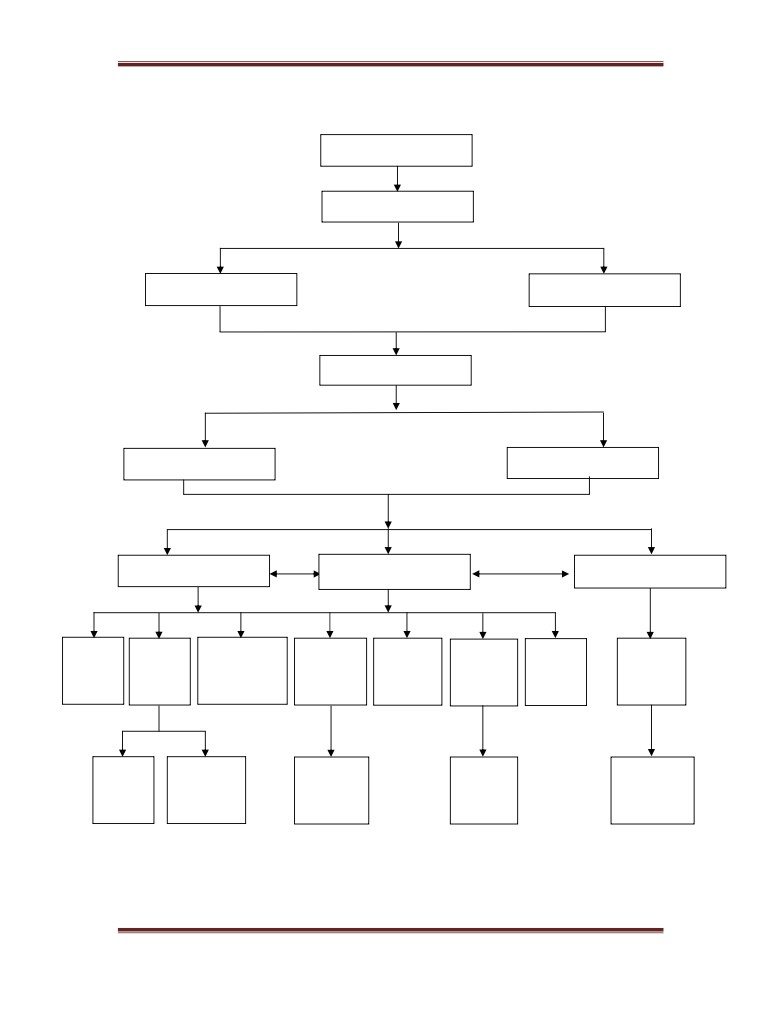
Figure 2.2 Flowchart for Teaching and Learning process
DSEC-BME
28
NBA-SAR
Criterion 2
The quality improvement of teaching learning process is customized by the following
activities:
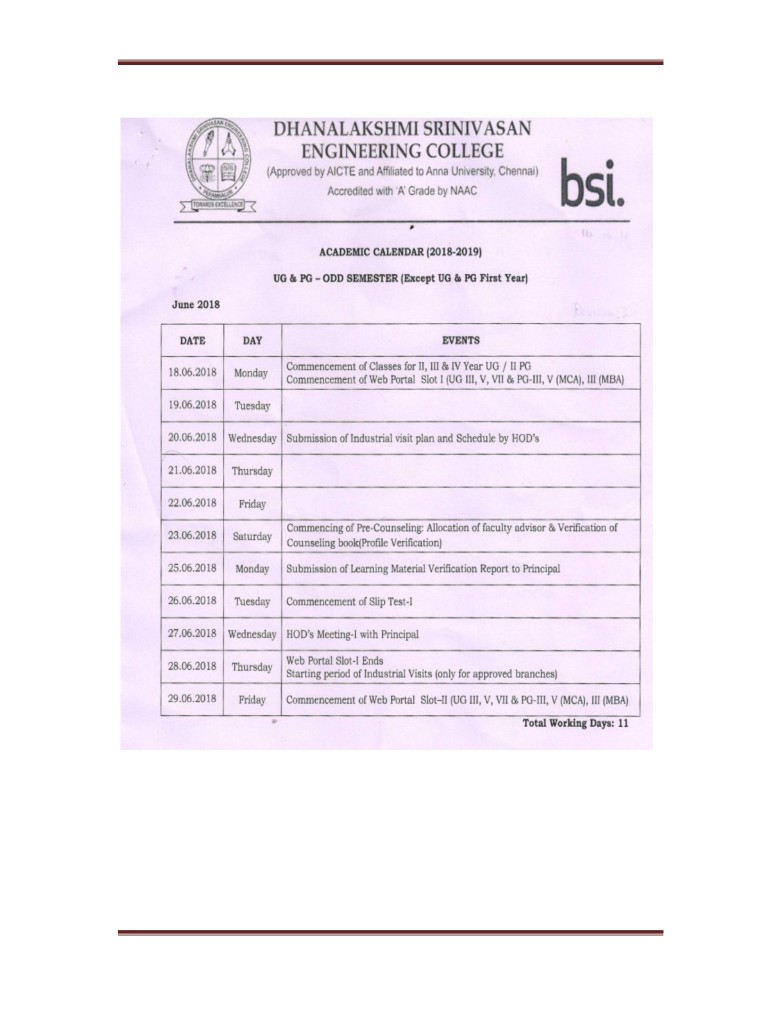
Academic Calendar
Allocation of Course
Course Plan
Content delivery process
Conduct of assessment
Segregations of learners
Feedback Process
Adherence to Academic Calendar
The academic calendar serves as an information source and planning document for
students, faculty, staff and departments. The academic calendar includes holidays, start and
end date of curricular sessions, assessment exams, tentative University exam dates, which co-
curricular and extracurricular activities.
The curricular activities comprises of the conduct dates of the following:
Start and end dates of commencement of the slip test
Class committee meeting
Counseling
Syllabus coverage status
Commencement of Assessment test
Project review dates
Revision class
Academic Audit
DSEC-BME
29
NBA-SAR
Criterion 2
The co-curricular activities comprises of the conduct dates of the following:
Department Association Events like Seminar, guest lectures, Symposium and
conference
Professional Society events namely SEP, FEP
The Extracurricular activities comprises of the conduct dates of the following:
Sports day
Annual Day
Institute level cultural day
The academic calendar is displayed in our college website for remote access by students and
faculty. The Time table is prepared on par with the academic calendar and displayed in the
department notice board and circulated to the students. The institution completes the curricular
activities within the planned time frame and as per calendar. The last working day of semester and
University exam dates are announced by Anna University which is subjective to change. Such
necessary changes will be announced at the earliest. Every effort has been made to adhere / follow
the academic calendar as accurate as possible.
Allocation of Course:
Workload: Faculty is offered with preferred courses. Considering their options, the
Head of the department will allot the course for the individual faculty and the
workload is finalized. After course allocation, faculty are encouraged to undergo
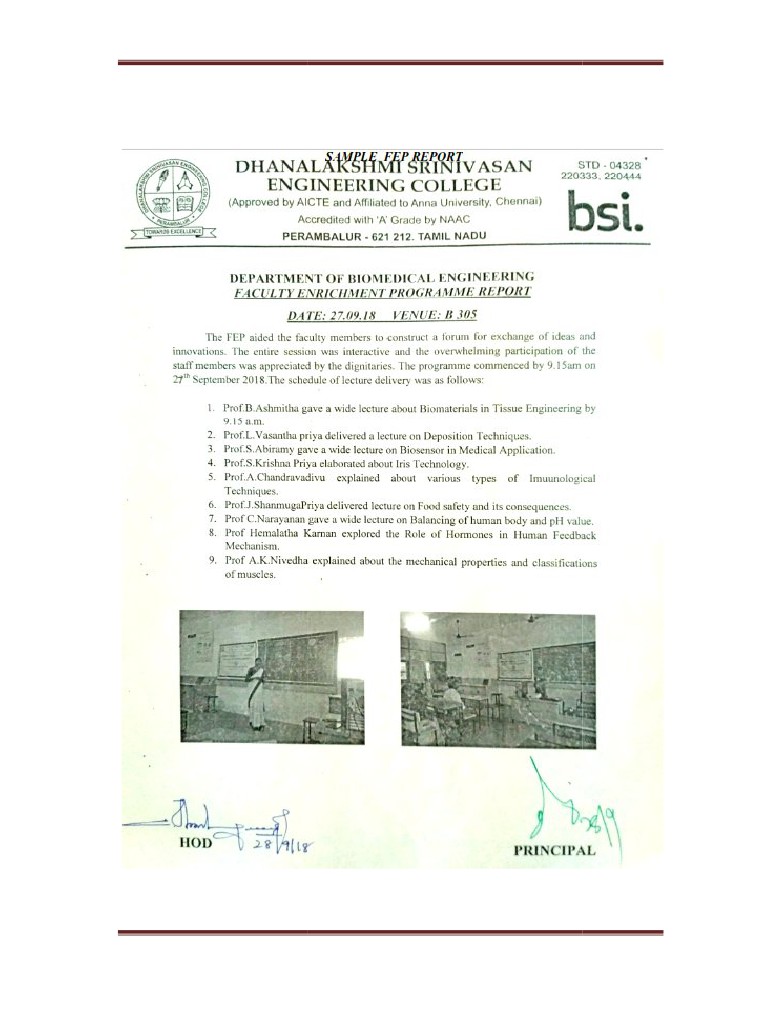
Faculty Development Programme (FDP) and their course delivery process is refined
by Faculty Enrichment Programme (FEP) organized at our Institute level.
Timetable: Structured time table will also have an impact in proper planning of work.
A well organized timetable basically helps the faculty to take control of the day from
one hour to the next. Time table consists mainly of four domains: students, faculty,
timing and venue. Despite of the above factors, additional factors are also considered
during the design process of timetable. Class strength, counselors, class committee
DSEC-BME
30
NBA-SAR
Criterion 2
members and chairperson details are mentioned. The alternate week of Saturdays are
utilized for professional society and counseling activities. Apart from the activity,
special attention has been given to PDP (Personality Development Programme) by
Human Resource Development cell (HRDC) team members.
Course Plan:
Course plan is a vital component of the teaching-learning process. Design of course
plan is inclusive of Syllabus, Objective of a course and individual units learning outcomes,
list of references
(Text, Reference Books and Web resources), usage of teaching aids,
planning of assessment tests and assignment submission, details of assignment topics, content
beyond syllabus, (if identified). The course instructors are instructed to prepare the course
plan in prior to the commencement of the semester for the allotted courses. It is prepared for
both the theory and laboratory courses. The dispatch of the course plan to the students from
day one for strict adherence to the same is made. The motivational perspective of the course
instructor is enriched and students focus on the course is also built up by course plan itself.
The teaching-learning process is reviewed based on the data recorded in the Log book by the
Head of the Department.
Content delivery Process
In the Teaching-Learning process, the lectures are delivered by the faculty member
through a set of teaching aids like Chalk & Board, Power point presentation, Video
Lectures, Models, Charts, Animation, etc., and adopting various teaching methods
like Lecture, Group Discussion, Seminar, Tutorials, Guest lectures, Demonstration
etc.,
Lecture:
Lecture is an efficient and traditional method for delivering substantial
information and imparting knowledge to a large number of students.
DSEC-BME
31
NBA-SAR
Criterion 2
Faculty member explains the concepts, principles, solutions to problems and
applications of respective subject. Lectures create an interest in the subject
among the students and kindle their creativity for application in the field.
Group Discussion:
Group discussions are arranged and facilitated by faculty members. Group
removes shyness of students and develops their communication skill. It builds
their self-confidence. It nurtures them to express their views regarding a
subject in a polite manner.
The recollection of such topics can be effectively carried out by hosting a
Group Discussion rather than a lecture course delivery. This approach also
paves way to improvise the communication and technical presentation skills of
the students. The debate on topics by students effectively improvises the skills
of the students.
At times, the faculty member summarizes the topic for the non-participants of
the group discussions such that they appreciate the need for recollection of the
topic.
At the end of a group discussion, the student members have clear and unbiased
thoughts.
Seminar:
Seminar plays a vital part of most academic courses and they give opportunity
to students to discuss the topics in depth with other students, and with the
faculty member.
Seminar is designed for students to talk about topics in the particular course or
lectures in detail.
DSEC-BME
32
NBA-SAR
Criterion 2
Tutorial:
Tutorial classes are conducted to train the students in analytical subjects.
Facilitators promote self-learning and help the students to develop critical
thinking skills in their own.
Implementation of tutorial classes helps the students to clear analytical papers
in University examination.
Guest lecturers:
The unique teaching capability of each faculty member is tapped in this
method. The variety of perceptions of the same subject by different experts is
experienced by the students.
The method effectively works for courses of higher levels where the students
get a blend of knowledge on focused topics.
Demonstration:
Learning Engineering demands on demonstrations. Demonstrations need not
be working models. This style gives teachers opportunities to incorporate a
variety of formats including lectures, multimedia presentations.
Faculty members choose day-to-day essentials for demonstrations of
engineering concepts. The approach is much suitable for basic level
engineering courses so that the student recollects the basic concept each and
every time he looks at the items.
Content beyond the Syllabus
The faculty member who is teaching the course identifies the important and
current topics that are not covered in the syllabus.
In each theory course, students enrich their knowledge by learning the
advanced concepts in the course that are not prescribed in the syllabus.
DSEC-BME
33
NBA-SAR
Criterion 2
Maintenance of course file
All faculty members maintain the Course file for the course that they handle. It
contains the following details
Department Vision, Mission statements
Timetable
Syllabus
Lesson plan
Learning materials (Hand written copy, printed copy, OHP, PPTs)
Log book - Delivery plan and implementation, Record of attendance, Analyze
the performance of students
Previous year University question papers
Assessment Question papers with answer key.
Details for Assignment, Seminar, Tutorial Hour implementation.
Learning Materials Verification (LMV)
Learning materials are the backbone for the students to prepare for their
exams. Learning materials contains Course plan, Part A questions (20 small
questions soft-copy) and Part B
(10 Big questions-written), Assessment
questions. All the questions have to be set based on the university question
papers. It will be verified by the LMV Committee.
Suggestions and corrections are to be updated in due time and to be kept ready
in the department for distribution. Group mail id for class has to be created
and the learning materials will be sent through on the first day of reopen.
Within a week time after the reopen of college, material has to be produced by
the students for verification purpose. This helps the students to focus on the
test well.
DSEC-BME
34
NBA-SAR
Criterion 2
Collect Feedback:
Feedback regarding the Teaching-Learning process is collected from students by
feedback form and during Counseling session and Class Committee Meetings.
Class Committee Meeting (CCM):
Class Committee Meetings are conducted twice in a semester to convey
information regarding academic activity and know the issues of students. It is
headed by the Chairperson.
The members of Class Committee meeting are
1. Chairperson
2. Convener
3. Class Advisor
4. Faculty for handling the subjects
5. Student representative
Initially Circular is formed with agenda and circulated to faculty and students.
On the day of meeting, points concerning agenda to be discussed. Chairperson
will circulate the minutes of the meeting to the subject in-charges.
Finally Student representatives are asked to discuss the same in the classroom,
in which the actions taken by the department shall transparent to all student.
The Action taken for the issues discussed will be intimated to the Principal
through HOD.
Students feedback:
The feedback process provides an opportunity to look strengths and weaknesses of
teaching-learning process through the eyes of students, the prime stakeholders. The
feedback on teaching-learning process is periodically collected by means of a
questionnaire from the students for all the courses. The questionnaire comprises of
DSEC-BME
35
NBA-SAR
Criterion 2
questions which include the communicative skills, learning skills and observation
skills of the course instructor. Unbiased, systematic and scientific analyses of the
collected data are used to self-regulation and mid-course correction in modifying,
altering and improvising the existing teaching-learning process. The results of the
feedbacks help the faculty to engage themselves in effective teaching-learning
process. Feedback reports are reviewed by HOD and discussed with the faculty
concerned and necessary corrective and preventive actions are taken. Set of questions
was given to the students to get unbiased impartial open-minded answers about
courses. The parameters include knowledge, teaching skills, presentation,
communication, and attitude etc,. Apart from questionnaire, feedback is collected
during class committee meeting and also during counseling session. The collected
feedback is processed by the HODs and the problem will be sorted out. If the faculty
performance is not satisfied, the faculty will be encouraged to improve their teaching
skills by undergoing FDP and FEP as a corrective action.
Collect feedback on Teaching -
Learning Process
Review by HOD
o Encouragement for further
improvement
Set level
o Appreciation by HOD
achieved or not
o Award/Reward/Promotion
No
Yes
Root Cause analysis
Any one or combinations of following corrective
Any one or combinations of following preventive
actions are specifically taken based on inadequacy.
actions are taken based on inadequacy.
o Short term training on subject knowledge
o Advised to attend FDP, workshop, seminars
o Motivated to use the teaching aids effectively
and/or teaching skills
o Updating teaching materials
o Counseling
o Refer yester years course file
o Improving teaching aids
Figure 2.3 Feedback and Learning process
DSEC-BME
36
NBA-SAR
Criterion 2
Content delivery process-Laboratory:
Course plan are designed for laboratory. Lab manuals are prepared which includes
do’s and don’ts inside laboratory and data sheets of components in appendices if needed.
Faculty members have to perform trial experiments for the assigned lab courses to ensure the
availability and working condition of equipments/ components. The trial experiments help
the faculty-in-charge to give the detailed picture of necessary recordings plots and relevant
outputs of the experiments. The same is verified by Lab Monitoring Committee (LMC) to
ensure the appropriateness of the same which is carried out before the start of the semester.
On the first day of lab class, explanation is given stating the need of each experiment and
application of experiment in the laboratory.
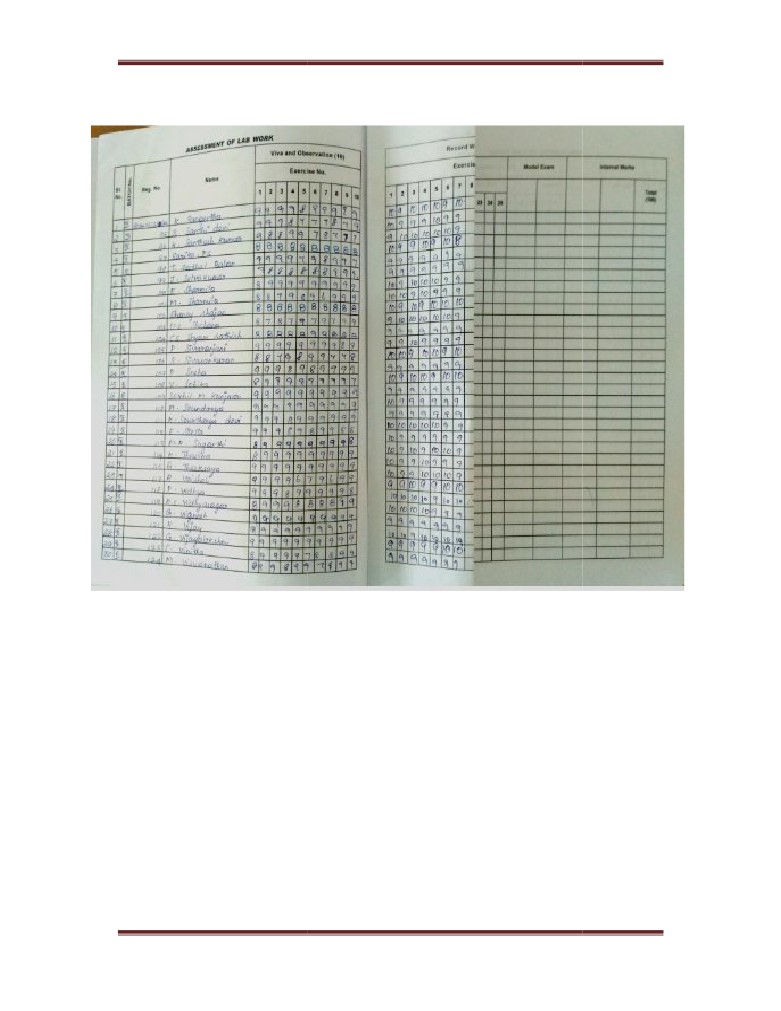
Record and observation has to be completed before the next lab session. Viva marks,
observation marks and record marks are to be updated in logbook periodically to ensure the
completion of experiments by absentees. The absentee register is maintained at the
department level. The absentees are insisted to complete the experiments after regular timing
of the college. To enable this activity the lab has to be kept open till 6.00 pm.
Internal marks will be calculated based on:
Attendance
-
25
Record
-
25(Average of all experiments to 25)
Observation
-
25(Average of all experiments to 25)
Model
-
25
Internal marks will be displayed in notice board for the reason of transparency. Prior
to lab model exam, all students have to complete the record. The LMC periodically reviews
the process.
DSEC-BME
37
NBA-SAR
Criterion 2
Impact:
The completion of all the experiments by the students is ensured.
The students are encouraged to carry out the In-house projects effectively.
The Systematic approach of lab session helps in the continuous progression of the
students
Conduct of assessment:
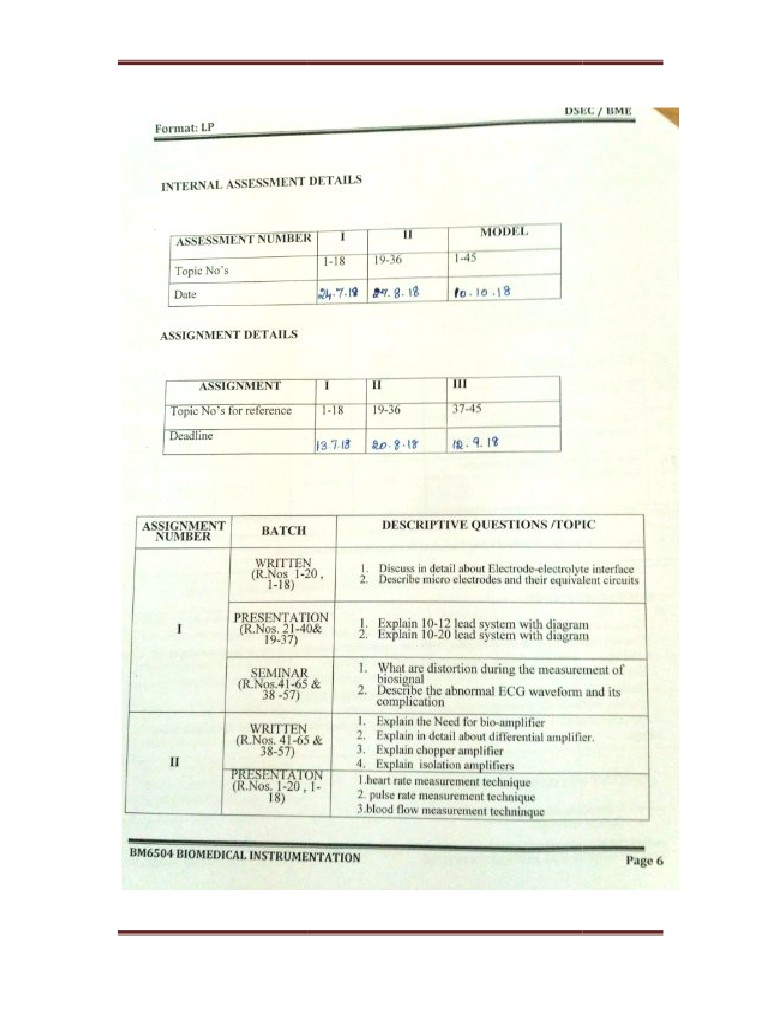
Continuous assessment strategy is introduced which includes slip test, assignment
marks and marks for attendance.
Slip Test:
For a semester four slip tests are planned for a course and 25% of total internal marks
are awarded through the same. The Slip test questions are framed during the course
plan preparation. The LMV committee insist the course instructor to frame slip test
questions with Part A (5 small questions) and Part B (1 big question).
The Slip tests help the students to cover the syllabus regularly. The continuous
assessment marks are displayed in notice board before the start of assessment test
which helps the students to prepare well for assessment test.
Assessment Test:
The systematic procedures are followed before submission of the Assessment
question papers to the Exam cell. Two sets of Assessment exam question papers (AT-
1, AT-2, and MODEL) are collected well in advance which strongly emphasize the
completion of syllabus before assessment examination. Syllabus coverage form is also
collected before the start of assessment to ensure completion of portions. Any
incompliance in syllabus coverage for a particular course is allotted a schedule on the
day before the start of assessment tests. Since two sets of question papers have been
collected, there will not be any outflow in question paper. The Head of Department is
DSEC-BME
38
NBA-SAR
Criterion 2
responsible for preparing and submitting the examination question papers according
to the guidelines. Once a question paper has been moderated by course instructor, the
LMV accomplishes a final check to ensure the contents consisting of standards,
presentation, factual and numerical accuracy.
Syllabus Coverage form
The syllabus coverage form is maintained to monitor the course completion status before
assessment tests. Any incompliance is meted out by arranging class hours the day before the
start of assessment test
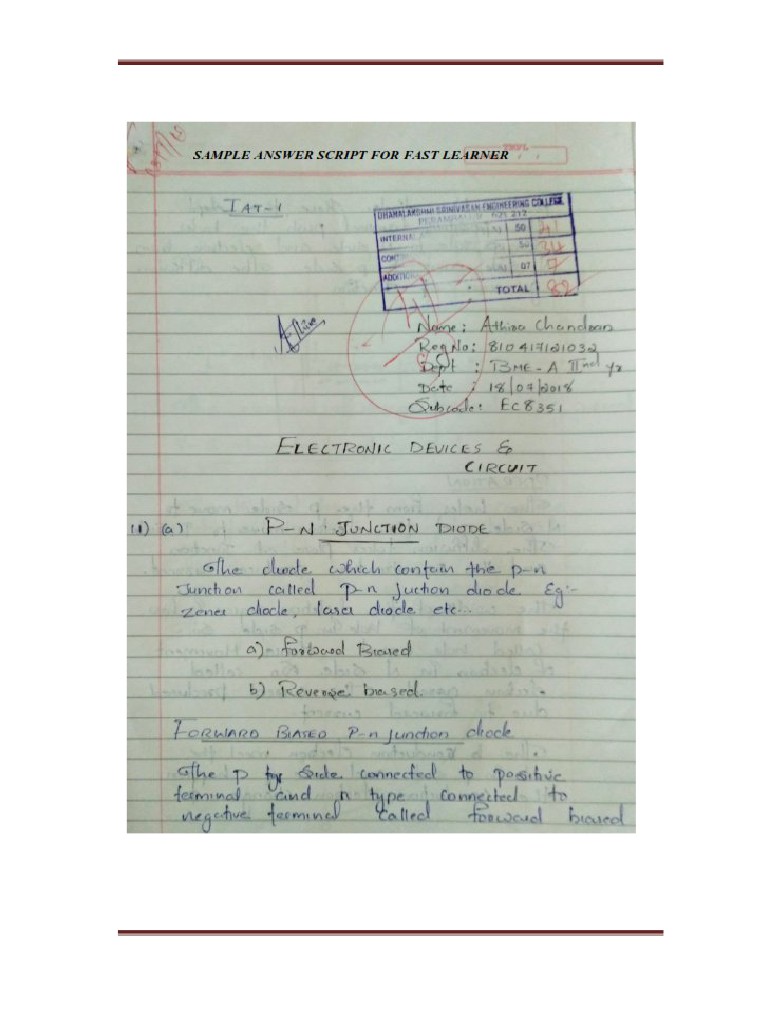
Students are categorized as slow and fast learners based on the performance in
assessment test.
Identification
Actions Taken
Criteria
Special classes are being conducted after the regular college hours.
Peer teaching is conducted by fast learners.
Students
Counseling is given to the students by subject handling faculty,
scoring less
concerned faculty advisors, Class Counselors and HoD.
marks
Student performances are intimated to parents through the progress
report.
Intensive Coaching classes are planned.
Examination failure reasons are analyzed.
Failures in
Counseling is given to the student.
Semester
Coaching classes are conducted before the commencement of
Examinations
examination.
Discussion on important questions and question bank.
Table :2.3 Guidelines to identify slow learners and mentoring system
DSEC-BME
39
NBA-SAR
Criterion 2
Identification
Actions Taken
Criteria
Motivate to get rank holder and cash prizes given on Graduation Day.
Encouraging them to participate in co-curricular Activities.
Semester
Toppers &
Motivating them to take part in National level competitions for
Subject
projects.
Toppers
Encouraging them to take part in co-curricular activities in National
and International venues by offering 50% of total expenditure.
Motivation to continue Excellency. Encouragement to get nationwide
Students with
exposure.
First Class
Motivating them to attend Conferences, Workshop, and other Co-
Curricular activities.
Table :2.4 Guidelines to identify fast learners and mentoring system
Profile verification
Profile verifications process is mandatory on the day of reopening of semester.
Verification contains phone number and address.
Students who have matriculated can verify or update changes to their personal
particulars. This process is mandatory to be in touch with the parents, as they can
give some valuable points about the like and dislike of the students and also to
discuss with the parents regarding their wards response in all aspects in the
college environment.
For absentees, verification will take place in subsequent days. Moreover this
process will be completed within a week. Phone number will be corrected inside
the software so that the absentees report will be sent correctly to the parents.
Impact
Revised Teaching and
(Pass %)
S.
Course
Learning Methodology
No
2017-18
2016-17
2015-16
Principles of Digital
83
Innovative assignment
75
50
1
Signal Processing
89
Biomechanics
NPTEL
80
80
2
Pathology and
91
Industry supported lab
94.1
93
3
microbiology
Table: 2.5 Impact Analysis of teaching and learning Process
DSEC-BME
40
NBA-SAR
Criterion 2
DHANALAKSHMI SRINIVASAN ENGINEERING COLLEGE
PERAMBALUR - 621 212.
SURVEY SHEET ON FACULTY
Dear Students,
Genuinely fill the feedback form for enhancing teaching learning process.
Faculty Name:
Subject:
Sl.
Feedback
Questions
No
1
2
3
4
5
1
Does the teacher come prepared on lessons?
2
Does the teacher present the lessons clearly and orderly?
Does the teacher speak with the voice clarity and effective body
3
language?
Is the teacher capable of keeping the class under discipline and
4
control?
Does the teacher command students’ attention and give
5
response to students’ doubts and questions?
6
Does the teacher possess depth of knowledge in subject?
Does the teacher help the students to clear the doubts and guide
7
them towards success?
8
Does the teacher use the black board effectively?
9
Does the teacher come with neat dress and posture?
Does the teacher take interest in maintaining discipline
10
anywhere in the college premises?
Does the teacher remind you about your responsibility to the
11
institution?
12
Do you find the teacher unbiased and open mined in judgment?
13
Do you find the teacher patient and considerate?
Do you find the teacher impartial and honest in paper valuation
14
and personal remark making?
15
Do you find the teacher inspiring in the class?
Suggestions, if any:
Attachment 2.4 Sample copy of survey sheet
DSEC-BME
41
NBA-SAR
Criterion 2
2.2.2. Quality of internal semester Question papers, Assignments and Evaluation
The impact of measuring effectiveness in teaching is enhanced by
assessing/evaluating learners. In this context, assessment/evaluation is a process of
formulating the effectiveness of the learning experience provided in the class room and the
extent to which course outcomes have been achieved..
As assessment/evaluation is subsequent of teaching-learning activity, the alignment
among course outcomes, teaching and assessment helps to make the overall learning
experience more transparent and meaningful for students. The college ensures that
assessment methods are well coordinated with course outcomes and teaching methods to
support students’ effective learning. As the knowledge levels and action verbs of revised
Bloom’s taxonomy are used to formulate course outcomes, Assessment question papers are
also set based on revised Bloom’s taxonomy.
Quality of internal semester Question papers
The assessments are designed in a relevant manner in order to ensure that the learner
achieves the intended learning outcomes. Thus, the evaluation of assessment tasks with
regards to both content and form is necessary. Our Institution has well-defined guidelines for
question paper setting and preparing key points for answers with mark distribution. While
setting question papers the following guidelines are kept in mind and strictly adhered to
enhance quality.
The question paper can measure only a representative sample of the learning
outcomes. Then the reasons for posing a question from particular course content as a
representative sample for particular marks are justified by a carefully prepared course
outcome-course content matrix.
DSEC-BME
42
NBA-SAR
Criterion 2
Evaluation of Assessment:
The Direct assessment marks system in general reflects the performance of the
students both in theory and lab. Based on this information, course instructor will guide the
students properly which emphasizes the growth of various abilities thereby enabling the
course instructor to take corrective action as and when required.
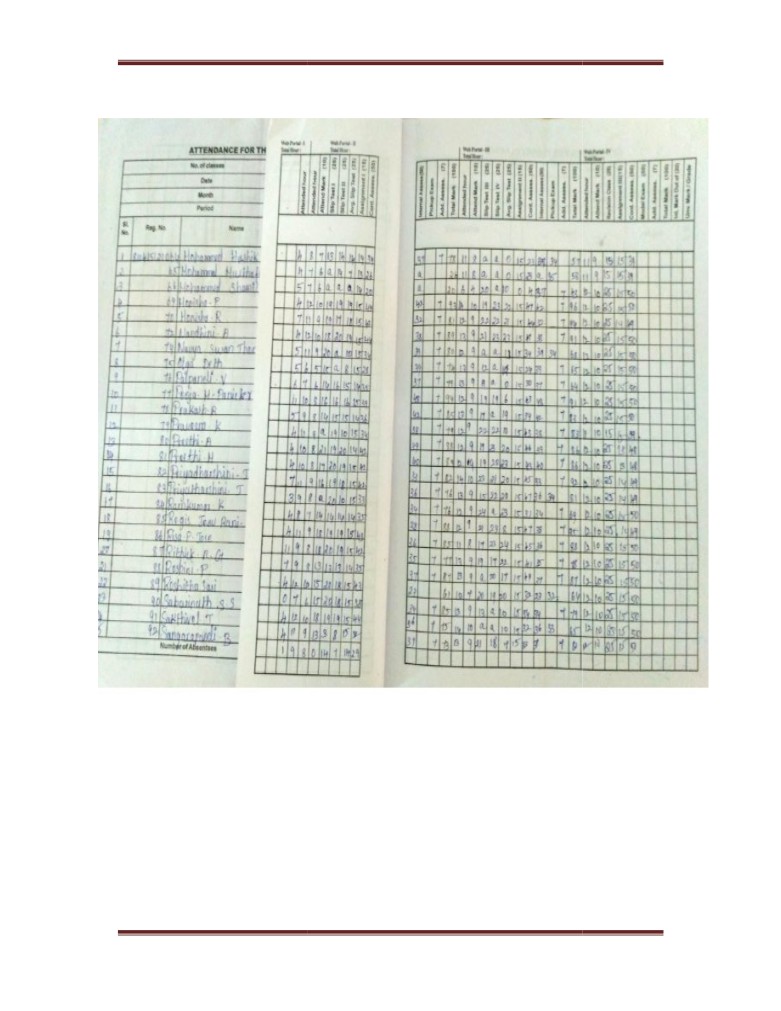
In Anna University, internal marks had been calculated based on three entries of web
portal marks.
Initiatives to improve the Quality of Assignment:
There exist many barriers in implementation of standards on improving instructional
quality as some of the content in the course are framed in general terms, where
insufficient information is structured during instructional delivery. In such case,
assignments play a vital role in instructional strategy simple.
Today, educators realize that computer literacy is an important part of a student's
education. Cooperative Learning is a systematic pedagogical strategy that
encourages small groups of students to work together for the achievement of a
common goal. Students confer their state of art work by presentation.
Active learning is a process in which the students will be engaged in hands-on
activities rather than passively receiving knowledge.
Active learning requires students to participate in class, as opposed to sitting and
listening quietly. Strategies include, but are not limited to, brief question-and-
answer sessions, effective evaluation strategies have been framed in the assignment.
Assignments are one of the key factors in continuous assessing of student learning
of a subject.
Three modes of assignments are introduced: Paper Work, Seminar and Presentation
to enhance the learning process. Assignment topics can be finalized based on the
weightage in university question papers.
DSEC-BME
43
NBA-SAR
Criterion 2
Seminar and presentation mode of assignments will be made during the Assignment
Presentation Hours (APH) for the respective courses.
Modes of assignment and submission deadlines will be indicated in course plan of a
subject, so that students can plan in prior.
To develop the writing strategies (clarity, spelling, and grammar), innovative
presentation style, and higher order thinking skills, correlation with
examples. Students utilize digital explore library and make use of higher
standard references and research papers that results in high quality work.
To neutralizing their fear and boosting their confidence, seminar mode of
assignments were introduced.
Presentation mode of assignment improves the student skills while prepare
for project reviews.
All these mode of assignments will be compiled in slip test note. Students who turn
in assignments on time will usually get good grades than students who miss
opportunity. This promotes the students to work collaboratively with others.
Initiatives to improve the Evaluation:
Theory Course
In Anna University, internal marks had been calculated based on three entries
of web portal marks.
Continuous monitoring of students will be carried out through continuous
assessment process. The primary aim of introducing continuous assessment is
to improve the performance of students. CA mark will be maintained in
logbook for each subject.
Web portal 1contains only attendance.
DSEC-BME
44
NBA-SAR
Criterion 2
Web portal
Assessment
Marks
Weightage
Average of two Slip tests
25
25
Assignment
15
15
Web portal 2
Attendance
Present Hours
10
&
Continuous Assessment (CA)
50
Web portal 3
Internal Assessment (IA)
50
50
Additional assessment (AA)
7
7
Coaching class attendance
Present Hours
25
Assignment
15
15
Attendance
Present Hours
10
Web portal 4
Continuous Assessment (CA)
50
Model Exam (IA)
100
50
Additional assessment (AA)
7
7
Table :2.6 Allotment of marks for Continuous Assessment
Web portal 2 to web portal 4: Web portal entry mark is illustrated in the above
Table.
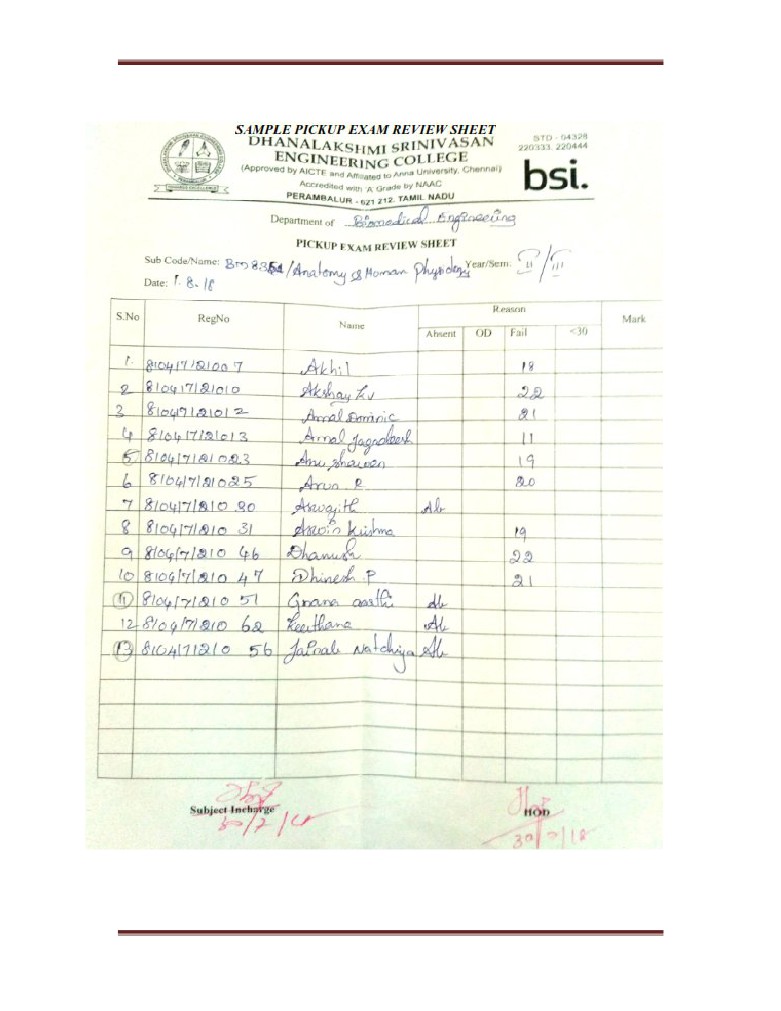
The Pickup exams are introduced for the benefits of the students who were
unable to appear due to Medical leave / co-curricular and extra-curricular
activities / any other special permissible incidents and also who have scored less
than 30 marks out of 50 marks with prior permission from the concerned Head
of the Department.
The weightage of this exam will be 70 marks (Maximum 70 only). The exam
question paper will be same as that of assessment test already appeared, students
has to bring both question paper and answer sheet while coming for exam,
without which they will not be permitted. Not more than 30% of students in a
class are eligible to attend pick up exam.
DSEC-BME
45
NBA-SAR
Criterion 2
Remedial classes will be planned before the day of assessment test from 3.15
pm to 4.50 pm, where students can discuss with their faculties regarding the
subject and also faculties can plan the conduct of class for the important topic,
so that the absentees for the regular class will get benefit.
Test report has been designed and to be maintained by the HoD. Test report
comprises of number of students passed, number of students more than
average level, and reason for poor performance and proposed corrective
action. The test report enables the course instructor to continuous monitor the
student’s performance and it’s also acts a follow up report in which details
will be entered after each test which helps in continuous monitoring of a
subject by the Heads. This serves as a node where clear focus for subject can
be made.
Lab course
Laboratory sessions are unique learning environment having particular
challenges and opportunities that differ from the standard classroom
environment. The skills acquired during the laboratory sessions are as given
below.
Ability to apply the theoretical concepts in new situations.
Develop awareness and deepen understanding of concepts.
Develop critical, quantitative thinking and the experimental and data
analysis skills
Learn to use modern engineering tools, scientific apparatus and
equipment.
Develop report writing skills in oral as well as written form.
Improves the individual role play and team work.
DSEC-BME
46
NBA-SAR
Criterion 2
Institution level Lab Monitoring Committee (LMC) is introduced to improve the
Teaching Learning process of Lab classes.
LMC should ensure the laboratory exercises are executed as per the course plan.
Lab manuals including course plan are prepared. Manuals should include Do’s
and Don’ts of lab, data sheets of components are placed in appendices if needed.
Faculty members to perform trial experiments for the assigned lab courses to
make sure the components are readily available.
On the first day of lab class, explanation can be given stating the need of
experiment and application of experiment in the classroom.
Record and observation has to be completed before the next class. Viva mark,
observation mark, record mark is to be updated in logbook periodically.
Labs to be kept open up to 6.00 pm for the benefit of absentees to complete the
experiment, the same should be recorded in absentee register. Date has to be
entered in logbook for the completion of experiment of absentees (observation
column).
Internal marks and the Continuous evaluation for Web Portal - 4 shall be as
illustrated in the following Table.
S. No.
Assessment
Weightage
Marks
1
Observation
25
5
2
Attendance
45
5
3
Record
25
5
4
Model
100
5
TOTAL (Internal)
20
TOTAL (Web portal - 4)
100
DSEC-BME
47
NBA-SAR
Criterion 2
In case of absentees, record and observation mark, maximum weightage of a
single experiment will be 6 marks; else it will be 10 marks.
Internal marks will be displayed in notice board for the transparency. Prior to
model exam, all students will complete the record note and signing procedure
will also get concluded. This committee periodically reviews the process.
Revision Class:
Procedure for the Conduct of revision classes are framed by the Institute level
co-coordinator and its flow are monitored by the corresponding department
co-coordinator.
Based on university questions, questions will be framed for the conduct of test.
Test will be carried out and the performance is continuously monitored.
For slow learners, intensive coaching classes will be planned. Special care is
given to the students individually.
Internal marks will be displayed in noticed board after each entry of web
portal mark, students can avail this practice in positive method thereby increasing the
performance in forthcoming entry.
140
BATCH 2014-2018
120
100
80
60
FAST LEARNERS
SLOW LEARNERS
40
20
0
I
II
III
IV
V
VI
VII
VIII
SEMSESTER
Figure 2.4 Gradual improvement analysis of fast and slow learners
DSEC-BME
48
NBA-SAR
Criterion 2
Students
Extra Curricular
Academic
Attendance
& Curricular
performance
activity
Correc
Yes
No
No
Is good
>=75%
>=65%
tive
?
& <75%
actions
No
Yes
Yes
Inform to
Parents
Counseling
Counseling
Remedial
University Exam
class
Result
Figure 2.5. Process of evaluation of Continuous Assessment
2.2.3. Quality of student projects
It is imperative to promote the spirit of inquiry among young graduates since
Lifelong learning is a synergy between teaching and research. The knowledge through
lectures in class rooms, practical in laboratories and reference work in libraries do not expose
students to real life situations. The adoption of participatory approach in learning, where by
the students involve themselves in identifying a problem, analyzing the causes and finding
the solution objectively will have a positive impact on the students and will make the learning
process more meaningful and interesting.
DSEC-BME
49
NBA-SAR
Criterion 2
The outcomes of project work and mapping with program outcomes are as follows:
S.
Program
Course Outcomes
No
Outcomes
Identify the problem domain, collect and review the literature, and
1.
POs(1,2)
define the problem.
Analyze the data collected/generated by applying appropriate
2.
POs(4,5)
techniques, resources and modern engineering tools and interpret the
results and synthesize the information to provide valid conclusions.
Examine the analyzed results to understand the impact of the
3.
POs(3,6,7,8)
professional engineering solutions with ethics, society and
environment.
Illustrate the results with effective presentations in graphical and
4.
PO10
tabular form to write effective reports and design documentation.
Recognize the need and scope for future study in the broader context
5.
PO12
of technology.
Function as individuals, members and leading the team to manage
6.
POs(9,11)
projects in multidisciplinary environments.
Table : 2.7 Course Outcome for Project Work
The conduct of project is monitored by Project Monitoring Committee (PMC) which
is initiated in VII semester although Anna University recommends the initiation of end
semester project from VIII semester onwards. Project hour has to be allotted in time table of
VII semester, per week one period can be given. It is the carry forward process, project
coordinator can be allotted taking into account of VIII semester (same co-coordinator has to
continue for VIII semester)
Students of final year are divided into various groups to carry out the project work.
The Identification of projects and allotment is carried out through a formal circular by Project
coordinator/HOD. The specialization areas of respective faculty with their area of interest is
collected which will then be considered for allocation of research topics and Student groups.
Preliminary discussion between the batch of students and faculty is held to decide on
the following aspects of project work: Suitable and appropriate problem of research,
Objectives of the study, Methodology to be employed, Data collection to be made,
DSEC-BME
50
NBA-SAR
Criterion 2
Prospective analysis and interpretation of data, Expected conclusions and Scope for further
study. This will finally decide on the Preparation of a Project report and Qualities of a
researcher. Every project supervisor is allotted with a group of students who will be guided
by him until the project work is completed. This will be monitored and ratified by Project
coordinator/HOD.
Schedule
Work plan
First week
Project Orientation by Project coordinator
Second week
Domain description by Project coordinator
Third week
Team formation(Maximum of 4 members)
Guide allocation based on the specialization
Fourth week
(Arrange for display of staff with specialization)
Presentation regarding domain related ongoing activities by
Fifth week
the project students.(About proposed projects)
Collection of literature papers(Conference Journal)-
Sixth week
Atleast 20 papers(Hard copies)
eventh week
Survey activities
Eighth week
Problem identification
Ninth week
Title Confirmation
Zeroth review presentation+ Literature survey report
Tenth week
submission
Table: 2.8 Plan and Description of activities for VII semester are listed below:
Process for monitoring and evaluating the quality of projects:
Two Expert members will be nominated for the smooth conduct of review.
Expert members should not be changed under any circumstances. At the end of VII
semester, team has to submit the literature survey report along with the bonafide
certificate.(Refer :Anna University UG thesis report-Front page, Bonafide certificate,
Table of Contents- Introduction, Literature Survey(Content, Advantage, Disadvantage),
Conclusion)Guide should be present for all the review. Project coordinator is to monitor
the ongoing process.
DSEC-BME
51
NBA-SAR
Criterion 2
Schedule
Work plan
First week
Review-Outline of Project work-
Report-First Chapter submission
Third week
Review-Description of Project work
Sixth Week
Report submission-Second and Third Chapter Submission
Tenth week
Final Review, Report-Submission-Comprised of full work.
Table :2.9 Plan and Description of activities for VIII semester are listed below:
All the scheduled work must be maintained in project diary(will be given by the
department) and acknowledge by guide.
Summary of review to be submitted by the project coordinator.
Batch
Guide
Expert 1
Expert 2
Expert 3
Att
Total
S.No
Reg No
Name
Title
No.
Name
(25)
(25)
(25)
(25)
(100)
1
2
I
3
Name
Signature
Expert 1
Expert 2
Expert 3(Guide)
Project coordinator
HOD
* 25 marks can be categorized as presentation (15) +handout (5)
+ viva questions (5).
*Attendance 25 marks can be categorized as:
Percentage of attendance
Mark
91-100%
25 marks
81-90%
20 marks
71-80%
15 marks
61-70%
10 marks
51-60%
5 marks
DSEC-BME
52
NBA-SAR
Criterion 2
The progress of project is periodically monitored by a review committee headed by
HOD and project coordinator. They duly assessed the work and pass on their critical
comments regarding the project. Their comments are acted upon by the students under the
supervision of the project guide. Marks are awarded for every review. The total reviews are
three. Marks awarded for all the three reviews form part of internal assessment of project
work.
This includes the following aspects and orientation:
Innovation
Originality
Unit Cost
Social Impact and relevance
Environmental safety and Ethics
The evaluation is carried out to assess both individual and team performance. The team
performance is gauged on the following aspects:
The final getup of the project report
The depth of Literature review covered
The methodology adopted
The analysis carried out and presented
The display of the results by way of bar charts, pie charts, graphs supported by
detailed tables.
The discussion culminating in conclusions and the new impacts at the end of the
project work with scope for further study.
DSEC-BME
53
NBA-SAR
Criterion 2
The individual performance evaluation is made on the following observations:
The style of presentation
Ability to answer the questions
Depth of understanding of the problem
Individual contribution to data collection and analysis of the problem proper.
Demonstration of the work by way of presenting models and other innovative
ways of expression.
After total evaluation, the PMC proposes an encouragement to student by selecting
best project award which is given to the students of every programme. These in turn
encourage and motivate students to explore many thought provoking ideas/problems.
Submission of Project Report and conduct of Viva-voce
Continuous internal assessment is monitored by the faculty guide at every stage of the
project work by giving due weight-age to sources consulted / literature review, methodology,
data collection, technical accuracy, content of the report and references. In addition, the
external examiner evaluates the project report and conducts viva-voice examination.
Internal Assessment
University Examination\Evaluation
Total
Project Thesis
Viva-Voce
Review
Submission (30)
(50)
Attendance
(20)
Internal
External
Internal
External
I
II
III
Supervisor
Examiner
Examiner
Examiner
Examiner
5
5
5
5
15
15
16
18
16
100
DSEC-BME
54
NBA-SAR
Criterion 2
Form a Project Review Committee
Collect faculty specialization areas & Research areas
Project Orientation by Project Coordinator
Disseminate the Faculty specialization areas
to students
Form batch of students as team based on their own
interest
Allocate Guide based on the specialization
Presentation regarding domain specification
Continuous Monitoring/Assessment Process
Seventh semester:
Collection of literature papers
Analyse Survey papers
Identify Problems
Confirm title of project
0th review
: Submission of Literature survey report
Eight semester:
1st review
: Outline of Project work, Submission of First Chapter report
2nd review
: Description of Project work, Submission of second & third
Chapter report
Final review
: Submission of full report.
University Examination / Evaluation
Figure 2.6 Process of Project
DSEC-BME
55
NBA-SAR
Criterion 2
Evidence of Success
The project work undertaken by the students develops self-confidence to take up any
work of substance and motivates them to take up real time projects. This includes short, fast
and very useful Mini projects. The feedback collected from the students on their opinion
about project work shows that project work at UG level has helped to develop scientific
temper and has enhanced their understanding of the subject. It is gratifying to note that even
an average caliber student is able to do well and get a sense of achievement through the
project work. Few of samples of publication details are listed below in Table:
Students’
Publication
Relevance to PO &
Academ
Project Name
Name
Details
PSOs
ic year
Image based Detection
,POs(1,2,3 4,5,9,10),
Nasreen Banu
IJERME
with voice output
PSO1
Diagnosis and
classification of Breast
2017-
cancer from Thermo
2018
R.Ramya.
POs(1,2,3,4,5,9,10),
gram images using
IJERME
N.Punitha
PSO1
texture feature &
Artificial neural
network
2016-
POs(1,2,3,4,5,9,10),
R.Adhavan
Pharmaceutical Card
IJERT
2017
PSO1
A.Kumaraguru
Epileptic seizure
2015-
POs(1,2,3,4,5,9,10),
,H.Mohammed
detection and alert
IJERT
2016
PSO1
Agram
system
Table: 2.10 Publication Details
2.2.4. Initiatives related to industry interaction
Initiatives were taken to meet out the tremendous need for Academic-Industry
Interaction. All the stakeholders, namely: Management, Industry, Employers, Faculty,
Students’ and society stand to gain, as it can be a ‘win-win’ partnership. Here academic-
industries are viewed as a system where active participation of all players is important.
DSEC-BME
56
NBA-SAR
Criterion 2
Academic benefits include improving their morale through secure training and final
placements for students and relationship established with industry.
Faculty benefits lead to improve teaching perspective through knowledge sharing by
various industrial training programmes designed by the Industry, partial delivery of the
regular courses and to carry out the research work.
Students stand to gain by way of hands-on training during visits, reduction of
learning curve in industrial practices, employment opportunities, filling the gap between
theoretical and practical courses, various Internship trainings and to carry out the project
work.
Industry benefited by updated and upgrading the knowledge base of the industry
professionals through management program designed by the academia.
Medical camp and BIOMED expo is promoted in the department for establishing and
exposure of the students with the clinician to meet their requisites.
Overall, effective Academia-Industry Interaction leads to strengthen competitiveness,
promote innovation and new technology development and ensure quality and quantity of
Human Resource base. There are several initiatives, successfully carried out. Some of the
initiatives are described below:
Memorandum of Understanding (MOUs)
Memorandum of Understandings are signed between our department and various
Industry like Dhanalakshmi Srinivasan Medical College and Hospitals (Siruvachur) , MI
Measuring Instruments (Madurai), Precision Scientific (Trichy), MTAB India Pvt. Ltd.,
(Chennai), South India Surgical Company Ltd (Chennai). Students’ knowhow become more
industry relevant by interacting with industry persons during Guest lectures, Seminars and
workshops.
DSEC-BME
57
NBA-SAR
Criterion 2
Project Exhibition Lab
Major projects and Mini projects are taken up more seriously and industries and
alumni have also been brought into the loop for having more knowledge resources. Students
are motivated to do their major projects and mini projects in Project Exhibition Lab(PEL) of
Department of Biomedical Engineering. The support for data acquisition and analysis are
done through MOUs. The Projects developed from PEL are displayed for students.
Industry Support/Involvement Lab:
Industry Support
Our department has developed some Industrial supported laboratories to meet the
current and future developments in the field of Medical instruments
Industry Involvement
Active Programmes are established for regular visits of experts from industry to
address students, faculty and technical assistants to spend a few days at college for
participating in teaching activities. Few activities can be listed out:
S.
Academic
Implementation
Relevance to
Industry Name
Lab
No
year
details
PO,PSOs
Utilization of
POs(1,2,4,9,12),
Dhanalakshmi
maintenance and
PSOs(1,2)
Hospital
1
2017-2018
Srinivasan Medical
calibration of
Training Lab
College And Hospital
medical
equipments
Installation and
POs(1,2,4,9,12),
Diagnostic and
Bioplus Medical
servicing of
PSOs(1,2)
2
2016-2017
therapeutic
System
medical
equipment lab
equipment
Construct
POs(1,2,3,5,7),
Medical
building blocks
PSOs(1,2)
3
2015-2016
Measuring Instruments
Instrumentation
for biosignal
Lab
processing
Table: 2.11 Industry Support Lab
DSEC-BME
58
NBA-SAR
Criterion 2
Acad
Name of the
S.
emic
Industry Name
Industrial
Date
Topic
Pos and PSOs
No
year
Person
Sulfikar Ali,
Design of surgical
POs(1,2,3,5,7),
1
Kare Surgicals
Bio Medical
09.02.18
equipments
PSOs(1,2)
2017-
consultant
2018
Yogaraj .S
Manufacturer of
POs(1,2,3,5,6,8,9,
Creative
2
Bio Medical
19.06.17
cardiac care
12),
Medical System
consultant
equipments
PSOs(1,2)
V.Dinesh
Bioplus
Calibration of
POs(1,2,4,5,12),
3
Bio Medical
21.03.17
Medical System
medical devices
PSO2
consultant
Mr.D.Murugan
Cure Medical
Role of BME in
POs(1,2,3,6,7,8),
4
Bio Medical
01.02.17
Services
Health Care
PSO1
consultant
Intellectual Property
CIPR, AUC,
Dr.Kandha Babu
POs(1,2,3,4,5,12),
5
11.02.17
Rights and
2016-
GUINDY
Director
PSO2
Innovations
2017
Sree Chitra
Thirunal
Ms A.V.Anupa
Institute For
Biomaterials
POs(1,2,4,9,12),
6
Research
08.03.16
Medical
Implants
PSOs(1,2)
Assistant
Sciences And
Technology
Mr.M .Vignesh
Modes of Ultra
POs(1,2,4,9,12),
7
Siemens
10.08.15
Senior Engineer
sound Scanning
PSOs(1,2)
Table : 2.12 Industry Involvement
DSEC-BME
59
NBA-SAR
Criterion 2
Evidence of Success
Huge demand and response from the students for the course
Increase in employment opportunities
Industrial visits are arranged to the students. These visits build a strong practical
knowledge in students to provide solutions for production problems.
In-plant trainings are provided to the students to get an industry work culture
and first hand information on real world problems.
Practical training is given to the students in addition to their regular work outs in
Laboratories with help of resource persons from industry.
Conduct of several enrichment courses for students through workshops, seminars
and guest lectures.
Career profile of the students will be enhanced due to the continuous interaction
with industrialist.
2.2.5. Initiatives related to industry internship/summer training
The industrial knowledge is essential for all students to get success in their job.
Industry training provides the exposure to the students to face the industry once they set their
foot out of the campus. Once the students step into the industry they should be ready to face
competitive world with knowledge. The core competence area is extending its boundary daily
as technology grows. The initiatives taken by the department are as follows:
1. Internship for students in doing project work
Internship for students are arranged to expose them to industrial practices and for
undergoing their project work for more than two weeks. The students plan and structure the
internship program after getting proper approval from both college and industry. The
internship is to be made more meaningful and long term so that it benefits both students and
industry. Data collection, Prospective analysis and interpretation of data are done for project
DSEC-BME
60
NBA-SAR
Criterion 2
completion by students with the help of industry. Student involvement in industry internships
and summer training for yesteryears are shown in the below Table.
Industry name /
S. No
Academic Year
Students name
Type of Industry
(Core/Noncore)
Linda Mathew
Panacea Medical Systems,
1
Jameela
Bangalore
2017-18
S.Pradeepa
2
M.Vishali
Abbes biotech, Coimbatore
S.Sathya
T.Nadhini
Meenakshi Mission Hospital,
3
P.Nandhini
Thanjavur
2016-17
Veena Gopika
4
Thennila
Rayone, Chennai
M.Soundarya
5
R.Sumalasri
Bempu technologies, Bangalore
2015-16
Bishop Heber College,
6
Syed Mohammed
Trichy
Table: 2.13 Internship details
2. Industrial training/tours
Industrial visits are arranged for the students every year as part of the curriculum
which helps them to understand the practical application of their education to real world
scenarios.
No of
Type of
S.
Academic
Industry Name with
Area of
Students
Industry
No
Year
address
Training
Participated
(Core/Noncore)
1
IBAB, Bangalore
Bio Tech
91
Core
Dhanalakshmi Srinivasan
2017-18
Biomedical
2
medical college and
90
Core
department
hospital
3
Bio Tech Lab land, Mysore
Bio Tech
96
Core
2016-17
Dhanalakshmi Srinivasan
Biomedical
96
Core
college of Nursing
department
NIMHANS,
4
2015-16
Anatomy
86
Core
Bangalore
Table :.2.14 Industrial Visit details
DSEC-BME
61
NBA-SAR
Criterion 2
3. In- plant Training
During semester holidays students are motivated to attend in-plant training to collect
information about the industry work culture as a planned activity. On their successful
completion of training, a formal report and feedback of the same is to be submitted by the
students. They are encouraged to share their experience by giving a seminar.
Name of the
Date
S.NO
Year
Concern
Duration
student
DD/MM/YY
1.
Pooja M Panicker
2.
Risa P Jose
05.06.18-
Sunrise Hospitals,
1 Week
3.
Mohammed Hashik
21.06.18
Kakkanad, Kochi
Mohammed
4.
Musthafa
5.
Mohammed Shamil
6.
Vijay
7.
Vignesh
Meenakshi Hospital,
06.06.18-
8 days
8.
Viswanath
Thanjavur
13.06.18
2017
9.
Selvakumar
-
10.
Sakthivel
2018
11.
M Sharmila
12.
K Thasleema
KMC Hospital,
12.06.18-
10 days
13.
A Nandini
Trichy
22.06.18
14.
P Monisha
15.
Vijayalakshmi G
MIMS Hospital,
20.06.18-
16.
Roshitha Sasi
1 week
Calicut
27.06.18
17.
Sarika
Dhaya Super Speciality
14.06.18-
1 week
Surgical Centre,Thrissur
21.06.18
18.
Shency
DSEC-BME
62
NBA-SAR
Criterion 2
Name of the
Date
S.NO
Year
Concern
Duration
student
DD/MM/YY
19.
E Stella
01.05.18-
1 month
Kaveri Hospital,Trichy
30.05.18
20.
Sivaranjini
21.
Seethal
22.
Sokhil
Niranjan Ultrasound Pvt
10.6.18-
10 days
Ltd,Calicut
20.6.18
23.
Olga
2017
24.
Navya
-
2018
25.
Seethal
Bilievers Church Medical
02.06.18-
1 week
College,
08.06.18
26.
Sokhil
Thiruvalla, Kerala
Trivandrum Medical
18.07.18-
27.
1 week
Olga
College,Kerala
23.07.18
28.
Prakash
29.
Sivasankaran
01.06.18-
Velamal Hospital,
1 week
30.
Ramkumar
08.06.18
Madurai
31.
Rithick
32.
Palpandi
33.
P Kokila Priya
34.
Jefsy
35.
Valliammai C
36.
Asimabanu
01.06.18-
KG Hospital,
7 days
Coimbatore
08.06.18
37.
Deepa
2017
-
38.
Manisha M
2018
39.
Martina Selus
40.
P Kokila Priya
Uniq Technologie,
01.06.18-
41.
Jefcy
3 Days
Chennai
08.06.18
42.
Valliammai C
DSEC-BME
63
NBA-SAR
Criterion 2
Name of the
Date
S.NO
Year
Concern
Duration
student
DD/MM/YY
43.
Asimabanu
44.
Deepa
Codebind Technologies,
01.06.18-
5 days
45.
Manisha M
Coimbatore
08.06.18
46.
Martina Selus
2017
-
47.
R Keerthana
2018
Apollo Hospital,
01.06.18-
6 days
Chennai
08.06.18
48.
Kaviya
49.
Kayalvizhi
Uniq Technologies,
06.06.18-
50.
S Balakrishnan
3 days
Chennai
08.06.18
51.
Jerin
VIMS Hospital,
01.06.18-
52.
Cibi
1month
Salem
08.06.18
Akhila
53.
Shanthappan
54.
Aishwarya Vijayan
PVS Memmorial Hospital,
04.06.18-
4days
Ernakulam
08.06.18
55.
Ashwin K Prasad
2017
56.
Pooja Sajeev
-
2018
57.
Greeshma Gopi
58.
Ganga G Nair
Libiya Rani
59.
Varhese
Cyrix Health Care Pvt Ltd,
01.06.18-
60.
Anusree S
13days
Ernakulam
13.06.18
61.
Akhil P Lal
62.
Maneesh Krishna
63.
Amal T
DSEC-BME
64
NBA-SAR
Criterion 2
Name of the
Date
S.NO
Year
Concern
Duration
student
DD/MM/YY
64.
Deepak Raj
65.
Abin Renji
66.
Surya M
Cyrix Health Care Pvt Ltd,
01.06.18-
67.
Munavirul Midhilaj
13days
Ernakulam
13.06.18
68.
Nikhil Raj
69.
Vyshnav Prakash
70.
Subijith K J
2017
71.
Athul Krishna
-
72.
Jomon Paulson
2018
73.
Don Anto
PVS Memorial
18.06.18-
74.
Ajith E J
1 week
Hospital,Kaloor,
24.06.18
Ernakulam
75.
Ajay Joy
76.
Ashik Joy
77.
Aflah K
78.
Ajna Jasmin
Mumbai Goderej Hospital,
18.06.18-
79.
Bijo T Joy
1 week
Mumbai
24.06.18
80.
S Saravana Kumar
81.
S Surya Moorthy
82.
R Rajesh Kanna
83.
E Vickneshwaran
1week
84.
S Jaganathan
11.06.18-
Madurai Meenakshi Mission
17.06.18
Research Centre, Madurai
85.
A Kiruba Karan
86.
V Ganesh Moorthy
87.
A Amal Allwinraj
88.
Dinesh
DSEC-BME
65
NBA-SAR
Criterion 2
Name of the
Date
S.NO
Year
Concern
Duration
student
DD/MM/YY
PVS Hospital,
18.06.18-
89.
Swathy Sudhan
5days
Kozhikode
23.06.18
90.
Pravitha K P
91.
Swarna Rose
14.06.18-
Apollo Hospital,
10days
Chennai
23.06.18
92.
Roshni
PVS Hospital,
04.06.18-
93.
Reshma Rajeev
4days
Ernakulam
08.08.18
04.06.18-
94.
Vishni Krishna
PVS Hospital Ernakulam
4days
08.08.18
Cyrix Health Care Pvt Ltd,
04.06.18-
95.
Reshma K R
4days
Ernakulam
08.06.18
96.
A Praveen Nabu
97.
R Priyadharshini
2017
98.
M Rasitha Farkath
-
2018
Uniq Technologies,
06.06.18-
99.
S Sowdharya
3days
Coimbatore
09.06.18
100.
R Vimal
101.
S Shumuga Priya
102.
M Saritha
103.
T Dhivya
104.
P Aruna
105.
A K Dhaarani
Meenakshi Hospital,
04.06.18-
6days
Tanjavur
09.06.18
106.
D Jeevitha
107.
B Kanagalakshmi
108.
Shyam Sathish
109.
Sabari Nath
Vinayaka Mission Hospital,
03.11.17-
Salem
1 Week
110.
Sangarapandi
09.11.17
111.
Vidhyasagar
DSEC-BME
66
NBA-SAR
Criterion 2
Name of the
Date
S.NO
Year
Concern
Duration
student
DD/MM/YY
112.
Pooja M Panicker
113.
Risa P Jose
Ananthapuri Hospitals &
Research Institute,
24.11.17-
2 Weeks
114.
Suganthi M R
Trivandrum
10.12.17
115.
Mohammed Hashik
116.
Mohammed Shamil
117.
Elavarasan
VIMS Hospital,
25.11.17-
1week
Salem
31.11.17
118.
Ananth R
Biovision,
11.12.17-
119.
Anas
7days
Chennai
16.12.17
120.
Mariya Anjali
Baby Memorial Hospital Ltd
26.06.17-
121.
Preethi M
5days
Kerala
30.06.17
122.
Nithyusha P K
123.
Ashique K P
Moulana Hospital
12.06.17-
2016
5days
Kerala
16.06.17
124.
Akshay P Rajan
-
2017
125.
Mohammed Aslam
126.
Shithin B S
Kerala State Cooperative
127.
Sajay Mol P
Hospital Complex And
05.06.17-
5days
Center Of Advanced Medical
12.06.17
Service Limited
Mohaqmmed
128.
Nadeer Ibrahim
129.
S.Vishnu Priya
130.
Vaishnavi J
Bioplus Medical System,
29.05.17-
131.
`M Raja Rajewari
7 Days
Trichy
03.06.17
132.
Vaishali M
133.
Christro Varghese
DSEC-BME
67
NBA-SAR
Criterion 2
Name of the
Date
S.NO
Year
Concern
Duration
student
DD/MM/YY
134.
Karishma S
135.
Akshaya Rajendran
Niranjan Ultrasound India
12.06.17-
136.
Gogila P
Pvt Ltd,
5days
16.06.17
Calicut
Mohammed
137.
Muhsin
138.
Bibina Alias
Bhagyalekshmi
139.
MIMS Research Foundation
26.06.17-
Omanakuttan
5days
Calicut
30.06.17
140.
Fatima
Manomohan Memorial
10.07.17-
141.
Maniraj Penaru
Community Hospital,
15days
25.07.17
Kathmandu
142.
Pooja M Panicer
143.
Heera Bh
2016
14.06.17-
Sunrise Hospital ,Kakkanad
7days
-
21.06.17
144.
Arunima Renjan
2017
145.
Risa P Jose
Creative Medical
29.05.17-
146.
B.Parkavi
5days
Systems.Namakkal
03.06.17
VI Microsystems Pvt
12.06.17-
147.
M.V.Dhanalakshmi
5days
Bltd,Chennai
16.06.17
148.
P.Roshini
149.
R.Vaishali
Meenakshi Hospital,
12.06.17-
5days
150.
J.Priyadharshini
Thanjavur
17.06.17
151.
Bavithra.B
2016
-
152.
Harinisree.B
2017
DSEC-BME
68
NBA-SAR
Criterion 2
Name of the
Date
S.NO
Year
Concern
Duration
student
DD/MM/YY
153.
Valliammai C
07.06.17-
K G Hospital,Coimbatore
5days
12.06.17
154.
Kokila Priya
155.
A Preethi
156.
S.Sivasankaran
157.
A Preethi
158.
K.Ramkumar
Velammal Medical College
12.12.16-
159.
Regis Jessu Rani
5 Days
And Hospital,Madurai
17.12.16
160.
Sangareshwari M
161.
M Preethi
2016
-
162.
Vinitha C
2017
163.
P.Vidhya
16.06.16-
164.
Priyadharshini
Apollo Hospital Trichy
7 Days
25.06.16
20.6.16-
165.
M.Balamurugan
Apollo Hospital Trichy
10 Days
30.6.16
166.
T.Shalini
20.06.16-
Kaashiv Infotech,Chennai
5days
24.06.16
167.
R.Priyadharsini
Apollo Firstmed
20.06.16-
168.
Gunabalan
10 Days
Hospital,Chennai
30.06.16
Kaashiv Infotech,
20.06.16-
169.
Vembu.M
5days
Chennai
24.06.16
Meenakshi Mission
20.06.16-
170.
R.Agalya
5days
Hospital,Madurai
25.06.16
Apollo Loga Hospital,
13.06.16-
171.
S.Sathya
15 Days
Karur
27.06.16
20.06.16-
172.
S Dharani
Kaashiv Info Tech Chennai
5days
24.06.16
DSEC-BME
69
NBA-SAR
Criterion 2
Name of the
Date
S.NO
Year
Concern
Duration
student
DD/MM/YY
23.06.16-
173.
Jameela
Apollo Hospital, Chennai
10 Days
03.07.16
174.
Linda Mathew
175.
Hareeshma
23.06.16-
Apollo Hospital, Chennai
15 Days
08.07.16
176.
Ashna Babu
177.
Jyothys Joys
2016
-
Malabar Institute Of Medical
12.01.16-
178.
Athula P
2017
Sciences,
5 Days
16.01.16
Kerala
179.
13.06.16-
R B Ramya
Apollo Loga Hospital Karur
15 Days
27.06.16
180.
Kalaivani
181.
Keerthika B
27.06.16-
Apollo Hospital Chennai
5days
02.07.16
182.
Gomathi
15.05.16 -
183.
V.Pragathi
Meenakshi Hospital Tanjore
5days
20.05.16
Neyveli Lignite
17.06.16-
184.
Valarmathy E
1 Week
Cooperation,Neyveli
24.06.16
2015
Nirmala Medical Center,
22.06.15-
185.
Jothin Johns
5days
Kerala
27.06.15
-
2016
Maharani Scans And Sri Sai
04-12-15-
186.
M.Balamurugan
15 Days
Diagnostics Services,Theni
20.12.15
Thrisha
187.
Radhakrishnan
Amala Institute Of Medical
11.06.15-
3 Days
Sciences Kerala
13.06.15
188.
Haritha P
DSEC-BME
70
NBA-SAR
Criterion 2
Name of the
Date
S.NO
Year
Concern
Duration
student
DD/MM/YY
189.
M.Vaishali
190.
S.Pradeepa
191.
Monisha M
192.
M.Poornima
2015
Meenakshi Hospital,
15.06.15-
-
5days
Thanjavur
20.06.15
193.
R.Arthi
2016
194.
A.Preethi
195.
A.Muhilarasi
196.
Rajeswari
Table: 2.11 List of In-plant Training
Impact
All these Initiatives related to industry internship/summer training have positively
impacted the learning culture of students. MOUs, employers, alumni and parents who are
working in core companies help in identifying the industries for industrial visits and in-plant
training. Due to such training and placement initiatives, the employability and placement of
prospective students is improved. Students have opportunity to interact with the technocrats.
The effectiveness of the industry training is assessed by the students’ feedback.
Based on the analysis of student learning level and usefulness of the training, an
Initiative/Action taken to sign more MOUs with the industry and tie up with the company for
placements are undertaken with the help of Industry Institute Interaction Cell.
DSEC-BME
71
NBA-SAR
Criterion 2
Appendix 2.1 Sample Copy of Course Plan
DSEC-BME
72
NBA-SAR
Criterion 2
DSEC-BME
73
NBA-SAR
Criterion 2
DSEC-BME
74
NBA-SAR
Criterion 2
DSEC-BME
75
NBA-SAR
Criterion 2
Appendix 2.2 Sample Copy of pickup review sheet
DSEC-BME
76
NBA-SAR
Criterion 2
Appendix 2.3Sample answer scripy of fast learner
DSEC-BME
77
NBA-SAR
Criterion 2
Appendix 2.4 Sample answer scripy of slow learner
DSEC-BME
78
NBA-SAR
Criterion 2
Appendix 2.5 Sample Copy of Faculty Enrichment Programme
DSEC-BME
79
NBA-SAR
Criterion 2
Appendix 2.6 Sample Copy of Time table
DSEC-BME
80
NBA-SAR
Criterion 2
Appendix 2.7 Sample Copy of test report
DSEC-BME
81
NBA-SAR
Criterion 2
Appendix 2.8 Sample Copy Of Theory Log Book
DSEC-BME
82
NBA-SAR
Criterion 2
Appendix 2.9 Sample Copy of Lab log book
DSEC-BME
83
NBA-SAR
Criterion 2
Appendix 2.10 Sample Copy of project diary
DSEC-BME
84
NBA-SAR
Criterion 2
Appendix 2.11 Sample Copy Of Professional Society Activities
DSEC-BME
85
NBA-SAR
Criterion 2
Appendix 2.12 Sample Question Paper
DSEC-BME
86
NBA-SAR
Criterion 2
Appendix 2.13 Sample Copy Of Academic Calendar
cont….
DSEC-BME
87
NBA-SAR
Criterion 2
Appendix 2.13 Sample Copy of academic calendar
DSEC-BME
88
NBA- SAR
Criterion 3
CRITERION3
COURSE OUTCOMES AND PROGRAM OUTCOMES
120
3. COURSE OUTCOMES AND PROGRAM OUTCOMES
PROGRAM OUTCOMES (POs):
PO1:
Engineering knowledge: Apply the knowledge of mathematics, science,
engineering fundamentals, and an engineering specialization to the solution of
complex engineering problems.
PO2:
Problem analysis: Identify, formulate, review research literature, and analyze
complex engineering problems reaching substantiated conclusions using first
principles of mathematics, natural sciences, and engineering sciences.
PO3:
Design/development of solutions: Design solutions for complex engineering
problems and design system components or processes that meet the specified
needs with appropriate consideration for the public health and safety, and the
cultural, societal, and environmental considerations.
PO4:
Conduct investigations of complex problems: Use research based knowledge
and research methods including design of experiments, analysis and interpretation
of data, and synthesis of the information to provide valid conclusions.
PO5:
Modern tool usage: Create, select, and apply appropriate techniques, resources,
and modern engineering and IT tools including prediction and modeling to
complex engineering activities with an understanding of the limitations.
PO6:
The engineer and society: Apply reasoning informed by the contextual
knowledge to assess societal, health, safety, legal and cultural issues and the
consequent responsibilities relevant to the professional engineering practice.
PO7:
Environment and sustainability: Understand the impact of the professional
engineering solutions in societal and environmental contexts, and demonstrate the
knowledge of, and need for sustainable development.
DSEC- BME
89
NBA- SAR
Criterion 3
PO8: Ethics: Apply ethical principles and commit to professional ethics and
responsibilities and norms of the engineering practice.
PO9: Individual and team work: Function effectively as an individual, and as a
member or leader in diverse teams, and in multidisciplinary settings.
PO10: Communication: Communicate effectively on complex engineering activities
with the engineering community and with society at large, such as, being able to
comprehend and write effective reports and design documentation, make effective
presentations, and give and receive clear instructions.
PO11: Project management and finance: Demonstrate knowledge and understanding of
the engineering and management principles and apply these to one’s own work, as
a member and leader in a team, to manage projects and in multidisciplinary
environments.
PO12: Life-long learning: Recognize the need for, and have the preparation and ability
to engage in independent and life-long learning in the broadest context of
technological change.
PROGRAM SPECIFIC OUTCOMES (PSOs):
PSO1: Bio-Analysis. Apply Mathematical Analysis for human illness, to problems, thereby
to interface engineering and life science.
PSO2: Data Interpretation and Problem Solving. Make measurements on and interpret
data from physiological systems and decipher the problems associated with the
interaction between living and nonliving materials and systems.
DSEC- BME
90
NBA- SAR
Criterion 3
3.1 Establish the correlation between the courses & Program Outcomes (POs), Program
Specific Outcomes (PSOs)
3.1.1. Course Outcomes (COs) (SAR should include course outcomes of one course
from each semester of study, however, should be prepared for all courses and
made available as evidence, if asked).
All courses have their own Course Outcomes. The Course Outcomes of one
course from each semester of study for the 2008- Regulation of Anna University
Chennai are listed below.
Anna University, Chennai - 2008 Regulation
Course Code & Name: BM2202&Signals and Systems
Semester: 03
COURSE
COURSE OUTCOMES
CODE
On Successful completion of the course, students will able to
C203.1
Classify the signals and differentiates its related properties
C203.2
Classify the systems and its related properties
C203.3
Analyze the signals in time domain and frequency domain using Fourier series
Classify the sampling process and analysis of signals and systems using
C203.4
Laplace and Z-transforms
C203.5
Analyze and synthesize the various state space modeling of systems
C203.6
Relate the analysis of DFT and FFT signals with different techniques
Course Code & Name: BM2251 & Biomedical Instrumentation
Semester: 04
COURSE
COURSE OUTCOMES
CODE
On Successful completion of the course, students will able to
Explain the bio potential concepts, electrode interface and its related
C211.1
functions.
Classify various types of electrode with its equivalent circuit and its related
C211.2
concepts of recording problem during measurement of two electrodes.
C211.3
Explain electrode configuration and characteristics of various bio-signals.
C211.4
Illustrate the concept of various bio-amplifier and band pass filtering.
DSEC- BME
91
NBA- SAR
Criterion 3
COURSE
COURSE OUTCOMES
CODE
On Successful completion of the course, students will able to
C211.5
Explain the methods for measuring non-electrical parameters.
Explain the simplified schematic description of various biochemical
C211.6
sensors and its measurement setup.
Course Code & Name: BM2307&Biomedical Instrumentation Lab
Semester: 05
COURSE
COURSE OUTCOMES
CODE
On Successful completion of the course, students will able to
C308.1
Design and Analyze various amplifiers for bio signal measurements.
C308.2
Demonstrate the functions and its modes of surgical diathermy.
Do Experiment with pH for given solution and galvanic skin resistance for
C308.3
the given subject.
Do Experiment with blood flow measurement system for measuring blood
C308.4
flow
C308.5
Operate the audiogram and temperature sensor record its related outputs.
Examine the subject pulse rate, respiration rate and heart rate using
C308.6
measurement setup.
Course Code & Name: BM2353 & Diagnostic and Therapeutic Equipment II
Semester: 06
COURSE
COURSE OUTCOMES
CODE
On Successful completion of the course, students will able to
C312.1
Discuss the ultrasound imaging techniques and its usefulness in diagnosis
C312.2
Explain the different methods and uses of patient monitoring system
Apply different types and uses of Diathermy Units for therapeutic
C312.3
application.
Explain the Measurement Techniques of Extracorporeal devices in
C312.4
diagnosing
C312.5
Outline the Importance of Patient Safety Against Electrical Hazard.
Make use of Electrical Safety Codes and Standards while installing,
C312.6
designing and testing the medical Equipments.
DSEC- BME
92
NBA- SAR
Criterion 3
Course Code & Name: BM2406&Digital Image Processing
Semester: 07
COURSE
COURSE OUTCOMES
CODE
On Successful completion of the course, students will able to
C408.1
Apply the histogram equalization in an image
C408.2
Observe the different transformation techniques in an image
C408.3
Identify the discontinuities in an image
C408.4
Apply the different filtering techniques in an image processing.
C408.5
Show the conversion techniques in color image
C408.6
Apply the different transform methods for image segmentation
Course Code & Name: BM2451 & Project Work
Semester: 08
COURSE
COURSE OUTCOMES
CODE
On Successful completion of the course, students will able to
Identify the problem domain, collect and review the literature, and define
C411.1
the problem.
Analyze the data collected/generated by applying appropriate techniques,
C411.2
resources and modern engineering tools and interpret the results and
synthesize the information to provide valid conclusions.
Examine the analyzed results to understand the impact of the professional
C411.3
engineering solutions with ethics, society and environment.
Illustrate the results with effective presentations in graphical and tabular
C411.4
form to write effective reports and design documentation.
Recognize the need and scope for future study in the broader context of
C411.5
technology.
Function as individuals, members and leading the team to manage projects
C411.6
in multidisciplinary environments.
Table B.3.1.1a Course outcomes-2008
All courses have their own Course Outcomes. The Course Outcomes of one course from
each semester of study for the 2013- Regulation of Anna University Chennai are listed below:
DSEC- BME
93
NBA- SAR
Criterion 3
Anna University - Chennai
Regulation 2013
PH6151 ENGINEERING PHYSICS - I
Semester: 01
Course
Course Outcomes
Code
On Successful completion of the course, Students will be able to,
C103.1
Explain internal structure, formation and qualitative treatment of crystal.
C103.2
Apply the concepts of internal bending and external bending for beam.
C103.3
Explain properties of matter and thermal physics.
C103.4
Classify different kinds of electron microscopes based on the working principle.
C103.5
Classify types of acoustic waves based on the frequency.
C103.6
Make use of the laser technology and fiber optics in various engineering fields.
PH6251 ENGINEERING PHYSICS - II
Semester: 02 Semesters: 02
Course
Course Outcomes
Code
On Successful completion of the course, Students will be able to,
C112.1
Classify the variety of materials based on conductivity.
Identify the property of semi conducting materials by projecting the different types
C112.2
of energy band in solids.
C112.3
Solve the engineering related problem based on electric and magnetic fields.
C112.4
Utilize the super conducting phenomena in various fields .
C112.5
Summarize the importance of dielectrics in electrical phenomena.
Extend the knowledge of nano science in technology and study the gradual change
C112.6
in the properties of nano sized materials .
BM6301 BIOCHEMISTRY
Semester: 03
Course
Course Outcomes
Code
On Successful completion of the course, Students will be able to,
Outline water, acids, basis and buffers
C202.1
C202.2
Explain about properties of fluid and their application in biological system
C202.3
summarise the classification, structure of carbohydrates, lipids and proteins
C202.4
Explain various metabolism of macromolecules
DSEC- BME
94
NBA- SAR
Criterion 3
Course
Course Outcomes
Code
On Successful completion of the course, Students will be able to,
C202.5
Illustrate various techniques of separation of proteins
C202.6
Summarise the enzymes and enzymes activity
BM6401 MEDICAL PHYSICS
Semester: 04
Course
Course Outcomes
Code
On Successful completion of the course, Students will be able to,
Explain the frequency effects on non ionizing radiation
C210.1
C210.2
Outline the inherent property of light , color vision & its demerits
C210.3
Interpret and apply the physics of ultrasound, generation and doppler effect
techniques
C210.4
Summarize the various scanning systems and artifacts in ultrasounds
C210.5
Illustrate the radioactive decay production and radiation interaction with matter
C210.6
Explain radiation quantities to differentiate the stochastic & non stochastic effects
BM6404 PATHOLOGY AND MICROBIOLOGY
Semester: 04
Course
Course Outcomes
Code
On Successful completion of the course, Students will be able to,
Explain the cell degeneration, repair and neoplasia.
C213.1
C213.2
Classify the autopsy and biopsy techniques.
C213.3
Explain the fluid , hemodynamic derangement and hematological disorders.
C213.4
Summarize on microscopy and staining procedures.
C213.5
Explain the structure, gowth and identification of bacteria.
C213.6
Outline the immunity and immunological techniques.
DSEC- BME
95
NBA- SAR
Criterion 3
BM6504 BIOMEDICAL INSTRUMENTATION
Semester: 05
Course
Course Outcomes
Code
On Successful completion of the course, Students will be able to,
Explain about bio potential concepts, electrode interface and its related functions.
C304.1
C304.2
Classify various types of electrode with its equivalent circuit and its related
concepts of recording problem during measurement of two electrode.
C304.3
Explain electrode configuration and characteristics of various biosignals.
C304.4
Illustrate the concept of various bio amplifier and band pass filtering.
C304.5
Explain methods for measuring non-electrical parameters.
C304.6
Explain simplified schematic description of various biochemical sensors and its
measurement setups.
BM6601 RADIOLOGICAL EQUIPMENTS
Semester: 06
Course
Course Outcomes
Code
On Successful completion of the course, Students will be able to,
C310.1
Explain the properties of X-ray and its production
C310.2
Interpret the imaging principles involved with various generation and CT imaging
Explain and summarize magnetic resonance concept with nucleus & fundamental
C310.3
blocks of MRI
C310.4
Illustrate the various radio medicine diagnostic techniques
Illustrate the different types of radiation therapy and radiation measurement
C310.5
techniques
C310.6
Summarize the radiation protection principles
DSEC- BME
96
NBA- SAR
Criterion 3
BM6703 MEDICAL OPTICS
Semester: 07
Course
Course Outcomes
Code
On Successful completion of the course, Students will be able to,
Explain fundamentals of optical properties of tissue during interaction, optothermal
C403.1
interaction, florescence and speckles
Explain various instruments and detectors used in photonics and related excitation
C403.2
light sources
Explain the usage of laser in tissue welding, dermatology, ophthalmology,
C403.3
otolaryngology and urology.
C403.4
Explain various optical imaging modalities available with its clinical application
Describe principles photodynamic therapy, its application in oncology and non-
C403.5
oncological disciplines in biomedical field.
Explain safety procedure for handling lasers and biostimulation effect ands its
C403.6
application
BM6801 REHABILITAION ENGINEERING
Semester: 08
Course
Course Outcomes
Code
On Successful completion of the course, Students will be able to,
C410.1
Explain fundamentals of rehabilitation engineering and purpose of rehabilitation .
C410.2
Explain various principles of rehabilitation engineering.
C410.3
Explain the usage of exercise techniques for various clinical complications.
C410.4
Explain various principles of management for rehabilitation engineering.
C410.5
Describe principles of orthodic and prosthetic devices and their applications.
C410.6
Explain biomechanics for rehabilitation
Table B.3.1.1b Course outcomes-2013
3.1.2. CO-PO matrices of courses selected in 3.1.1
Each Course Outcome is mapped to relevant POs and PSOs. The relevance/
correlation are assigned as following numerical weights: High correlation
(3), Medium
correlation (2), Low correlation (1) and No correlation (-). CO - PO and CO - PSO matrices
of all courses are framed using three learning domains
- Cognitive, Affective and
DSEC- BME
97
NBA- SAR
Criterion 3
Psychomotor skills of revised Bloom’s taxonomy. However CO - PO and CO - PSO
matrices for one course per semester (as selected in 3.2) are presented in below Tables.
Each Course Outcome is mapped to relevant POs and PSOs. One course from each
semester of study for the 2008- Regulation of Anna University Chennai is listed below:
Anna University - Chennai 2008 Regulation
Course Code & Name: BM2202&Signals and System
Semester: 03
CO
C203.1
1
1
-
-
-
-
-
-
-
-
-
-
1
-
C203.2
1
1
-
-
-
-
-
-
-
-
-
-
1
-
C203.3
3
3
1
2
2
-
-
-
-
-
-
-
3
-
C203.4
3
3
1
2
2
-
-
-
-
-
-
-
3
-
C203.5
2
1
-
-
-
-
-
-
-
-
-
-
-
-
C203.6
3
1
2
-
3
-
-
-
-
-
-
1
2
-
C203
2
2
1
1
1
-
-
-
-
-
-
-
2
-
Course Code & Name: BM2251 & Biomedical Instrumentation
Semester: 04
CO
C211.1
3
-
-
-
-
-
-
-
-
-
-
2
1
2
C211.2
3
3
-
-
-
-
-
-
-
-
-
2
1
2
C211.3
3
-
-
2
-
-
-
-
-
-
-
3
3
3
C211.4
2
-
-
-
-
-
-
-
-
-
-
1
2
2
C211.5
3
-
-
2
-
-
1
-
-
-
-
3
3
3
C211.6
3
-
-
2
-
-
3
-
-
-
-
3
3
3
3
1
-
1
-
-
1
-
-
-
-
2
2
3
C211
DSEC- BME
98
NBA- SAR
Criterion 3
Course Code & Name: BM2307&Biomedical Instrumentation Lab
Semester: 05
CO
C308.1
3
2
3
3
1
1
1
2
1
1
-
2
3
3
C308.2
3
-
-
-
-
-
2
-
1
1
-
2
1
3
C308.3
3
-
-
1
-
-
2
2
1
1
-
2
1
3
C308.4
3
-
-
1
-
-
1
2
1
1
-
2
1
3
C308.5
3
-
-
1
2
-
2
-
1
1
-
2
1
3
C308.6
3
-
-
1
2
-
2
2
1
1
-
2
1
3
3
-
1
2
1
-
2
1
1
1
-
1
1
3
C308
Course Code & Name: BM2353 & Diagnostic and Therapeutic Equipment II
Semester: 06
CO
C312.1
2
2
-
-
-
2
2
-
-
-
-
3
1
3
C312.2
2
-
-
-
-
2
2
-
-
-
-
3
-
3
C312.3
2
-
-
-
-
2
2
-
-
-
-
3
-
3
C312.4
2
-
-
-
-
2
2
-
-
-
-
3
-
3
C312.5
2
-
-
-
-
2
2
-
-
-
-
3
-
2
C312.6
2
2
3
2
2
3
2
-
-
-
-
-
-
-
2
1
1
-
-
2
2
-
-
-
-
3
-
3
C312
Course Code & Name: BM2406&Digital Image Processing
Semester: 07
CO
C408.1
3
2
2
1
3
-
-
1
-
1
-
3
2
1
C408.2
2
2
2
2
3
-
-
1
-
1
-
2
3
2
C408.3
3
3
1
1
3
-
-
-
-
1
-
2
2
1
C408.4
3
2
2
-
3
-
-
-
-
1
-
3
2
2
C408.5
2
1
1
-
3
-
-
-
-
1
-
2
3
1
C408.6
3
2
2
-
3
-
-
1
-
1
-
2
2
2
C408
3
2
2
1
3
-
-
1
1
1
-
2
2
2
DSEC- BME
99
NBA- SAR
Criterion 3
Course Code & Name: BM2451 & Project Work
Semester: 08
CO
C411.1
3
3
-
-
-
-
-
-
-
-
-
-
3
3
C411.2
-
-
-
3
3
-
-
-
-
-
-
-
3
3
C411.3
-
-
3
-
-
3
3
3
-
-
-
-
3
3
C411.4
-
-
-
-
-
-
-
-
-
3
-
-
3
3
C411.5
-
-
-
-
-
-
-
-
-
-
-
3
3
3
C411.6
-
-
-
-
-
-
-
-
3
-
3
-
-
-
C411
1
1
1
1
1
1
1
1
1
1
1
1
3
3
Table B.3.1.2a CO-PO matrices of courses R-2008
Each Course Outcome is mapped to relevant POs and PSOs. One course from each semester
of study for the 2013- Regulation of Anna University- Chennai are listed below:
Anna University - Chennai 2013 Regulation
Course Code & Name: PH6151 ENGINEERING PHYSICS - I
Semester: 01
COs
2
-
-
2
2
2
-
2
-
-
-
-
-
-
C103.1
3
-
-
3
3
2
-
2
2
-
-
-
-
-
C103.2
3
-
-
2
3
2
-
2
2
-
-
-
-
-
C103.3
1
-
-
1
-
2
-
2
-
2
-
-
-
-
C103.4
C103.5
-
-
-
1
1
2
-
2
-
-
-
-
-
-
C103.6
3
-
-
1
2
2
-
2
2
2
-
-
-
-
2
-
-
2
2
2
-
2
1
1
-
-
-
-
C103
DSEC- BME
100
NBA- SAR
Criterion 3
Course Code & Name: PH6251 ENGINEERING PHYSICS - II
Semester: 02
COs
3
3
3
3
-
3
-
3
-
-
-
3
-
-
C112.1
2
2
2
2
-
2
-
2
-
-
-
2
-
-
C112.2
2
2
2
2
-
1
-
2
-
-
-
2
-
-
C112.3
C112.4
2
2
2
2
-
1
-
2
-
-
-
2
-
-
2
2
2
2
-
1
-
2
-
-
-
2
-
-
C112.5
1
-
1
-
-
-
-
2
-
-
-
2
-
-
C112.6
2
2
2
2
-
1
-
2
-
-
-
2
-
-
C112
Course Code & Name: BM6301 BIOCHEMISTRY
Semester: 03
COs
1
2
1
-
-
-
-
-
-
-
1
1
2
1
C202.1
1
1
1
-
-
-
-
-
-
-
1
1
1
1
C202.2
2
1
-
-
-
-
-
-
-
-
-
1
2
1
C202.3
1
1
-
-
-
-
-
-
-
-
-
1
1
1
C202.4
2
1
-
-
-
-
-
-
-
-
1
1
1
1
C202.5
1
2
1
-
-
-
-
-
-
-
-
-
2
1
C202.6
1
1
1
-
-
-
-
-
-
-
1
1
2
1
C202
Course Code & Name: BM6401 MEDICAL PHYSICS
Semester: 04
COs
1
1
-
-
-
-
-
-
-
-
-
2
1
1
C210.1
C210.2
1
1
-
-
1
-
-
-
-
-
-
-
1
-
2
1
-
-
1
-
-
-
-
-
-
1
1
1
C210.3
1
-
1
-
-
-
-
-
-
-
-
-
2
1
C210.4
1
1
-
-
-
-
-
-
-
-
-
1
1
-
C210.5
C210.6
1
1
-
-
-
-
-
-
-
-
-
2
1
1
C210
1
1
-
-
-
-
-
-
-
-
-
1
1
1
DSEC- BME
101
NBA- SAR
Criterion 3
Course Code & Name: BM6404 PATHOLOGY AND MICROBIOLOGY
Semester: 04
COs
C213.1
2
1
2
-
-
2
1
-
-
-
-
2
2
2
C213.2
2
1
2
-
-
2
1
-
-
-
-
2
2
2
C213.3
2
1
2
-
-
2
1
-
-
-
-
2
2
2
C213.4
1
1
-
-
-
-
-
-
-
-
1
1
1
1
C213.5
2
1
2
-
-
2
1
-
-
-
-
2
2
2
C213.6
2
1
2
-
-
2
1
-
-
-
-
2
2
2
C213
2
1
2
-
-
2
1
-
-
-
-
2
2
2
Course Code & Name: BM6601 RADIOLOGICAL EQUIPMENTS
Semester: 06
COs
C310.1
1
-
-
-
-
-
-
-
-
-
-
2
2
1
C310.2
2
2
-
-
2
-
-
-
-
-
-
2
1
1
C310.3
1
-
-
-
-
-
-
-
-
-
-
2
-
-
C310.4
1
1
-
-
2
-
-
-
-
-
-
2
1
1
2
1
-
-
1
-
-
-
-
-
-
2
2
1
C310.5
C310.6
1
-
-
-
-
1
-
-
-
-
-
3
1
-
C310
1
1
-
-
1
-
-
-
-
-
-
2
1
1
BM6703 MEDICAL OPTICS
Semester: 07
COs
C403.1
2
2
-
-
-
-
-
-
-
-
-
-
-
2
C403.2
2
1
-
-
-
-
-
-
-
-
-
-
-
2
C403.3
1
-
-
-
2
-
-
3
-
-
-
-
-
-
C403.4
2
-
-
-
2
-
-
-
-
-
-
-
-
1
C403.5
2
-
-
-
2
-
-
-
-
-
-
-
-
1
C403.6
2
-
-
-
-
-
-
3
-
-
-
-
-
2
C403
2
1
-
-
1
-
-
1
-
-
-
-
-
1
DSEC- BME
102
NBA- SAR
Criterion 3
BM6801 REHABILITAION ENGINEERING
Semester: 08
COs
2
2
-
-
-
-
-
-
-
-
-
-
-
2
C410.1
2
1
-
-
-
-
-
-
-
-
-
-
-
2
C410.2
1
1
-
-
2
-
-
3
-
-
-
-
-
-
C410.3
2
1
-
-
2
-
-
-
3
-
3
-
-
1
C410.4
2
2
-
-
2
-
-
-
-
-
-
-
-
1
C410.5
-
-
-
-
-
-
-
-
-
-
-
-
-
-
C410.6
2
1
-
-
1
-
-
1
1
-
1
-
-
1
C410
Table B.3.1.2b CO-PO matrices of courses R-2013
3.1.3. Program level Course-PO matrix of all courses including first year courses
The Course - POs and Course - PSOs Matrices, for all courses,are framed by rounding
off the average value of the mapping results for each PO &PSO.
Anna University Chennai
Regulation 2008
C101
HS2111
-
-
-
-
-
-
-
2
-
3
-
2
-
-
C102
MA2111
3
2
-
-
-
-
-
-
-
-
-
1
-
-
C103
PH2111
3
2
-
-
-
-
-
-
-
-
-
1
-
-
C104
CY2111
3
1
1
-
-
-
-
-
-
-
-
2
-
-
C105
GE2111
3
-
1
-
2
-
-
-
-
-
-
1
-
-
C106
GE2112
3
-
1
-
1
-
-
-
-
-
-
1
-
-
C107
GE2115
1
-
1
-
3
-
-
-
1
-
-
1
-
-
C108
GE2116
3
-
2
-
-
-
-
-
1
-
-
1
-
-
C109
HS2161
-
-
-
-
-
-
-
1
-
3
-
2
-
-
C110
MA2161
3
2
-
-
-
-
-
-
-
-
-
1
-
-
C111
PH2161
3
1
1
-
-
-
-
-
-
-
-
-
-
-
C112
CY2161
3
-
-
-
-
2
2
-
-
-
-
-
-
-
C113
EC2151
2
2
-
-
-
-
-
-
-
-
-
-
-
-
C114
GE2152
2
1
-
-
2
-
-
-
-
-
-
-
-
-
DSEC- BME
103
NBA- SAR
Criterion 3
C115
GE2155
2
2
-
-
-
-
-
-
-
-
-
2
-
-
C116
GS2165
3
2
-
-
-
-
-
-
2
-
-
2
-
-
C117
EC2155
3
1
1
-
-
-
-
-
1
-
-
-
-
-
C201
MA 2211
1
1
-
-
-
-
-
-
1
-
-
1
-
-
C202
BM 2201
2
1
-
-
-
1
-
-
-
-
-
1
1
1
C203
BM 2202
2
2
1
1
1
-
-
-
-
-
-
-
2
-
C204
BM 2203
2
1
-
1
-
-
-
-
-
-
-
2
1
-
C205
BM 2204
3
1
1
-
-
-
-
-
-
-
-
-
1
-
C206
BM 2205
1
1
-
-
-
-
-
-
-
-
1
1
1
1
C207
BM 2206
1
-
-
-
1
-
-
-
-
-
-
-
1
3
C208
BM 2208
1
1
1
-
-
-
-
-
-
-
-
1
1
-
C209
BM 2209
3
2
2
-
-
-
-
-
-
-
-
-
1
-
C210
MA 2261
1
2
-
-
-
-
-
-
1
-
-
1
-
-
C211
BM 2251
3
1
-
1
-
-
1
-
-
-
-
2
2
3
C212
BM 2253
2
1
-
-
1
-
-
-
-
-
-
1
-
-
C213
BM 2254
3
2
2
-
-
-
-
-
-
-
-
-
1
-
C214
BM 2252
2
1
2
-
-
2
1
-
-
-
-
2
2
2
C215
BM 2255
3
2
1
-
-
-
-
-
-
-
-
-
1
-
C216
GE 2021
3
-
-
-
-
-
2
1
-
2
-
2
-
-
C217
BM 2257
3
2
2
-
-
-
-
-
-
-
-
-
1
-
C218
BM 2258
1
1
-
-
1
-
-
-
-
-
-
-
1
1
C301
BM2305
3
1
1
1
2
-
-
-
-
-
-
-
2
1
C302
BM2301
1
1
-
-
-
-
-
1
-
-
-
1
1
1
C303
BM2302
2
-
-
-
-
2
-
-
-
-
-
3
-
3
C304
BM2303
2
-
1
-
-
1
1
1
-
-
-
1
2
2
C305
EC2363
2
1
1
-
1
-
-
-
-
-
-
-
1
1
C306
BM2304
2
-
-
-
-
-
2
1
-
-
-
-
-
-
C307
BM2306
3
1
2
1
2
-
-
-
-
-
-
-
1
1
C308
BM2307
3
-
1
2
1
-
2
1
1
1
-
1
1
3
C309
GE2321
1
-
-
-
-
1
1
1
2
2
1
1
-
-
C310
BM2351
1
1
-
-
1
-
-
-
-
-
-
2
1
1
C311
BM2352
2
-
-
-
-
-
-
-
-
-
-
-
1
1
DSEC- BME
104
NBA- SAR
Criterion 3
C312
BM2353
2
1
1
-
-
2
2
-
-
-
-
3
-
3
C313
CS2361
1
2
1
-
1
-
-
-
-
-
-
-
-
-
C314
EC2303
3
-
1
-
-
-
-
-
-
-
-
-
-
-
C315
CS2068
2
2
2
-
1
-
-
-
-
-
-
-
-
-
C316
BM2356
2
1
1
1
2
-
-
-
-
-
-
1
1
-
C317
CS2362
-
2
2
-
1
-
-
-
-
-
-
-
-
-
C318
BM2355
3
1
1
2
2
1
1
1
1
1
1
2
2
3
C401
BM2401
1
-
-
-
-
-
-
-
-
-
-
-
2
1
C402
BM2402
1
-
-
1
-
-
-
-
-
-
-
1
1
-
C403
BM2403
2
-
-
-
-
-
-
1
-
-
-
1
-
1
C404
BM2404
3
2
1
1
2
-
-
-
-
-
-
2
2
1
C405
GE2022
1
1
1
-
2
-
1
-
2
-
-
-
-
-
C406
EC2352
3
2
1
-
-
-
-
-
-
-
-
-
2
-
C407
BM2405
2
1
1
1
-
1
-
1
1
1
-
3
1
2
C408
BM2406
3
2
2
1
3
-
-
1
1
1
-
2
2
2
C409
BM2025
3
-
-
-
-
1
1
-
-
-
-
1
1
3
C410
BM2026
2
-
-
-
-
-
-
-
-
-
-
-
2
1
C411
BM2451
1
1
1
1
1
1
1
1
1
1
1
1
3
3
Table B.3.1.3a Course-PO matrices of courses R-2008
Anna University - Chennai
Regulation 2013
HS6151
-
-
1
1
2
-
2
2
3
3
1
3
1
2
C101
MA6151
C102
3
2
-
-
-
-
-
-
-
-
-
1
-
-
PH6151
C103
2
-
-
2
2
2
-
2
1
1
-
-
-
-
CY6151
C104
2
-
1
2
1
-
-
2
-
-
1
2
1
1
GE6151
C105
3
2
1
1
3
3
3
1
3
3
2
2
1
-
GE6152
C106
3
2
1
1
3
3
3
-
1
2
1
2
-
-
DSEC- BME
105
NBA- SAR
Criterion 3
GE6161
C107
3
2
1
1
3
3
3
1
3
3
2
3
1
-
GE6162
C108
3
2
1
1
3
3
3
1
3
3
2
2
1
-
GE6163
C109
2
-
1
1
-
1
1
1
3
1
1
1
-
-
HS6251
C110
-
-
1
1
2
-
2
2
3
3
1
3
1
2
MA6251
C111
3
2
1
1
2
1
-
1
1
1
1
2
2
1
PH6251
C112
2
2
2
2
-
1
-
2
-
-
-
2
-
-
CY6251
C113
2
1
2
-
1
2
1
2
-
-
1
1
-
-
EC6202
C114
2
1
-
-
2
2
2
-
-
2
-
-
-
-
EE6201
C115
3
3
2
2
3
3
2
1
-
2
2
3
2
1
GE6262
C116
2
1
1
-
-
1
-
1
3
-
2
1
-
-
C117
EC6211
2
1
-
-
-
-
-
-
-
-
-
-
-
-
MA6351
C201
1
1
-
-
-
-
-
-
1
-
-
1
-
-
BM6301
C202
1
1
1
-
-
-
-
-
-
-
1
1
2
1
EC6303
C203
2
2
1
1
1
-
-
-
-
-
-
-
2
-
BM6302
C204
2
1
-
1
-
-
-
-
-
-
-
2
1
-
EC6301
C205
2
1
1
-
1
-
-
-
-
-
-
-
-
-
BM6303
C206
1
-
-
-
1
-
-
-
-
-
-
3
-
2
BM6311
C207
2
1
1
-
-
-
-
-
-
-
1
1
1
1
BM6312
C208
1
1
1
-
1
-
-
-
-
-
-
-
-
-
MA6451
C209
2
2
1
1
1
1
1
-
1
-
-
-
-
-
BM6401
C210
1
1
-
-
-
-
-
-
-
-
-
1
1
1
BM6402
C211
3
3
2
2
3
3
2
1
-
2
2
3
2
1
BM6403
C212
2
1
2
-
-
2
1
-
-
-
-
2
2
2
BM6404
C213
2
1
2
-
-
2
1
-
-
-
-
2
2
2
DSEC- BME
106
NBA- SAR
Criterion 3
CS6304
C214
3
2
1
-
-
-
-
-
-
-
-
-
1
-
BM6411
C215
3
1
1
1
1
-
-
-
-
-
-
-
1
1
BM6412
C216
1
1
-
-
1
-
-
-
-
-
-
-
1
1
BM6501
C301
1
1
-
-
-
-
-
1
-
-
-
1
1
1
BM6502
C302
2
-
-
-
-
2
-
-
-
-
-
3
-
3
BM6503
C303
2
-
1
-
-
1
-
1
-
-
-
1
2
2
BM6504
C304
3
1
-
1
-
-
-
-
-
-
-
2
2
3
EC6504
C305
3
1
2
1
1
-
-
-
-
-
-
1
1
1
MD6501
C306
2
-
-
-
-
-
-
1
-
-
-
-
-
-
BM6511
C307
3
1
2
-
2
-
-
-
-
-
-
-
1
1
BM6512
C308
3
1
1
2
1
1
-
1
1
1
-
2
2
3
GE6674
C309
1
-
-
-
-
1
1
1
2
2
1
1
1
-
BM6601
C310
1
1
-
-
1
-
-
-
-
-
-
2
1
1
BM6602
C311
2
-
-
-
1
-
-
-
-
-
-
1
1
-
BM6603
C312
2
1
1
-
-
2
-
-
-
-
-
3
-
3
EC6502
C313
3
2
1
-
2
-
-
-
-
-
-
-
2
1
GE6351
C314
3
-
-
-
-
-
-
1
-
2
-
2
-
-
BM6004
C315
1
1
1
-
-
-
-
-
-
-
-
-
-
-
BM6611
C316
2
1
1
-
2
-
-
-
-
-
-
1
1
-
BM6612
C317
3
-
-
2
2
-
-
-
-
-
-
2
2
3
BM6701
C401
1
-
-
-
-
-
-
-
-
-
-
-
2
1
BM6702
C402
3
-
-
2
2
-
-
-
-
-
-
2
2
3
BM6703
C403
2
1
-
-
1
-
-
1
-
-
-
-
-
1
DSEC- BME
107
NBA- SAR
Criterion 3
IT6005
C404
3
-
-
2
2
-
-
-
-
-
-
2
2
3
BM6005
C405
3
3
1
-
2
1
-
-
-
-
-
2
3
3
MD6010
C406
1
1
-
-
-
2
-
1
-
-
1
1
1
1
CS6511
C407
3
-
-
2
2
-
-
-
-
-
-
2
2
3
BM6711
C408
3
-
-
2
2
-
-
-
-
-
-
2
2
3
BM6712
C409
3
-
-
2
2
-
-
-
-
-
-
2
2
3
BM6801
C410
2
1
-
-
1
-
-
1
1
-
1
-
-
1
BM6010
C411
3
-
-
2
2
-
-
-
-
-
-
2
2
3
MD6008
C412
3
2
1
-
2
2
-
-
-
-
-
1
-
2
GE6078
C413
1
1
1
-
1
1
1
1
-
1
1
1
-
-
BM6811
C414
1
1
1
1
1
1
1
1
1
1
1
1
3
3
Table B.3.1.3b Course-PO matrices of courses R-2013
3.2.Attainment of Course Outcomes
3.2.1. Describe the assessment processes used to gather the data upon which the
evaluation of Course Outcome is based
The evaluation process for achieving Course Outcomes takes place in each semester.
The process for evaluation of Course Outcomes proceeds in the following way:
1. Assessment tools such as Assessment test 1, 2 and model examination, Assignments,
Tutorials, Group discussion, Quiz and University Exams are appropriately chosen.
2. The relevant data are collected in accordance with Course Outcomes.
3. The collected data are further analyzed.
DSEC- BME
108
NBA- SAR
Criterion 3
4. Whether Course Outcomes meet the set level or not is verified and necessary steps
like assignment collection, seminars and guest lectures were conducted NPTEL
videos were shown to get realistic knowledge in basic principles.
The above described process is shown in Figure 3.1.Assessment tools and its frequency,
the responsible authority to collect data and its relevant COs are tabulated are shown in below
Assessment
Reviewed
Assessment Tools
Assessed by
Mapping with COs
period
by
Outcome based
Relevant COs
Assessment Test - 1
Department
Outcome based
Once per
Course
Advisory
Relevant COs
Assessment Test - 2
semester
Instructor
Committee
Outcome based
CO1, CO2, CO3, CO4,
model examination
CO5 & CO6
Assignments /
Department
Course
Tutorials /
As required
Advisory
Relevant COs
Instructor
Presentation/seminar
Committee
Department
Once per
Anna
CO1, CO2, CO3, CO4,
University Exams
Advisory
semester
University
CO5 & CO6
Committee
Table: 3.1 Assessment Process for Theory Courses
Assessment
Reviewed
Assessment Tools
Assessed by
Mapping with COs
period
by
Lab
Continuous evaluation
Course
CO1, CO2, CO3, CO4,
-
monitoring
for Lab experiments
Instructor
CO5 & CO6
Committee
Lab
Outcome based
Once per
Course
CO1, CO2, CO3, CO4,
monitoring
Assessment Test
semester
Instructor
CO5 & CO6
Committee
Lab
Course
CO1, CO2, CO3, CO4,
monitoring
Mini project
As required
Instructor
CO5 & CO6
Committee
Lab
University Practical
Once per
Anna
CO1, CO2, CO3, CO4,
monitoring
examinations
semester
University
CO5 & CO6
Committee
Table: 3.2 Assessment Process for Practical Courses
DSEC- BME
109
NBA- SAR
Criterion 3
Assessment
Assessment
Mapping with
Assessed by
Reviewed by
Tools
period
COs
0th Review
Relevant COs
1st Review
Project
Relevant COs
Once per
Project Review
monitoring
semester
committee
2nd Review
Relevant COs
Committee
3rd Review
Relevant COs
Internal &External
Project
CO1, CO2,
Once per
examiners
monitoring
University Exams
CO3, CO4,
semester
appointed by Anna
Committee
CO5, CO6
University
Table: 3.3 Assessment Process for Project Work
Assessment Process for Courses
(Theory, Practical and Project)
Choose Assessment tools
Conduct tests at regular interval
Collect data
Evaluation
Analysis
Is CO
No
Modify the Teaching Learning
Process
met?
Yes
Attainment of COs
Figure 3.1 Assessment process for evaluation of Course Outcomes
3.2.2. Record the attainment of Course Outcomes of all courses with respect to set
attainment levels
The Performance of a candidate for each course is assessed for 100 marks and further
converted into grade points and letter grade as per guidelines of Anna University.
DSEC- BME
110
NBA- SAR
Criterion 3
Grade
Grade Points
Marks Range
S
10
91 - 100
A
9
81 - 90
B
8
71 - 80
C
7
61 - 70
D
6
57 - 60
E
5
50 - 56
U
0
< 50
Table: 3.4 Details of Grade system(R-2008, 2013)
Grade
Grade Points
Marks Range
O
10
91 - 100
A+
9
81 - 90
A
8
71 - 80
B+
7
61 - 70
B
6
50 - 60
RA
0
<50
Table: 3.5 Details of Grade system(R-2017)
The weightage for assessment 1, 2 and model examination is given as 20% and
weightage for University examination is 80%. For each course, the course attainment is
calculated based on the results (in terms of grades) published by University for all the
students.
Based on the results published by the Anna University and the inference from the
entry analysis of admitted students, pprogram average Grade is fixed as grade ‘D’
The Course attainment level is set as follows:
Attainment Level 1:
50% to 54.9% students secured the program average
Grade and above grades in the University examinations.
Attainment Level 2:
55% to 59.9% students secured the program average
Grade and above grades in the University examinations.
Attainment Level 3: Above
60% students secured the program average
Grade and above grades in the University examinations.
DSEC- BME
111
NBA- SAR
Criterion 3
Sample calculation:
Course Code: C213- BM 2254 Analog and digital IC’s
Number of students got ‘D’ grade and above = 64
Total number of students
= 79
ǯ
ሻ
ሻ
ሻ
ͻ
So the attainment level is 3.
Anna University Chennai
Regulation 2008
Batch: 2012-2016
In-level
Course
university
Course Name
Target
attainment
Code
Code
Action Plan/ Remarks
Level
2
2
C101
HS2111
Technical English-I
Target attained
2
2
C102
MA2111
Mathematics - I
Target attained
2
3
C103
PH2111
Engineering Physics - I
Target attained
2
3
C104
CY2111
Engineering Chemistry - I
Target attained
2
3
C105
GE2111
Engineering Graphics
Target attained
Fundamentals of
2
2
C106
GE2112
Computing and
Target attained
Programming
Computer Practice
2
3
C107
GE2115
Target attained
Laboratory-I
Engineering Practices
2
3
C108
GE2116
Target attained
laboratory
2
3
C109
HS2161
Technical English-II
Target attained
More assignments were
2
1
given to have more
C110
MA2161
Mathematics - II
practice in solving
problems.
DSEC- BME
112
NBA- SAR
Criterion 3
In-level
Course
university
Course Name
Target
attainment
Code
Code
Action Plan/ Remarks
Level
NPTEL videos were shown
2
1
to get realistic knowledge
C111
PH2161
Engineering Physics - II
in basic principles.
Engineering Chemistry -
2
3
C112
CY2161
Target attained
II
NPTEL videos were shown
Electric Circuits and
2
0
to get realistic knowledge
C113
EC2151
Electron Devices
in basic principles.
Basic Civil & Mechanical
2
3
C114
GE2152
Target attained.
Engineering
Circuits and Devices
2
3
C117
EC2155
Target attained
Laboratory
Transforms and Partial
2
3
C201
MA 2211
Target attained
Differential Equations
Provided more Information
about optics through Guest
2
1
C202
BM 2201
Medical Physics
Lectures on High and low
frequency radiation effects
on tissues.
Provided more conceptual
2
0
C203
BM 2202
Signals and Systems
information about bio-
signals.
Sensors and
2
2
C204
BM 2203
Target attained
Measurements
Intensive lectures were
2
0
C205
BM 2204
Electronic Circuits
given in basic Circuits with
the support of NPTEL.
Although target was
attained, Students are
2
1
C206
BM 2205
Biochemistry
motivated to work for next
Grade Level considering
entire course attainment.
Anatomy and Human
2
2
C207
BM 2206
Target attained
Physiology
DSEC- BME
113
NBA- SAR
Criterion 3
In-level
Course
university
Course Name
Target
attainment
Code
Code
Action Plan/ Remarks
Level
Biochemistry and Human
2
3
C208
BM 2208
Target attained
Physiology Lab
2
3
C209
BM 2209
Electronic Circuits Lab
Target attained
More assignments were
Probability and Random
given and solved more
2
0
C210
MA 2261
Processes
problems in tutorial
classes.
Biomedical
2
3
C211
BM 2251
Target attained
Instrumentation
Basics of Electrical
2
2
C212
BM 2253
Target attained
Engineering
2
3
C213
BM 2254
Analog and Digital ICs
Target attained
Pathology and
2
3
C214
BM 2252
Target attained
Microbiology
Analog and Digital
2
3
C215
BM 2255
Target attained
Communication
Environmental Science
2
3
C216
GE 2021
Target attained
and Engineering
2
3
C217
BM 2257
Integrated Circuits Lab
Target attained
Pathology and
2
3
C218
BM 2258
Target attained
Microbiology Lab
2
3
C301
BM2305
Digital Signal Processing
Target attained
More assignments were
given to solve many
2
0
C302
BM2301
Bio control systems
problems and also arranged
Guest Lecture.
Diagnostic and
2
3
C303
BM2302
Target attained
Therapeutic Equipment I
Bio materials and artificial
2
3
C304
BM2303
Target attained
organs
Microprocessor,
Workshops were
2
1
C305
EC2363
Microcontroller and
conducted to get basic and
System Design
design knowledge.
2
3
C306
BM2304
Hospital Management
Target attained
Microprocessor and
2
3
C307
BM2306
Target attained
Microcontroller Lab
DSEC- BME
114
NBA- SAR
Criterion 3
In-level
Course
university
Course Name
Target
attainment
Code
Code
Action Plan/ Remarks
Level
Biomedical
2
3
C308
BM2307
Target attained
Instrumentation Lab
2
3
C309
GE2321
Communication Skills Lab
Target attained
2
3
C310
BM2351
Radiological Equipment
Target attained
2
2
C311
BM2352
Biomechanics
Target attained
Diagnostic and
2
3
C312
BM2353
Target attained
Therapeutic Equipments II
More Lab classes were
conducted to get practical
2
1
C313
CS2361
Internet and Java
knowledge
Computer Architecture
2
0
Guest Lecture and
C314
EC2303
and Organization
seminars were arranged.
Data Structures and
More Lab classes were
2
0
C315
CS2068
Object Oriented
conducted to get practical
Programming
knowledge
Digital Signal Processing
2
3
Target attained
C316
BM2356
Lab
Internet and Java
2
3
Target attained
C317
CS2362
programming Lab
Diagnostic and
2
3
Target attained
C318
BM2355
Therapeutic Equipment
Lab
Pattern Recognition and
Seminars and Guest
2
2
C401
BM2401
Neural Networks
lecturers were arranged.
2
3
Target attained
C402
BM2402
Medical Informatics
2
3
Target attained
C403
BM2403
Medical Optics
2
3
Target attained
C404
BM2404
Digital Image Processing
Total Quality
2
3
Target attained
C405
GE2022
Management
Guest Lecture and
2
0
C406
EC2352
Computer Networks
seminars were arranged
DSEC- BME
115
NBA- SAR
Criterion 3
In-level
Course
university
Course Name
Target
attainment
Code
Code
Action Plan/ Remarks
Level
2
3
Target attained
C407
BM2405
Hospital Training
Digital Image Processing
2
3
Target attained
C408
BM2406
Lab
2
3
Target attained
C409
BM2025
Assist Devices
Medical Imaging
2
3
Target attained
C410
BM2026
Techniques
2
C411
BM2451
Project Work
3
Target attained.
Table B. 3.3.2a Course attainment level (Batch 2012-2016)
Regulation 2013
Batch: 2013-2017
The Course attainment level is set as follows:
Attainment Level 1:
50% to 54.9% students secured the program average
Grade and above grades in the University examinations.
Attainment Level 2:
55% to 59.9% students secured the program average
Grade and above grades in the University examinations.
Attainment Level 3: Above
60% students secured the program average
Grade and above grades in the University examinations.
Course Code: C303
BM6503/Biomaterials and artificial organs
Number of students got ‘D’ grade and above
=
75
Total number of students
=
112
ǯ
ሻ
ሻ
ሻ
ૢ
, So the attainment level is 3.
DSEC- BME
116
NBA- SAR
Criterion 3
Anna University Chennai
Regulation 2013
Batch: 2013-2017
In-level
Course
Subject
Course Name
Target
attainment
Action Plan/
Code
Code
Level
Remarks
C101
HS6151
Technical English-I
2
3
Target attained
C102
MA6151
Mathematics-I
2
3
Target attained
NPTEL videos were
C103
PH6151
Engineering Physics-I
2
1
shown to get realistic
knowledge in basic
principles.
C104
CY6151
Engineering Chemistry-I
2
2
Target attained
Classes have to be
C105
GE6151
Computer programming
2
1
conducted effectively
with demonstration
2
0
More practice have
C106
GE6152
Engineering Graphics
to be given
C107
GE6161
Computer Practices Laboratory
2
3
Target attained
C108
GE6162
Engineering Practices Laboratory
2
3
Target attained
C109
GE6163
Physics and Chemistry Laboratory-I
2
3
Target attained
C110
HS6251
Technical English-II
2
3
Target attained
C111
MA6251
Mathematics-II
2
2
Target attained
C112
PH6251
Engineering Physics-II
2
3
Target attained
C113
CY6251
Engineering Chemistry-II
2
2
Target attained
C114
EC6202
Electron Devices and Circuits
2
2
Target attained
C115
EE6201
Circuit Theory
2
3
Target attained
C116
GE6262
Physics and Chemistry Laboratory-II
2
3
Target attained
C117
Circuits and Devices Laboratory
2
3
EC6211
Target attained
Transforms and Partial Differential
More Practices on
C201
MA6351
2
0
Equations
problems have to be
given to the students
Classes have to be
C202
BM6301
Bio Chemistry
2
0
conducted effectively
with demonstration
More practice in
C203
EC6303
Signals and Systems
2
0
solving problems for
further improvement
DSEC- BME
117
NBA- SAR
Criterion 3
In-level
Course
Subject
Course Name
Target
attainment
Action Plan/
Code
Code
Level
Remarks
NPTEL videos were
C204
BM6302
Sensors and Measurements
2
0
shown to get realistic
knowledge in basic
principles.
Object Oriented Programming and Data
C205
EC6301
2
0
Guest lecturers have
Structures
to be arranged
NPTEL videos were
C206
BM6303
Anatomy and Human Physiology
2
1
shown to get
practical knowledge.
Bio Chemistry and Human Physiology
C207
BM6311
2
3
Laboratory
Target attained
C208
BM6312
OOPS and Data Structures Laboratory
2
3
Target attained
More practice in
C209
MA6451
Probability and Random Processes
2
0
solving problems for
further improvement
Classes have to be
C210
BM6401
Medical physics
2
0
conducted effectively
with demonstration
C211
BM6402
Basics of Electrical Engineering
2
0
Improvement in
results.
More practice in
C212
BM6403
Analog and Digital ICs
2
0
solving problems for
further improvement
More Lab classes
C213
BM6404
Pathology and Microbiology
2
0
were conducted to
get practical
knowledge
Classes have to be
C214
CS6304
Analog and Digital Communication
2
0
conducted effectively
with demonstration
C215
BM6411
Circuits and ICs Laboratory
2
3
Target attained
C216
BM6412
Pathology and Microbiology Laboratory
2
3
Target attained
C301
BM6501
Bio Control Systems
2
3
Target attained
C302
BM6502
Diagnostic and Therapeutic Equipment - I
2
3
Target attained
C303
BM6503
Bio Materials and Artificial Organs
2
3
Target attained
C304
BM6504
Biomedical Instrumentation
2
3
Target attained
DSEC- BME
118
NBA- SAR
Criterion 3
In-level
Course
Subject
Course Name
Target
attainment
Action Plan/
Code
Code
Level
Remarks
C305
EC6504
Microprocessor and Microcontroller
2
2
Target attained
C306
MD6501
Hospital Management
2
3
Target attained
Microprocessor and Microcontroller
C307
BM6511
2
3
Target attained
Laboratory
C308
BM6512
Bio Medical Instrumentation Laboratory
2
3
Target attained
Communication and Soft Skills -
C309
GE6674
2
3
Target attained
Laboratory Based
C310
BM6601
Radiological Equipment
2
3
Target attained
C311
BM6602
Biomechanics
2
3
Target attained
C312
BM6603
Diagnostic and Therapeutic Equipment - II
2
3
Target attained
More practice in
C313
EC6502
Principles of Digital Signal Processing
2
0
solving problems for
further improvement
C314
GE6351
Environmental Science and Engineering
2
0
Give awareness
through clubs
C315
BM6004
Computer organization
2
0
More assignments
were given
C316
BM6611
Digital Signal Processing Laboratory
2
3
Target attained
Diagnostic and Therapeutic Equipment
C317
BM6612
2
3
Laboratory
Target attained
More practice in
C401
BM6701
Pattern Recognition and Neural Networks
2
0
solving problems for
further improvement
C402
BM6702
Medical Informatics
2
3
Target attained
C403
BM6703
Medical Optics
2
3
Target attained
C404
IT6005
Digital Image Processing
2
3
Target attained
C405
BM6005
Bio Informatics
2
3
Target attained
C406
MD6010
TeleHealth Technology
2
3
Target attained
C407
CS6511
Computer Networks
2
3
Target attained
C408
BM6711
Hospital Training
2
3
Target attained
DSEC- BME
119
NBA- SAR
Criterion 3
In-level
Course
Subject
Course Name
Target
attainment
Action Plan/
Code
Code
Level
Remarks
C409
BM6712
Digital Image Processing Lab
2
3
Target attained
C410
BM6801
Rehabilitation Engineering
2
3
Target attained
C411
BM6010
Assist Devices
2
3
Target attained
C412
MD6008
Fiber Optics and Laser in Medicine
2
3
Target attained
C413
GE6078
Intellectual Property Rights
2
3
Target attained
C414
BM6811
Project Work
2
3
Target attained
Table B 3.3.2b Course attainment level (Batch 2013-2017)
Anna University Chennai
Batch:
2014-2018
Batch: 2014-2018 The Course attainment level is set as follows:
Attainment Level 1:
50% to 54.9% students secured the program average
Grade and above grades in the University examinations.
Attainment Level 2:
55% to 59.9% students secured the program average
Grade and above grades in the University examinations.
Attainment Level 3: Above
60% students secured the program average
Grade and above grades in the University examinations.
Course Code: C302
6502/ Diagnostic and Therapeutic Equipment - I
Number of students got ‘D’ grade and above
=
90
Total number of students
=
125
ǯ
ሻ
ͻ
ሻ
ሻ
, So the attainment level is 3.
DSEC- BME
120
NBA- SAR
Criterion 3
Anna University Chennai
Regulation 2013
Batch: 2014-2018
In-level
Course
University
Action Plan/
Target
Course Name
Attainment
Code
Code
Remarks
level
Level
C101
HS6151
Technical English-I
2
3
Target attained
More practice in
C102
MA6151
Mathematics-I
2
0
solving problems
for further
improvement
NPTEL videos were
C103
PH6151
Engineering Physics-I
2
0
shown to get
realistic knowledge
in basic principles.
NPTEL videos were
C104
CY6151
Engineering Chemistry-I
2
0
shown to get
realistic knowledge
in basic principles.
Classes have to be
C105
GE6151
Computer programming
2
0
conducted
effectively with
demonstration
C106
GE6152
Engineering Graphics
2
0
More practice have
to be given
C107
GE6161
Computer Practices Laboratory
2
3
Target attained
C108
GE6162
Engineering Practices Laboratory
2
3
Target attained
Physics and Chemistry Laboratory-
C109
GE6163
2
3
Target attained
I
C110
HS6251
Technical English-II
2
1
Improvement in
results.
More practice in
C111
MA6251
Mathematics-II
2
0
solving problems
for further
improvement
Classes have to be
C112
PH6251
Engineering Physics-II
2
0
conducted
effectively with
demonstration
NPTEL videos were
C113
CY6251
Engineering Chemistry-II
2
0
shown to get
realistic knowledge
in basic principles.
C114
EC6202
Electron Devices and Circuits
2
0
More practice have
to be given
DSEC- BME
121
NBA- SAR
Criterion 3
In-level
Course
University
Action Plan/
Target
Course Name
Attainment
Code
Code
Remarks
level
Level
More practice in
C115
EE6201
Circuit Theory
2
0
solving problems
for further
improvement
Physics and Chemistry Laboratory-
C116
GE6262
2
3
Target attained
II
C117
Circuits and Devices Laboratory
2
3
Target attained
EC6211
More Practices on
Transforms and Partial Differential
C201
MA6351
2
problems have to be
Equations
0
given to the
students
Classes have to be
C202
BM6301
Bio Chemistry
2
conducted
0
effectively with
demonstration
More practice in
C203
EC6303
Signals and Systems
2
solving problems
0
for further
improvement
C204
BM6302
Sensors and Measurements
2
Guest lecturers have
0
to be arranged
More practice in
Object Oriented Programming and
solving problems
C205
EC6301
2
0
for further
Data Structures
improvement
C206
BM6303
Anatomy and Human Physiology
2
Target attained
3
Bio Chemistry and Human
C207
BM6311
2
Target attained
Physiology Laboratory
3
OOPS and Data Structures
C208
BM6312
2
Target attained
Laboratory
3
More practice in
C209
MA6451
Probability and Random Processes
2
solving problems
0
for further
improvement
C210
BM6401
Medical physics
2
2
Target attained
NPTEL videos were
C211
BM6402
Basics of Electrical Engineering
2
shown to get
0
realistic knowledge
in basic principles.
DSEC- BME
122
NBA- SAR
Criterion 3
In-level
Course
University
Action Plan/
Target
Course Name
Attainment
Code
Code
Remarks
level
Level
More practice in
C212
BM6403
Analog and Digital ICs
2
solving problems
0
for further
improvement
C213
BM6404
Pathology and Microbiology
2
3
Target attained
NPTEL videos were
C214
CS6304
Analog and Digital Communication
2
shown to get
0
realistic knowledge
in basic principles.
C215
BM6411
Circuits and ICs Laboratory
2
Target attained
3
Pathology and Microbiology
C216
BM6412
2
Target attained
Laboratory
3
C301
BM6501
Bio Control Systems
2
Target attained
2
Diagnostic and Therapeutic
C302
BM6502
2
Target attained
Equipment - I
3
C303
BM6503
Bio Materials and Artificial Organs
2
Target attained
3
C304
BM6504
Biomedical Instrumentation
2
More assignments
0
have to be given
Classes have to be
C305
EC6504
Microprocessor and Microcontroller
2
1
conducted based on
practical knowledge
Microprocessor and Microcontroller
C307
BM6511
2
Target attained
3
Laboratory
Microprocessor and Microcontroller
C307
BM6511
2
Target attained
3
Laboratory
Bio Medical Instrumentation
C308
BM6512
2
Target attained
3
Laboratory
Communication and Soft Skills -
C309
GE6674
2
Target attained
Laboratory Based
3
C310
BM6601
Radiological Equipment
2
Target attained
3
C311
BM6602
Biomechanics
2
Target attained
3
Diagnostic and Therapeutic
C312
BM6603
2
Target attained
3
Equipment - II
DSEC- BME
123
NBA- SAR
Criterion 3
In-level
Course
University
Action Plan/
Target
Course Name
Attainment
Code
Code
Remarks
level
Level
More practice in
Principles of Digital Signal
C313
EC6502
2
solving problems
0
Processing
for further
improvement
Environmental Science and
C314
GE6351
2
Target attained
2
Engineering
C315
BM6002
Biometric systems
2
Target attained
3
Digital Signal Processing
C316
BM6611
2
Target attained
3
Laboratory
Diagnostic and Therapeutic
C317
BM6612
2
Target attained
Equipment Laboratory
3
More practice in
Pattern Recognition and Neural
C401
BM6701
2
solving problems
0
Networks
for further
improvement
C402
BM6702
Medical Informatics
2
More assignments
0
have to be given
Classes have to be
C403
BM6703
Medical Optics
2
0
conducted based on
practical knowledge
Classes have to be
C404
IT6005
Digital Image Processing
2
0
conducted based on
practical knowledge
C405
BM6005
Bio informatics
2
3
Target attained
C406
MD6010
TeleHealth Technology
2
3
Target attained
NPTEL videos were
C407
CS6511
Computer Networks
2
shown to get
0
realistic knowledge
in basic principles
C408
BM6711
Hospital Training
2
Target attained
3
C409
BM6712
Digital Image Processing Lab
2
Target attained
3
C410
BM6801
Rehabilitation Engineering
2
Target attained
3
C411
BM6010
Assist Devices
2
Target attained
3
C412
MD6008
Fiber Optics and Laser in Medicine
2
Target attained
3
DSEC- BME
124
NBA- SAR
Criterion 3
In-level
Course
University
Action Plan/
Target
Course Name
Attainment
Code
Code
Remarks
level
Level
C413
GE6078
Intellectual Property Rights
2
Target attained
3
C414
BM6811
Project Work
2
Target attained
3
Table B 3.3.2c Course attainment level (Batch 2014-2018)
3.3. Attainment of Program Outcomes and Program Specific Outcomes
3.3.1. Describe assessment tools and processes used for measuring the attainment
of each of the Program Outcomes and Program Specific Outcomes
All the theory and practical courses are directly related/mapped to POs and PSOs.
Achieving Course attainment is the direct way of accomplishing POs and PSOs. Performance
in various courses reflects the extent of achievement of POs and PSOs. The weightage of
each assessment method is given as 80% for direct and 20% for indirect tools. The above
described process is shown in Figure 3.2.The various direct and indirect tools and its
frequency, the responsible authority to collect data for assessing the attainment of each PO
and PSO are given in below
DSEC- BME
125
NBA- SAR
Criterion 3
Direct assessment tools
Assessment Test / Review - 1, 2 and 3
University Exams
Indirect assessment tools
Student exit survey
Assignments /seminar/presentation.
Practical courses
Evaluation
Analysis
IsPOs /
No
Modify the Teaching
PSOs
Learning Process
attained?
Yes
Attainment of
POs & PSOs
Figure 3.2 Assessment process for measuring POs and PSOs attainment
Weightage
Assessment
Assessment
Assessed and
Assessment method
type
period
reviewed by
Outcome Based Assessment Tests /
100%
Once per
Review - 1, 2 and 3
(80% of
semester
Department
Direct
University Exam
Once per
Advisory Committee
University Exam
+20% of
semester
Assessment test)
At the end
Student exit level survey
of 8th
semester
Every
50%
Recruiters survey
Placement
Department
Indirect
activity
Advisory Committee
Once per
Alumni survey
year
Assignments/Viva/Mini Projects/Online
During the
courses/Value added
50%
course of
course/Symposium/Conference/Workshop
study
Table B.3.3.1 Assessment tools for POs and PSOs attainment
DSEC- BME
126
NBA- SAR
Criterion 3
Indirect assessment tools:
Some of the indirect assessment tools used for indirect attainment are described as
follows.
Students exit level Feedback: The attainment of PO and PSO is evaluated by
feedback collected from final year (8th semester) students which is valuated for 50
marks out of 100.
Assignments (seminar/presentation): On regular basis the assignments consisting of
write up, presentation and seminars are collected from students which are evaluated
for 20 marks.
Viva/quiz: The professional society activities encompasses of quiz and viva to the
students which is considered for 10 marks.
Practical courses: The technical skills of the students are enhanced by practical
which are utilized for indirect assessment which is weighted for 20 marks.\
3.3.2. Provide results of evaluation of each PO & PSO
Process for calculation of PO attainment is as follows:
BME department is comprised of 64 courses under 7 Programme Curriculum. Each
course is fixed with 6 course outcomes which are mapped with various POs and PSOs. The
level of course attainment of each course is measured. The value of obtained level of course
attainment is maintained same for POs which are mapped by the course.
For example course ‘C101/ Technical English-I’ (from below Table Anna University
Regulation 2008, Batch 2012-2016) is mapped with PO8, PO10, PO12.As the level of course
attainment for the course ‘C101/ Technical English-I’ is ‘3’, the PO attainment level for PO8,
PO10, PO12 through the course ‘C101/ Technical English-I’ is kept same as ‘3’.For a
particular PO (say PO2), direct attainment is calculated as ratio between sum of various
DSEC- BME
127
NBA- SAR
Criterion 3
attainment levels (3,2,1) obtained from courses which mapped with particular PO to the total
number of courses which mapped with particular PO.
From the result of indirect tools (surveys and Portfolios) the attainment of each PO is
calculated.
Total attainment is calculated as summation of 50% of direct attainment and 50% of
indirect attainment.
Total attainment = 80% of Direct attainment + 20% of Indirect attainment
The values of Direct, Indirect and total attainment level for each PO are calculated
and presented in following Table for past three academic years
Anna University Chennai
Regulation 2008
Batch: 2012-2016
C101
HS2111
2
-
-
-
-
-
-
-
2
-
3
-
2
-
-
C102
MA2111
2
3
2
-
-
-
-
-
-
-
-
-
1
-
-
3
C103
PH2111
3
2
-
-
-
-
-
-
-
-
-
1
-
-
3
C104
CY2111
3
1
1
-
-
-
-
-
-
-
-
2
-
-
3
C105
GE2111
3
-
1
-
2
-
-
-
-
-
-
1
-
-
2
C106
GE2112
3
-
1
-
1
-
-
-
-
-
-
1
-
-
3
C107
GE2115
3
-
3
-
3
-
-
-
3
-
-
3
-
-
3
C108
GE2116
3
-
3
-
-
-
-
-
3
-
-
3
-
-
3
C109
HS2161
-
-
-
-
-
-
-
3
-
3
-
3
-
-
1
C110
MA2161
-
-
-
-
-
-
-
-
-
-
-
-
-
-
1
C111
PH2161
2
2
2
-
-
-
-
-
-
-
-
-
-
-
DSEC- BME
128
NBA- SAR
Criterion 3
C112
CY2161
3
3
-
-
-
-
3
3
-
-
-
-
-
-
-
0
C113
EC2151
-
-
-
-
-
-
-
-
-
-
-
-
-
-
3
C114
GE2152
3
3
-
-
3
-
-
-
-
-
-
-
-
-
3
C115
GE2155
3
3
-
-
-
-
-
-
-
-
-
3
-
-
3
C116
GS2165
3
3
-
-
-
-
-
-
3
-
-
3
-
-
3
C117
EC2155
3
3
3
-
-
-
-
-
3
-
-
-
-
-
3
C201
MA 2211
-
-
-
-
-
-
-
-
-
-
-
-
-
-
1
C202
BM 2201
1
1
1
-
-
1
-
-
-
-
-
1
1
1
0
C203
BM 2202
-
-
-
-
-
-
-
-
-
-
-
-
-
-
2
C204
BM 2203
2
2
2
2
-
2
-
-
-
-
-
2
2
2
0
C205
BM 2204
-
-
-
-
-
-
-
-
-
-
-
-
-
-
1
C206
BM 2205
3
3
-
-
-
-
3
-
-
-
3
3
3
3
2
C207
BM 2206
3
-
-
-
3
-
-
-
-
-
-
-
3
3
3
C208
BM 2208
3
3
3
-
-
-
-
-
-
-
3
3
3
3
3
C209
BM 2209
3
3
3
-
-
-
-
-
-
-
-
-
3
3
0
C210
MA 2261
-
-
-
-
-
-
-
-
-
-
-
-
-
-
C211
BM 2251
3
-
-
-
-
-
-
-
-
-
-
-
-
-
-
C212
BM 2253
2
-
-
-
-
-
-
-
-
-
-
-
-
-
-
C213
BM 2254
3
-
-
-
-
-
-
-
-
-
-
-
-
-
-
C214
BM 2252
3
-
-
-
-
-
-
-
-
-
-
-
-
-
-
C215
BM 2255
3
-
-
-
-
-
-
-
-
-
-
-
-
-
-
C216
GE 2021
3
1
-
-
-
-
-
1
1
-
1
-
1
-
-
3
C217
BM 2257
3
3
3
3
-
-
-
-
-
-
-
-
3
3
3
C218
BM 2258
3
3
-
-
3
-
-
-
-
-
3
-
3
3
3
C301
BM2305
-
-
-
-
-
-
-
-
-
-
-
-
-
-
DSEC- BME
129
NBA- SAR
Criterion 3
C302
BM2301
0
-
-
-
-
-
-
-
-
-
-
-
-
-
-
3
C303
BM2302
2
-
-
-
-
2
-
-
-
-
-
2
-
2
3
C304
BM2303
3
-
3
-
-
3
3
3
-
-
-
3
3
3
1
C305
EC2363
-
-
-
-
-
-
-
-
-
-
-
-
-
-
3
C306
BM2304
1
-
-
-
-
-
1
1
-
-
-
-
-
-
3
C307
BM2306
3
3
3
3
3
-
-
-
-
-
-
-
3
3
3
C308
BM2307
3
3
3
3
3
3
3
3
3
3
-
3
3
3
3
C309
GE2321
3
3
3
3
3
3
3
3
3
3
3
3
-
-
3
C310
BM2351
2
2
-
-
2
2
-
-
-
-
-
2
2
2
2
C311
BM2352
-
-
-
-
-
-
-
-
-
-
-
-
-
1
3
C312
BM2353
3
3
3
-
-
3
3
-
-
-
-
3
3
3
1
C313
CS2361
1
1
1
-
1
-
-
-
-
-
-
-
-
-
0
C314
EC2303
-
-
-
-
-
-
-
-
-
-
-
-
-
-
0
C315
CS2068
1
1
1
-
1
-
-
-
-
-
-
-
-
-
3
C316
BM2356
3
3
3
3
3
-
-
-
-
-
-
3
3
-
3
C317
CS2362
-
3
3
-
3
-
-
-
-
-
-
-
-
-
C318
BM2355
3
3
3
3
3
3
3
3
3
3
3
3
3
3
3
C401
BM2401
2
-
-
-
-
-
-
-
-
-
-
-
-
-
-
C402
BM2402
3
-
-
-
-
-
-
-
-
-
-
-
-
-
-
C403
BM2403
3
3
-
-
-
-
-
-
3
-
-
-
3
-
3
C404
BM2404
3
-
-
-
-
-
-
-
-
-
-
-
-
-
-
C405
GE2022
3
3
3
3
-
3
-
3
0
3
-
3
3
-
3
0
C406
EC2352
-
-
-
-
-
-
-
-
-
-
-
-
-
-
3
C407
BM2405
3
3
3
3
3
3
-
3
3
3
-
3
3
3
3
C408
BM2406
3
3
3
3
3
-
-
3
3
3
-
3
3
3
DSEC- BME
130
NBA- SAR
Criterion 3
C409
BM2025
3
3
-
-
-
-
3
3
-
-
-
-
3
3
3
3
C410
BM2026
3
3
3
-
3
-
-
-
-
-
-
-
3
3
3
C411
BM2451
3
3
3
3
3
3
3
3
3
3
3
3
3
3
2.7
2.6
2.5
2.9
2.6
2.6
2.7
2.4
3.0
2.8
3.0
2.4
2.8
2.7
Direct
2
2
2
2
2
2
2
2
2
2
2
2
2
2
Indirect
2.5
2.5
2.4
2.7
2.5
2.5
2.5
2.3
2.8
2.6
2.8
2.3
2.6
2.6
Attainment Level
Table B 3.3.2a Program outcome attainment levels (Batch 2012-2016
Anna University Chennai
Regulation 2013
Batch: 2013-2017
C101
HS6151
3
-
-
1
1
2
-
2
2
3
3
1
3
1
2
C102
MA6151
3
3
2
-
-
-
-
-
-
-
-
-
1
-
-
C103
PH6151
1
2
-
-
2
2
2
-
2
1
1
-
-
-
-
C104
CY6151
2
2
-
1
2
1
-
-
2
-
-
1
2
1
1
C105
GE6151
1
3
2
1
1
3
3
3
1
3
3
2
2
1
-
C106
GE6152
0
3
2
1
1
3
3
3
-
1
2
1
2
-
-
C107
GE6161
3
3
2
1
1
3
3
3
1
3
3
2
3
1
-
C108
GE6162
3
3
2
1
1
3
3
3
1
3
3
2
2
1
-
C109
GE6163
3
2
-
1
1
-
1
1
1
3
1
1
1
-
-
C110
HS6251
3
-
-
1
1
2
-
2
2
3
3
1
3
1
2
C111
MA6251
2
3
2
1
1
2
1
-
1
1
1
1
2
2
1
C112
PH6251
3
2
2
2
2
-
1
-
2
-
-
-
2
-
-
C113
CY6251
2
2
1
2
-
1
2
1
2
-
-
1
1
-
-
C114
EC6202
2
2
1
-
-
2
2
2
-
-
2
-
-
-
-
DSEC- BME
131
NBA- SAR
Criterion 3
C115
EE6201
3
3
3
2
2
3
3
2
1
-
2
2
3
2
1
C116
GE6262
3
2
1
1
-
-
1
-
1
3
-
2
1
-
-
C117
3
2
1
-
-
-
-
-
-
-
-
-
-
-
-
EC6211
C201
MA6351
0
1
1
-
-
-
-
-
-
1
-
-
1
-
-
C202
BM6301
0
1
1
1
-
-
-
-
-
-
-
1
1
2
1
C203
EC6303
0
2
2
1
1
1
-
-
-
-
-
-
-
2
-
C204
BM6302
0
2
1
-
1
-
-
-
-
-
-
-
2
1
-
C205
EC6301
0
2
1
1
-
1
-
-
-
-
-
-
-
-
-
C206
BM6303
1
1
-
-
-
1
-
-
-
-
-
-
3
-
2
C207
BM6311
3
2
1
1
-
-
-
-
-
-
-
1
1
1
1
C208
BM6312
3
1
1
1
-
1
-
-
-
-
-
-
-
-
-
C209
MA6451
0
2
2
1
1
1
1
1
-
1
-
-
-
-
-
C210
BM6401
0
1
1
-
-
-
-
-
-
-
-
-
1
1
1
C211
BM6402
0
3
3
2
2
3
3
2
1
-
2
2
3
2
1
C212
BM6403
0
2
1
2
-
-
2
1
-
-
-
-
2
2
2
C213
BM6404
0
2
1
2
-
-
2
1
-
-
-
-
2
2
2
C214
CS6304
0
3
2
1
-
-
-
-
-
-
-
-
-
1
-
C215
BM6411
3
3
1
1
1
1
-
-
-
-
-
-
-
1
1
C216
BM6412
3
1
1
-
-
1
-
-
-
-
-
-
-
1
1
C301
BM6501
3
1
1
-
-
-
-
-
1
-
-
-
1
1
1
C302
BM6502
3
2
-
-
-
-
2
-
-
-
-
-
3
-
3
C303
BM6503
3
2
-
1
-
-
1
-
1
-
-
-
1
2
2
C304
BM6504
3
3
1
-
1
-
-
-
-
-
-
-
2
2
3
C305
EC6504
2
3
1
2
1
1
-
-
-
-
-
-
1
1
1
DSEC- BME
132
NBA- SAR
Criterion 3
C306
MD6501
3
2
-
-
-
-
-
-
1
-
-
-
-
-
-
C307
BM6511
3
3
1
2
-
2
-
-
-
-
-
-
-
1
1
C308
BM6512
3
3
1
1
2
1
1
-
1
1
1
-
2
2
3
C309
GE6674
3
1
-
-
-
-
1
1
1
2
2
1
1
1
-
C310
BM6601
3
1
1
-
-
1
-
-
-
-
-
-
2
1
1
C311
BM6602
3
2
-
-
-
1
-
-
-
-
-
-
1
1
-
C312
BM6603
3
2
1
1
-
-
2
-
-
-
-
-
3
-
3
C313
EC6502
0
3
2
1
-
2
-
-
-
-
-
-
-
2
1
C314
GE6351
0
3
-
-
-
-
-
-
1
-
2
-
2
-
-
C315
BM6004
0
1
1
1
-
-
-
-
-
-
-
-
-
-
-
C316
BM6611
3
2
1
1
-
2
-
-
-
-
-
-
1
1
-
C317
BM6612
3
3
-
-
2
2
-
-
-
-
-
-
2
2
3
C401
BM6701
0
1
-
-
-
-
-
-
-
-
-
-
-
2
1
C402
BM6702
3
3
-
-
2
2
-
-
-
-
-
-
2
2
3
C403
BM6703
3
2
1
-
-
1
-
-
1
-
-
-
-
-
1
C404
IT6005
3
3
-
-
2
2
-
-
-
-
-
-
2
2
3
C405
BM6005
3
3
3
1
-
2
1
-
-
-
-
-
2
3
3
C406
MD6010
3
1
1
-
-
-
2
-
1
-
-
1
1
1
1
C407
CS6511
3
3
-
-
2
2
-
-
-
-
-
-
2
2
3
C408
BM6711
3
3
-
-
2
2
-
-
-
-
-
-
2
2
3
C409
BM6712
3
3
-
-
2
2
-
-
-
-
-
-
2
2
3
C410
BM6801
3
2
1
-
-
1
-
-
1
1
-
1
-
-
1
C411
BM6010
3
3
-
-
2
2
-
-
-
-
-
-
2
2
3
C412
MD6008
3
3
2
1
-
2
2
-
-
-
-
-
1
-
2
DSEC- BME
133
NBA- SAR
Criterion 3
C413
GE6078
3
1
1
1
-
1
1
1
1
-
1
1
1
-
-
C414
BM6811
3
1
1
1
1
1
1
1
1
1
1
1
1
3
3
DIRECT
ATTAINMENT
2.2
1.4
1.2
1.5
1.7
1.8
1.8
1.2
1.9
1.9
1.3
1.8
1.6
1.9
INDIRECT
ATTAINMENT
2
2
2
2
2
2
2
2
2
2
2
2
2
2
TOTAL
2.1
1.5
1.4
1.6
1.8
1.8
1.8
1.4
2.0
2.0
1.4
1.8
1.6
1.9
Table B 3.3.2b Program outcome attainment levels (Batch 2013-2017)
Anna University Chennai
Regulation2013
Batch:2014-2018
C101
HS6151
3
-
-
1
1
2
-
2
2
3
3
1
3
1
2
C102
MA6151
0
3
2
-
-
-
-
-
-
-
-
-
1
-
-
C103
PH6151
0
2
-
-
2
2
2
-
2
1
1
-
-
-
-
C104
CY6151
0
2
-
1
2
1
-
-
2
-
-
1
2
1
1
C105
GE6151
0
3
2
1
1
3
3
3
1
3
3
2
2
1
-
C106
GE6152
0
3
2
1
1
3
3
3
-
1
2
1
2
-
-
C107
GE6161
3
3
2
1
1
3
3
3
1
3
3
2
3
1
-
C108
GE6162
3
3
2
1
1
3
3
3
1
3
3
2
2
1
-
C109
GE6163
3
2
-
1
1
-
1
1
1
3
1
1
1
-
-
C110
HS6251
1
-
-
1
1
2
-
2
2
3
3
1
3
1
2
C111
MA6251
0
3
2
1
1
2
1
-
1
1
1
1
2
2
1
C112
PH6251
0
2
2
2
2
-
1
-
2
-
-
-
2
-
-
C113
CY6251
0
2
1
2
-
1
2
1
2
-
-
1
1
-
-
DSEC- BME
134
NBA- SAR
Criterion 3
C114
EC6202
0
2
1
-
-
2
2
2
-
-
2
-
-
-
-
C115
EE6201
0
3
3
2
2
3
3
2
1
-
2
2
3
2
1
C116
GE6262
3
2
1
1
-
-
1
-
1
3
-
2
1
-
-
C117
3
2
1
-
-
-
-
-
-
-
-
-
-
-
-
EC6211
C201
MA6351
1
1
-
-
-
-
-
-
1
-
-
1
-
-
0
C202
BM6301
1
1
1
-
-
-
-
-
-
-
1
1
2
1
0
C203
EC6303
2
2
1
1
1
-
-
-
-
-
-
-
2
-
0
C204
BM6302
2
1
-
1
-
-
-
-
-
-
-
2
1
-
0
C205
EC6301
2
1
1
-
1
-
-
-
-
-
-
-
-
-
0
C206
BM6303
1
-
-
-
1
-
-
-
-
-
-
3
-
2
3
C207
BM6311
2
1
1
-
-
-
-
-
-
-
1
1
1
1
3
C208
BM6312
1
1
1
-
1
-
-
-
-
-
-
-
-
-
3
C209
MA6451
2
2
1
1
1
1
1
-
1
-
-
-
-
-
0
C210
BM6401
1
1
-
-
-
-
-
-
-
-
-
1
1
1
2
C211
BM6402
3
3
2
2
3
3
2
1
-
2
2
3
2
1
0
C212
BM6403
2
1
2
-
-
2
1
-
-
-
-
2
2
2
0
C213
BM6404
2
1
2
-
-
2
1
-
-
-
-
2
2
2
3
C214
CS6304
3
2
1
-
-
-
-
-
-
-
-
-
1
-
0
C215
BM6411
3
1
1
1
1
-
-
-
-
-
-
-
1
1
3
C216
BM6412
1
1
-
-
1
-
-
-
-
-
-
-
1
1
3
C301
BM6501
1
1
-
-
-
-
-
1
-
-
-
1
1
1
2
C302
BM6502
2
-
-
-
-
2
-
-
-
-
-
3
-
3
3
C303
BM6503
2
-
1
-
-
1
-
1
-
-
-
1
2
2
3
C304
BM6504
3
1
-
1
-
-
-
-
-
-
-
2
2
3
0
DSEC- BME
135
NBA- SAR
Criterion 3
C305
EC6504
3
1
2
1
1
-
-
-
-
-
-
1
1
1
1
C306
MD6501
2
-
-
-
-
-
-
1
-
-
-
-
-
-
3
C307
BM6511
3
1
2
-
2
-
-
-
-
-
-
-
1
1
3
C308
BM6512
3
1
1
2
1
1
-
1
1
1
-
2
2
3
3
C309
GE6674
1
-
-
-
-
1
1
1
2
2
1
1
1
-
3
C310
BM6601
1
1
-
-
1
-
-
-
-
-
-
2
1
1
3
C311
BM6602
2
-
-
-
1
-
-
-
-
-
-
1
1
-
3
C312
BM6603
2
1
1
-
-
2
-
-
-
-
-
3
-
3
3
C313
EC6502
3
2
1
-
2
-
-
-
-
-
-
-
2
1
0
C314
GE6351
3
-
-
-
-
-
-
1
-
2
-
2
-
-
2
C315
BM6004
1
1
1
-
-
-
-
-
-
-
-
-
-
-
3
C316
BM6611
2
1
1
-
2
-
-
-
-
-
-
1
1
-
3
C317
BM6612
3
-
-
2
2
-
-
-
-
-
-
2
2
3
3
C401
BM6701
1
-
-
-
-
-
-
-
-
-
-
-
2
1
0
C402
BM6702
3
-
-
2
2
-
-
-
-
-
-
2
2
3
0
C403
BM6703
2
1
-
-
1
-
-
1
-
-
-
-
-
1
0
C404
IT6005
3
-
-
2
2
-
-
-
-
-
-
2
2
3
0
C406
MD6010
1
1
-
-
-
2
-
1
-
-
1
1
1
1
3
C407
CS6511
3
-
-
2
2
-
-
-
-
-
-
2
2
3
0
C408
BM6711
3
-
-
2
2
-
-
-
-
-
-
2
2
3
3
C409
BM6712
3
-
-
2
2
-
-
-
-
-
-
2
2
3
3
C410
BM6801
2
1
-
-
1
-
-
1
1
-
1
-
-
1
3
C411
BM6010
3
-
-
2
2
-
-
-
-
-
-
2
2
3
3
C412
MD6008
3
2
1
-
2
2
-
-
-
-
-
1
-
2
3
DSEC- BME
136
NBA- SAR
Criterion 3
C413
BM6811
1
1
1
-
1
1
1
1
-
1
1
1
-
-
3
C414
GE6078
1
1
1
1
1
1
1
1
1
1
1
1
3
3
3
DIRECT ATTAINMENT
2.1
1.3
1.2
1.4
1.7
1.7
1.6
1.2
1.8
1.8
1.2
1.7
1.4
1.7
INDIRECT ATTAINMENT
2.0
2.0
2.0
2.0
2.0
2.0
2.0
2.0
2.0
2.0
2.0
2.0
2.0
2.0
TOTAL
2.1
1.5
1.3
1.5
1.7
1.8
1.7
1.3
1.8
1.8
1.4
1.8
1.5
1.8
Table B 3.3.2c Program outcome attainment levels (Batch 2013-2018)
3.0
2.5
2.0
2012-2016
1.5
2013-2017
2014-2018
1.0
0.5
0.0
PO1 PO2 PO3 PO4 PO5 PO6 PO7 PO8 PO9 PO10 PO11 PO12 PSO1 PSO2
Figure B 3.3 Comparative analysis of program outcomes
The inference from Figure 3.3 is that the R-2008 has achieved the attainment level of all
graduate attributes which is fixed as 2. The batches (2013-2017, 2014-2018) of R-2013 have
shown the need of corrective action like seminars, workshops, guest lectures and symposium.
Sample calculation:
Total attainment is calculated for PO 8 for batch 2012-2016 (Anna University Chennai,
Regulation 2008)
DSEC- BME
137
NBA- SAR
Criterion 3
݅
݅
݂
݅
݅
݅
݂
ݓ ݅
݅
ݓ݅
ܲ ሻ
ܶ
݂
ݓ ݅
݅
ݓ݅
ܲ ሻ
݅
݅
ܶ
݅
݂
݅
݅
ሻ
݂
݅
݅
ሻ
ሻ
ሻ
Total attainment is calculated for PO 8 for batch 2013-2017 (Anna University Chennai,
Regulation 2013)
݅
݅
݂
݅
݅
݅
݂
ݓ ݅
݅
ݓ݅
ܲ ሻ
ܶ
݂
ݓ ݅
݅
ݓ݅
ܲ ሻ
݅
݅
ܶ
݅
݂
݅
݅
ሻ
݂
݅
݅
ሻ
ሻ
ሻ
DSEC- BME
138
NBA-SAR
Criterion 4
CRITERION 4
STUDENTS’ PERFORMANCE
150
4. STUDENTS’ PERFORMANCE
Item
2018-2019
2017-2018
2016-17
2015-16
Sanctioned intake of the program (N)
120
120
120
120
Total number of students admitted in first year
minus number of students migrated to other
93
128
117
116
programs /institutions plus no. of students
migrated to this program (N1)
Number of students admitted in 2nd year in
-
2
1
1
the same batch via lateral entry (N2)
Separate division students, if applicable (N3)
-
-
-
-
Total number of students admitted in the
93
130
118
116
Program
(N1 + N2 + N3)
Table B.4a Students’ Performance
Number of students who have
successfully graduated
N1+N2+N3
(Students without backlog in stipulated
Year of entry
(As defined above)
period of study)
I Year
II Year
III Year
IV Year
2018-2019
120(93)
2017-2018
130(128+2+0)
11
2016-2017
118(117+1+0)
54
14
2015-2016
117(116
(3)+1+0)
55
37
26
Table B .4b Number of students who have successfully graduated without backlog
DSEC-BME
139
NBA-SAR
Criterion 4
Number of students who have
successfully graduated
N1+N2+N3
Year of entry
in any semester / year of study
(As defined above)
(With Backlog in stipulated period)
I Year
II Year
III Year
IV Year
2018-2019
120(93)
2017-2018
130(128+2+0)
117
2016-2017
118(117+1+0)
63
104
2015-2016
117(116
(3)+1+0)
58
79
89
Table B .4c Number of students who have successfully graduated with backlog
4.1 Enrolment Ratio
Enrolment Ratio = N1/N = (130+118+117)/(120+120+120) = 0.99= 99%
ITEM
2017-2018
2016-2017
2015-2016
Sanctioned intake of the program (N)
120
120
120
Total number of students admitted in first year minus number
of students migrated to other programs/institutions plus no. of
130
118
117
students migrated to this program (N1)
N1 / N
100
98
98
Average
99
Table: 4.1 Enrolment Ratio
Item
(Students enrolled at the First Year Level on average basis during the period of
Marks
assessment)
>=90% students enrolled
20
>=80% students enrolled
18
>=70% students enrolled
16
>=60% students enrolled
14
>=50% students enrolled
12
Otherwise
0
Table B.4.1 Enrolment Ratio
DSEC-BME
140
NBA-SAR
Criterion 4
4.2. Success Rate in the stipulated period of the program
4.2.1. Success rate without backlogs in any semester/year of study
SI= (Number of students who have graduated from the program without backlog)/ (Number of
students admitted in the first year of that batch and admitted in 2nd year via lateral entry and separate division, if
applicable)
Average SI = Mean of Success Index (SI) for past three batches
Success rate without backlogs in any year of study = 25*0.212=5.3
Item
2018
2017
2016
Number of students admitted in the corresponding First Year +
122
112
admitted in 2nd year via lateral entry and separate division, if applicable
79
Number of students who have graduated without backlogs in the
10
41
15
stipulated period
Success Index (SI)
0.081
0.366
0.189
Average SI
0.212
Table B.4.2.1 Success rate without backlogs in any semester/year of study
4.2.2. Success rate in stipulated period
SI= (Number of students who graduated from the program in the stipulated period of course duration)/
(Number of students admitted in the first year of that batch and admitted in 2nd year via lateral entry and
separate division, if applicable)
Average SI = mean of Success Index (SI) for past three batches
Success rate = 15*0.739=11.09
Item
2018
2017
2016
Number of students admitted in the corresponding First Year
+
122
112
80
admitted in 2nd year via lateral entry and separate division, if applicable
Number of students who have graduated in the stipulated period
71
98
61
Success Index (SI)
0.581
0.875
0.762
Average SI
0.739
Table B 4.2.2 Success rate in stipulated period
DSEC-BME
141
NBA-SAR
Criterion 4
4.3. Academic Performance in Third Year
Academic Performance = 1.5*3.678=5.479
API = ((Mean of 3rd Year Grade Point Average of all successful Students on a 10 point scale) or
(Mean of the percentage of marks of all successful students in Third Year/10)) x (number of successful
students/number of students appeared in the examination) Successful students are those who are permitted to
proceed to the final year.
Academic Performance
2017-18
2016-17
2015-16
Mean of CGPA or Mean Percentage of all successful
7.12
7.26
7.013
students (X)
Total no. of successful students (Y)
56
65
64
Total no. of students appeared in the examination (Z)
115
124
112
API = x* (Y/Z)
3.472
3.808
3.678
Average API = (AP1 + AP2 + AP3)/3
3.656
Table B.4.3 Success rate in stipulated period
4.4. Academic Performance in Second Year
Academic Performance Level = 1.5*3.025=4.53
API = ((Mean of 2nd Year Grade Point Average of all successful Students on a 10 point scale) or (Mean of
the percentage of marks of all successful students in Second Year/10)) x
(number of successful
students/number of students appeared in the examination) Successful students are those who are permitted to
proceed to the Third year.
Academic Performance
2017-18
2016-17
2015-16
Mean of CGPA or Mean Percentage of all successful
6.87
7.3
6.774
students (X)
Total no. of successful students (Y)
19
43
32
Total no. of students appeared in the examination (Z)
106
79
124
API = x* (Y/Z)
1.23
3.97
3.875
Average API = (AP1 + AP2 + AP3)/3
3.025
Table B.4.4 Academic Performance in Second Year
DSEC-BME
142
NBA-SAR
Criterion 4
4.5. Placement, Higher Studies and Entrepreneurship
Assessment Points = 40*0.581=23.26
Item
2017-18
2016-17
2015-16
Total No. of Final Year Students (N)
122
115
80
No. of students placed in companies or Government
65
82
27
Sector (x)
No. of students admitted to higher studies with valid
qualifying scores
(GATE or equivalent State or
1
1
11
National Level Tests, GRE, GMAT etc.) (y)
No. of students
turned
entrepreneur
in
1
3
2
engineering/technology (z)
x + y + z =
65
83
38
Placement Index: (x + y + z )/N
0.549
0.721
0.475
Average placement= (P1 + P2 + P3)/3
0.581
Table B.4.5 Placement, Higher Studies and Entrepreneurship
4.5. (a) Provide the placement data in the below mentioned format with the name of the program and
the assessment year:
Appointment Letter
Name of the
Name of the
S. No.
Enrollment No.
Reference No. with
Student Placed
Employer
Date
Year 2014-2018
IDBI Federal Life/
1.
Aarthi R
DSEC/BME:IDDBI-01
DSEC'2018/001
IDBI Federal Life/
2.
Devibala S
DSEC/BME:IDDBI-38
DSEC'2018/002
IDBI Federal Life/
3.
Elamathi G
DSEC/BME:IDDBI-42
DSEC'2018/003
IDBI Federal
IDBI Federal Life/
4.
Govindarajulu Rk
DSEC/BME:IDDBI-46
Life,
DSEC'2018/004
Coimbatore
IDBI Federal
5.
Janani K
DSEC/BME:IDDBI-53
Life/DSEC'2018/005
IDBI Federal Life/
6.
Keerthika K
DSEC/BME:IDDBI-61
DSEC'2018/006
IDBI Federal Life/
7.
Nasreen Banu J
DSEC/BME:IDDBI-78
DSEC'2018/007
DSEC-BME
143
NBA-SAR
Criterion 4
Appointment Letter
Name of the
Name of the
S. No.
Enrollment No.
Reference No. with
Student Placed
Employer
Date
IDBI Federal Life/
8.
Pavithra M
DSEC/BME:IDDBI-84
DSEC'2018/008
IDBI Federal Life/
9.
Pradeepa S
DSEC/BME:IDDBI-86
DSEC'2018/009
IDBI Federal Life/
10.
Ramyaa R B
DSEC/BME:IDDBI-96
DSEC'2018/010
IDBI Federal Life/
11.
Sathya S
DSEC/BME:IDDBI-108
DSEC'2018/011
IDBI Federal Life/
12.
Sindhumathi C
DSEC/BME:IDDBI-113
DSEC'2018/012
Visionary RCM
13.
Aarthi R
DSEC/BME:V RCM-01
Infotech/
DSEC'2018/001
Visionary RCM
14.
Abinaya A
DSEC/BME:V RCM-03
Infotech/
DSEC'2018/002
Visionary RCM
15.
Anbuselvi R
DSEC/BME:V RCM-20
Infotech/
DSEC'2018/003
Visionary RCM
16.
Anitha A P
DSEC/BME:V RCM-04
Infotech/
DSEC'2018/004
Visionary RCM
Visionary RCM
17.
Anjitha P A
DSEC/BME:V RCM-22
Infotech,
Infotech/
DSEC'2018/005
Chennai
Visionary RCM
18.
Balamurugan M
DSEC/BME:V RCM-33
Infotech/
DSEC'2018/006
Visionary RCM
19.
Govindarajulu Rk
DSEC/BME:V RCM-46
Infotech/
DSEC'2018/007
Visionary RCM
20.
Hanna Baby
DSEC/BME:V RCM-49
Infotech/
DSEC'2018/008
Visionary RCM
21.
Janani K
DSEC/BME:V RCM-53
Infotech/
DSEC'2018/009
DSEC-BME
144
NBA-SAR
Criterion 4
Appointment Letter
Name of the
Name of the
S. No.
Enrollment No.
Reference No. with
Student Placed
Employer
Date
Visionary RCM
22.
Keerthika K
DSEC/BME:V RCM-61
Infotech/
DSEC'2018/010
Visionary RCM
23.
Linda Mathew
DSEC/BME:V RCM-64
Infotech/
DSEC'2018/011
Visionary RCM
24.
Mariya Anjali V C
DSEC/BME:V RCM-65
Infotech/
DSEC'2018/012
Visionary RCM
25.
Muhilarasi A
DSEC/BME:V RCM-73
Infotech/
DSEC'2018/013
Visionary RCM
26.
Nasreen Banu J
DSEC/BME:V RCM-78
Infotech/
DSEC'2018/014
Visionary RCM
27.
Nithyusha P K
DSEC/BME:V RCM-81
Infotech/
DSEC'2018/015
Visionary RCM
28.
Parkavi B
DSEC/BME:V RCM-83
Infotech/
DSEC'2018/016
Visionary RCM
Visionary RCM
29.
Pavithra M
DSEC/BME:V RCM-84
Infotech/
Infotech,
DSEC'2018/017
Chennai
Visionary RCM
30.
Poornima M
DSEC/BME:V RCM-85
Infotech/
DSEC'2018/018
Visionary RCM
31.
Prasanth N
DSEC/BME:V RCM-88
Infotech/
DSEC'2018/019
Visionary RCM
32.
Preethi A
DSEC/BME:V RCM-89
Infotech/
DSEC'2018/020
Visionary RCM
33.
Preethi M
DSEC/BME:V RCM-90
Infotech/
DSEC'2018/021
DSEC-BME
145
NBA-SAR
Criterion 4
Appointment Letter
Name of the
Name of the
S. No.
Enrollment No.
Reference No. with
Student Placed
Employer
Date
Visionary RCM
34.
Priyadharshini S
DSEC/BME:V RCM-91
Infotech/
DSEC'2018/022
Visionary RCM
35.
Raja Rajeswari M
DSEC/BME:V RCM-96
Infotech/
DSEC'2018/023
Visionary RCM
36.
Ramyaa R B
DSEC/BME:V RCM-96
Infotech/
DSEC'2018/024
Visionary RCM
37.
Shithin B S
DSEC/BME:V RCM-112
Infotech/
DSEC'2018/025
Visionary RCM
38.
Sindhumathi C
DSEC/BME:V RCM-113
Infotech/
Visionary RCM
DSEC'2018/026
Infotech,
Visionary RCM
Chennai
39.
Vaishnavi J
DSEC/BME:V RCM-121
Infotech/
DSEC'2018/027
Visionary RCM
40.
Vishnu Priya S
DSEC/BME:V RCM-126
Infotech/
DSEC'2018/028
We5 Solutions/Bluz
41.
Pavithra M
DSEC/BME:We5-84
Informatic
System/DSEC'2018/001
We5 Solutions/Bluz
42.
Poornima M
DSEC/BME:We5-85
Informatic
System/DSEC'2018/002
We5 Solutions/Bluz
We5
43.
Ramyaa R B
DSEC/BME:We5-96
Informatic
Solutions/Bluz
System/DSEC'2018/003
Informatic
System,
We5 Solutions/Bluz
Coimbatore
44.
Sindhumathi C
DSEC/BME:We5-113
Informatic
System/DSEC'2018/004
We5 Solutions/Bluz
45.
Vaishali M
DSEC/BME:We5-120
Informatic
System/DSEC'2018/005
DSEC-BME
146
NBA-SAR
Criterion 4
Appointment Letter
Name of the
Name of the
S. No.
Enrollment No.
Reference No. with
Student Placed
Employer
Date
We5 Solutions/Bluz
46.
Vaishnavi J
DSEC/BME:We5-121
Informatic
System/DSEC'2018/006
We5 Solutions/Bluz
47.
Punitha N
DSEC/BME:We5-92
Informatic
System/DSEC'2018/007
We5 Solutions/Bluz
48.
Pragathi V
DSEC/BME:We5-87
Informatic
System/DSEC'2018/008
We5 Solutions/Bluz
49.
Muhilarasi A
DSEC/BME:We5-73
Informatic
System/DSEC'2018/009
We5 Solutions/Bluz
50.
Parkavi B
DSEC/BME:We5-83
Informatic
We5
System/DSEC'2018/010
Solutions/Bluz
We5 Solutions/Bluz
51.
Preethi A
DSEC/BME:We5-89
Informatic
Informatic
System,
System/DSEC'2018/011
Coimbatore
We5 Solutions/Bluz
52.
Elamathi G
DSEC/BME:We5-42
Informatic
System/DSEC'2018/012
We5 Solutions/Bluz
53.
Keerthika B
DSEC/BME:We5-60
Informatic
System/DSEC'2018/013
Healthwatch
54.
Prasanth N
DSEC/BME:HWT-88
Telediagnastics/
DSEC'2018/001
Healthwatch
55.
Anjitha P A
DSEC/BME:HWT-22
Health watch
Telediagnastics/
Tele
DSEC'2018/002
diagnostics,
Healthwatch
56.
Arunkumar B
DSEC/BME:HWT-27
Chennai
Telediagnastics/
DSEC'2018/003
Healthwatch
57.
Yadhu Krishnan P
DSEC/BME:HWT-314
Telediagnastics/
DSEC'2018/004
DSEC-BME
147
NBA-SAR
Criterion 4
Appointment Letter
Name of the
Name of the
S. No.
Enrollment No.
Reference No. with
Student Placed
Employer
Date
Focus Edumatics/
58.
Christo Varghese
DSEC/BME:F E-36
DSEC'2018/001
Focus Edumatics/
59.
Anitha A P
DSEC/BME:W-21
Focus
DSEC’2018/002
Edumatics,
Focus Edumatics/
60.
Balamurugan M
DSEC/BME:W-33
DSEC’2018/003
Coimbatore
Focus Edumatics/
61.
Janani K
DSEC/BME:W-53
DSEC’2018/004
Focus Edumatics/
62.
Priyadharshini S
DSEC/BME:W-91
DSEC’2018/005
Focus Edumatics/
63.
Vaishnavi J
DSEC/BME:W-121
DSEC’2018/006
Focus
Focus Edumatics/
64.
Sameera A Samad
DSEC/BME:W-107
Edumatics,
DSEC’2018/007
Coimbatore
Focus Edumatics/
65.
Shabanas Pb
DSEC/BME:W-110
DSEC’2018/008
Name Of The
Appointment
Name Of The
Enrollment
S. No.
Student
Letter Reference
No.
Employer
Placed
No. With Date
2013-2017
Hinduja Global Solutions
1.
Aakila S
DSEC/BME:H-01
/DSEC’2017/001
Hinduja Global Solutions
2.
Aathavan R
DSEC/BME:H-02
Hinduja Global
/DSEC’2017/002
Solutions,
Chennai
Hinduja Global Solutions
3.
Arockya Selphine S
DSEC/BME:H-16
/DSEC’2017/003
Hinduja Global Solutions
4.
Badma Mira A
DSEC/BME:H-23
/DSEC’2017/004
DSEC-BME
148
NBA-SAR
Criterion 4
Name Of The
Appointment
Name Of The
Enrollment
S. No.
Student
Letter Reference
No.
Employer
Placed
No. With Date
Hinduja Global Solutions
5.
Koushini Suba A
DSEC/BME:H-46
/DSEC’2017/005
Hinduja Global
Solutions,
Hinduja Global Solutions
6.
Monika T
DSEC/BME:H-52
Chennai
/ DSEC’2017/006
Hinduja Global Solutions
7.
Nandhini R
DSEC/BME:H-57
/ DSEC’2017/007
Hinduja Global Solutions
8.
Nandhini T
DSEC/BME:H-58
Hinduja Global
/ DSEC’2017/008
Hinduja Global Solutions
9.
Rajinipriya K
DSEC/BME:H-74
Solutions,
/ DSEC’2017/009
Chennai
Hinduja Global Solutions
10.
Valarmathy E
DSEC/BME:H-110
/ DSEC’2017/010
CMS It Services Pvt Ltd
11.
Nandhini P
DSEC/BME:CMS-58
CMS It Services
/DSEC’2017/001
Pvt Ltd, Chennai
CMS It Services Pvt Ltd
12.
Sivapriya M
DSEC/BME:CMS-95
/DSEC’2017/002
TNQ Books And
13.
Aakila.S
DSEC/BME:TNQ-01
Journals Pvt Ltd
/DSEC’2017/002
TNQ Books And
14.
Abinaya.A
DSEC/BME:TNQ-05
Journals Pvt Ltd
/DSEC’2017/003
TNQ Books And
TNQ Books And
15.
Archana.A
DSEC/BME:TNQ-14
Journals Pvt Ltd
Journals Pvt Ltd,
/DSEC’2017/004
Chennai
TNQ Books And
16.
Arockya Selphine.S
DSEC/BME:TNQ-16
Journals Pvt Ltd
/DSEC’2017/005
TNQ Books And
17.
Badma Mira.A
DSEC/BME:TNQ-23
Journals Pvt Ltd
DSEC’2017/006
DSEC-BME
149
NBA-SAR
Criterion 4
Name Of The
Appointment
Name Of The
Enrollment
S. No.
Student
Letter Reference
No.
Employer
Placed
No. With Date
TNQ Books And
18.
Dharani.S
DSEC/BME:TNQ-28
TNQ Books And
Journals Pvt Ltd
/DSEC’2017/007
Journals Pvt Ltd,
TNQ Books And
Chennai
Koushini Suba.A
DSEC/BME:TNQ-46
Journals Pvt Ltd
19.
/DSEC’2017/008
TNQ Books And
20.
Krishnaveni.K
DSEC/BME:TNQ-47
Journals Pvt Ltd
/DSEC’2017/009
TNQ Books And
21.
Nandha Kumar.R
DSEC/BME:TNQ-55
Journals Pvt Ltd
/DSEC’2017/010
TNQ Books And
22.
Nandhini.P
DSEC/BME:TNQ-56
Journals Pvt Ltd
/DSEC’2017/011
TNQ Books And
23.
Nandhini.R
DSEC/BME:TNQ-57
Journals Pvt Ltd
/DSEC’2017/012
TNQ Books And
TNQ Books And
24.
Nandhini.T
DSEC/BME:TNQ-58
Journals Pvt Ltd
Journals Pvt Ltd,
/DSEC’2017/013
Chennai
TNQ Books And
25.
Poomari @ Prabha.G
DSEC/BME:TNQ-64
Journals Pvt Ltd
/DSEC’2017/014
TNQ Books And
26.
Ramya.M
DSEC/BME:TNQ-76
Journals Pvt Ltd
/DSEC’2017/015
TNQ Books And
27.
Sathya R
DSEC/BME:TNQ-84
Journals Pvt Ltd
/DSEC’2017/016
TNQ Books And
28.
Sivapriya.M
DSEC/BME:TNQ-95
Journals Pvt Ltd
/DSEC’2017/017
TNQ Books And
29.
Sofiya.E
DSEC/BME:TNQ-97
Journals Pvt Ltd
/DSEC’2017/018
DSEC-BME
150
NBA-SAR
Criterion 4
Name Of The
Appointment
Name Of The
Enrollment
S. No.
Student
Letter Reference
No.
Employer
Placed
No. With Date
MED Healthcare
30.
Ishwariya.N
DSEC/BME:MED-38
MED Healthcare
Solutions
/DSEC’2017/001
Solutions,
MED Healthcare
Chennai
31.
Valarmathy.E
DSEC/BME:MED-110
Solutions
/DSEC’2017/002
DSEC/BME:
E Care India Pvt Ltd
32.
Lalithambika.E
E CARE-48
/DSEC’2017/001
DSEC/BME:
E Care India Pvt Ltd
33.
Monika.T
E CARE-52
/DSEC’2017/002
DSEC/BME:
E Care India Pvt Ltd
34.
Nandhini.P
E CARE-78
/DSEC’2017/003
E Care India Pvt
DSEC/BME:
E Care India Pvt Ltd
35.
Reshma.P.D
Ltd, Chennai
E CARE-104
DSEC’2017/004
DSEC/BME:
E Care India Pvt Ltd
36.
Suganthi.S
E CARE-104
/DSEC’2017/005
DSEC/BME:
E Care India Pvt Ltd
37.
Unnimaya B Nair
E CARE-109
/DSEC’2017/006
DSEC/BME:
E Care India Pvt Ltd
38.
Vinith K
E CARE-116
/DSEC’2017/007
Shriram Value
Shriram Value Services
39.
Sakthi Suruthiban.M
DSEC/BME: S-79
Services, Chennai
/DSEC’2017/001
Alcance Technologies
40.
Kalaivani.R
DSEC/BME: S-42
Alcance
/DSEC’2017/001
Alcance Technologies
Technologies,
41.
Jyothin Johns
DSEC/BME: S-41
/DSEC’2017/002
Chennai
Thrishna
Alcance Technologies
42.
DSEC/BME: S-107
Radhakrishnan
/DSEC’2017/003
Aagna Corporate
DSEC/BME:
43.
Anbarasu.K
Services
AAGNA-09
/DSEC’2017/001
Aagna Corporate
Services, Chennai
Aagna Corporate
DSEC/BME:
44.
Antony Denisha.J
Services
AAGNA-11
/DSEC’2017/002
DSEC-BME
151
NBA-SAR
Criterion 4
Name Of The
Appointment
Name Of The
Enrollment
S. No.
Student
Letter Reference
No.
Employer
Placed
No. With Date
Aagna Corporate
Aagna Corporate
DSEC/BME:
45.
Durga.M
Services
AAGNA-31
Services, Chennai
/DSEC’2017/003
Aagna Corporate
DSEC/BME:
46.
Jyothin Johns
Services
AAGNA-41
/DSEC’2017/004
Aagna Corporate
DSEC/BME:
47.
Karhthikeyan.P
Services
AAGNA-44
/DSEC’2017/005
Aagna Corporate
DSEC/BME:
48.
Nisanthi.N
Services
AAGNA-62
/DSEC’2017/006
Aagna Corporate
DSEC/BME:
49.
Priyadharshini.R
Services
AAGNA-67
Aagna Corporate
/DSEC’2017/007
Services, Chennai
Aagna Corporate
DSEC/BME:
50.
Rajeshwari.A
Services
AAGNA-73
/DSEC’2017/008
Aagna Corporate
DSEC/BME:
51.
Salimabegam
Services
AAGNA-81
/DSEC’2017/009
Aagna Corporate
DSEC/BME:
52.
Shalini.T
Services
AAGNA-88
/DSEC’2017/010
DSEC/BME:
Aagna Corporate
Vishali.B
53.
Services
AAGNA-117
/DSEC’2017/011
DSEC/BME:
MOTIF INDIA
Koushini Suba A
INFOTECH PVT
54.
MOTIF-46
LTD/DSEC’2017/001
DSEC/BME:
Motif India
Motif India Infotech Pvt
Nithiyazhagan.B
Infotech Pvt Ltd,
55.
Ltd /DSEC’2017/002
MOTIF-63
Ahmedabad
DSEC/BME:
Motif India Infotech Pvt
Sakthi Suruthiban.M
56.
Ltd /DSEC’2017/003
MOTIF-79
DSEC-BME
152
NBA-SAR
Criterion 4
Name Of The
Appointment
Name Of The
Enrollment
S. No.
Student
Letter Reference
No.
Employer
Placed
No. With Date
Zifo
Zifo Technologies
Nandhini.P
DSEC/BME: ZIFO-56
57.
Technologies,
/DSEC’2017/001
Chennai
DSEC/BME:
Zealous Services Pvt Ltd
58.
Abhishek.M
ZEAOLUS-06
/DSEC’2017/001
DSEC/BME:
Zealous Services Pvt Ltd
59.
Anbuselvi.N
ZEAOLUS-10
/DSEC’2017/002
DSEC/BME:
Zealous Services Pvt Ltd
60.
Arun Kumar.S
ZEAOLUS-19
/DSEC’2017/003
DSEC/BME:
Zealous Services Pvt Ltd
61.
Famitha Banu.N
ZEAOLUS-33
/DSEC’2017/004
DSEC/BME:
Zealous Services
Zealous Services Pvt Ltd
62.
Krishnaveni.K
ZEAOLUS-47
/DSEC’2017/005
Pvt Ltd, Chennai
DSEC/BME:
Zealous Services Pvt Ltd
63.
Nisanthi.N
ZEAOLUS-62
/DSEC’2017/006
DSEC/BME:
Zealous Services Pvt Ltd
64.
Rajesh Kannan.S
ZEAOLUS-72
/DSEC’2017/007
DSEC/BME:
Zealous Services Pvt Ltd
65.
Ramala Banu.J
ZEAOLUS-75
/DSEC’2017/008
DSEC/BME:
Zealous Services Pvt Ltd
66.
Rekha.S.N
ZEAOLUS-77
/DSEC’2017/009
DSEC/BME:
Zealous Services Pvt Ltd
67.
Salimabegam
ZEAOLUS-81
/DSEC’2017/010
DSEC/BME:
Zealous Services Pvt Ltd
68.
Shajahan.A.K
Zealous Services
ZEAOLUS-86
/DSEC’2017/011
DSEC/BME:
Pvt Ltd, Chennai
Zealous Services Pvt Ltd
69.
Soundhara.M
ZEAOLUS-98
/DSEC’2017/012
DSEC-BME
153
NBA-SAR
Criterion 4
Name Of The
Appointment
Name Of The
Enrollment
S. No.
Student
Letter Reference
No.
Employer
Placed
No. With Date
DSEC/BME:
Zealous Services Pvt Ltd
70.
Valarmathy.E
ZEAOLUS-110
/DSEC’2017/013
DSEC/BME:
Zealous Services Pvt Ltd
71.
Vignesh.V
ZEAOLUS-113
/DSEC’2017/014
We5 Solution / Bluez
72.
Nisanthi.N
DSEC/BME: E5-62
Infomatic Solution /
DSEC’2017/001
We5 Solution / Bluez
73.
Poomari @ Prabha.G
DSEC/BME: E5-64
Infomatic Solution /
DSEC’2017/002
We5 Solution / Bluez
74.
Ramala Banu.J
DSEC/BME: E5-75
Infomatic Solution
We5 Solution /
/DSEC’2017/003
We5 Solution / Bluez
Bluez Infomatic
75.
Salimabegam
DSEC/BME: E5-81
Infomatic Solution /
Solution
DSEC’2017/004
We5 Solution / Bluez
76.
Susmitha.B
DSEC/BME: E5-105
Infomatic Solution /
DSEC’2017/005
We5 Solution / Bluez
77.
Valarmathy.E
DSEC/BME: E5-110
Infomatic Solution /
DSEC’2017/006
DSEC/BME:
V DART /
78.
Antony Denisha.J
V DART-11
DSEC’2017/001
DSEC/BME:
V DART/
79.
Divyalakshmi.A
V DART-30
DSEC’2017/002
DSEC/BME:
V DART/
V DART, Trichy
80.
Shabin.M
V DART-85
DSEC’2017/003
DSEC/BME:
V DART/
81.
Yesodha.K.A
V DART-119
DSEC’2017/004
DSEC/BME:
V DART/
82.
Jenifer.A
V DART-501
DSEC’2017/005
DSEC-BME
154
NBA-SAR
Criterion 4
Name of The
Appointment
S.
Enrollment
Name of The
Student
Letter Reference
No.
No.
Employer
Placed
No. With Date
BME & 2012-2016
Zifo
Shifa Farveen M
DSEC/BME: ZIFO-01
ZIFO/DSEC’2016/001
1.
Technologies
Deepa Amali
DSEC/BME: TNQ-01
TNQ/DSEC’2016/002
2.
Sheela A
3.
Annu Kuriakose
DSEC/BME: TNQ-02
TNQ /DSEC’2016/003
4.
Shanthi M
DSEC/BME: TNQ-03
TNQ /DSEC’2016/004
TNQ Books &
5.
Sumala Sri
DSEC/BME: TNQ-04
TNQ /DSEC’2016/005
journals
6.
Subhashini K
DSEC/BME: TNQ-05
TNQ /DSEC’2016/006
7.
Rakavi S
DSEC/BME: TNQ-06
TNQ /DSEC’2016/007
8.
Abirami R
DSEC/BME: TNQ-07
TNQ /DSEC’2016/008
9.
P M Abzer
DSEC/BME: TNQ-08
TNQ /DSEC’2016/009
SKYPRO
SKYPRO
10.
Sumalasri R
DSEC/BME: SKYPRO T 01
Technologies,
/DSEC’2016/001
Bangalore
11.
Amrutha M P
DSEC/BME: HCL T -01
HCL/DSEC’2016/001
HCL
12.
Akhi Viswam
DSEC/BME: HCL T -02
Technologies,
HCL/DSEC’2016/002
13.
Bangalore
Jenita S S
DSEC/BME: HCL T -03
HCL/DSEC’2016/003
14.
Soundarya S
DSEC/BME: A -01
AAGNA/DSEC’2016/001
15.
Sivaranjini D
DSEC/BME: A -02
AAGNA/DSEC’2016/002
16.
Nithya Nachiyar
DSEC/BME: A -03
AAGNA/DSEC’2016/003
Aagna Corporate
17.
Services
Gomathi N
DSEC/BME: A -04
AAGNA/DSEC’2016/004
18.
Syed Mohammed
DSEC/BME: A -05
AAGNA/DSEC’2016/005
M Y
19.
Kayalvizhi M K
DSEC/BME: A -06
AAGNA/DSEC’2016/006
20.
A. Kumaraguru
DSEC/SISCO: 01
SISCO/DSEC’2016/001
South India
Surgical Pvt Ltd
21.
Syed Mohammed
DSEC/SISCO: 02
SISCO/DSEC’2016/002
DSEC-BME
155
NBA-SAR
Criterion 4
Name of The
Appointment
S.
Enrollment
Name of The
Student
Letter Reference
No.
No.
Employer
Placed
No. With Date
22.
Sarath Kishore
DSEC/SISCO: 03
SISCO/DSEC’2016/003
23.
Mailvaganan K
DSEC/SISCO: 04
SISCO/DSEC’2016/004
24.
Venkatesh
DSEC/SISCO: 05
SISCO/DSEC’2016/005
Kumar S
25.
Murugapandy R
DSEC/SISCO: 06
SISCO/DSEC’2016/006
26.
Pragalatha G
DSEC/SISCO: 07
SISCO/DSEC’2016/007
27.
Valli
DSEC/SISCO: 08
SISCO/DSEC’2016/008
28.
Soundarya S
DSEC/ICICI:01
ICICI/DSEC’2016/001
29.
DSEC/ICICI:02
Sivaranjini D
ICICI/DSEC’2016/002
ICICI Insurance
30.
Nithya Nachiyar
DSEC/ICICI:03
ICICI/DSEC’2016/003
31.
Gomathi N
DSEC/ICICI:04
ICICI/DSEC’2016/004
32.
Rakavi S
DSEC/ICICI:05
ICICI/DSEC’2016/005
33.
Abirami R
DSEC/ICICI:06
ICICI/DSEC’2016/006
4.6. Professional Activities
4.6.1. Professional societies/chapters and organizing engineering events
Professional societies/chapters and organizing engineering events
Professional societies/chapters
The Biomedical Engineering Society of India
(BMESI) is an All India, non-profit making
professional learned body. The Headquarters of the BMESI is presently at the Department of
Biomedical Engineering, Manipal Institute of Technology, and Manipal.
Professional societies such as BMESI have already been incepted in the college. Many events are
organized in collaboration with professional bodies. Apart from ISTE, other two professional bodies
listed below are started up.
To encourage, promote and advance interdisciplinary co-operation amongst scientists, engineers,
and medical doctors for the growth of teaching, research and practices of Biomedical Engineering.
DSEC-BME
156
NBA-SAR
Criterion 4
S.
Professional societies
Moto
No
Biomedical engineering Society of
1
Practice-perceive-perpetuate
India (BMESI)
International Association of
Exchanging information and ideas
2
Engineers (IAENG)
among engineers and scientist.
Every Saturday, special focus is given for professional bodies which create the platform for the students to
organize many events. This helps them to create their leadership qualities. Faculty enrichment programme also has
been organized with respect to the society activities.
FACULTY ENRICHMENT PROGRAMME
NAME OF THE
S.NO
DATE
TOPIC
FACULTY
2017-2018
1.
Mrs.Hemalatha Karnan
Pattern Recognition for Medical Applications
Medical Applications for different applications
2.
Mr.K.Kathick Babu
specific system
3.
Ms. A.K.Nivedha
Bone regeneration and its implants
4.
Mr.S.Sathyamoorthy
Organic LED
5.
Mrs..M.Dhayalini
Application of Diathermy
28.07.2018
Applications of Biocompatible and its
6.
Ms.B.Ashmitha
regeneration bio-substances
Scaffold reconstruction for different stages of
7.
Ms.S.Abiramy
Wound Healing
Design and analysis of fully computerized risk
8.
Ms.L.Vasanthapriya
management in Hospitals
9.
Mr.S.Sathyamoorthy
Effects of Radiation in Human body
DSEC-BME
157
NBA-SAR
Criterion 4
NAME OF THE
S.NO
DATE
TOPIC
FACULTY
10.
Mr.C.Narayanan
Human body Vs Healing points
11.
Mrs.S.Krishnapriya
Measurement of Electro Encephalogram
12.
Ms.A.Chandravadivu
Measurement of Electro cardiogram
13.
Ms.J.Shanmugapriya
Types of Staining
14.
25.08.2018
Mrs.HemalathaKarnan
Research Techniques in BME
15.
Mr.K.Karthick Babu
Deep learning Using Networks
16.
Ms.A.K.Nivedha
Medical Applications of Fiber Optics
17.
Mr.S.Sathyamoorthy
Effect of Microwave Radiation Over Human Body
18.
Mrs..M.Dhayalini
Applications of Communication Systems
19.
Ms..B.Ashmitha
Biomaterials in Tissue Engineering
20.
Ms..L.Vasanthapriya
Deposition Techniques
21.
Ms.S.Abiramy
Biosensor in Medical Applications
22.
Mrs..S.Krishnapriya
Iris Technology
22.09.2018
23.
Ms..A.Chandravadivu
Types of Immunological Techniques
24.
Prof.J.Shanmugapriya
Food safety
25.
Prof.C.Narayanan
Balancing of Human Body and pH value
26.
Prof.Hemalatha Karnan
Role of Hormone in Human feedback Mechanism
27.
Prof.A.K.Nivedha
Mechanical properties of Muscle
DSEC-BME
158
NBA-SAR
Criterion 4
STUDENT ENRICHMENT PROGRAMME ACTION PLAN
S.No
Date
Year
Faculty Name
Activities
Mrs..S.Krishna priya
II A
Ms.A.K.Nivedha
Ms.Chandra vadivu
II B
Mrs.Hemalatha karnan
III A
Mr.C.Narayanan
1.
14.07.2018
Ms.J.Shanmuga Priya
III B
Technical Puzzle.
Ms.S.Abiramy
QUIZ WIZZ
Mr.K.Karthick Babu
One minute
IV A
Ms.B.Ashmitha
challenges
Group Discussion.
IV B
Ms.L.Vasantha Priya
Grab It.
Mrs..S.Krishna priya
II A
Learning and
Ms.A.K.Nivedha
Development.
Ms.Chandra vadivu
Writing skill.
II B
Presentation -Recent
Mrs.Hemalatha karnan
trends in existing
III A
Mr.C.Narayanan
technology.
11.08.2018
Ms.J.Shanmuga Priya
Pictionary
III B
Salt and Pepper.
Ms.S.Abiramy
To find the bond.
Mr.K.Karthick Babu
Creative skill.
2.
IV A
Flash card
Ms.B.Ashmitha
IV B
Ms.L.Vasantha Priya
DSEC-BME
159
NBA-SAR
Criterion 4
S.No
Date
Year
Faculty Name
Activities
Mrs..S.Krishna priya
II A
Ms.A.K.Nivedha
Ms.Chandra vadivu
II B
Mrs.Hemalatha karnan
III A
Mr.C.Narayanan
3
08.09.2018
Ms.J.Shanmuga Priya
III B
Ms.S.Abiramy
Mr.K.Karthick Babu
IV A
Ms.B.Ashmitha
IV B
Ms.L.Vasantha Priya
4.6.2. Publication of technical magazines, newsletters, etc.
2017-2018
Program
S.No
Date
Title
Chief-Editor
Name
Association
Inaugural
Association Inaugural and
1.
and one
22.07.2017
Ms.S.Abiramy
Seminar
day
seminar
Medical
2.
19.02.2018
KRENOVIYANTS
Mrs. S.Krishna priya
Camp
National
Conference
3.
19.03.2018
BIOMEMS’18
Mrs. Hemalatha Karnan
on
BIOMEMS
DSEC-BME
160
NBA-SAR
Criterion 4
2016-2017
Program
S.No
Date
Title
Chief-Editor
Name
Association
Inaugural
4.
22.07.2017
CADENZA’17
Ms.A.K.Nivedha
and one day
seminar
Medical
5.
01.02.2017
“Advaya ‘2017”
Mrs. Hemalatha Karnan
Camp
One day
6.
National
21.03.2017
BIOMAX 2017
Mr.G.Jagan
Conference
2015-2016
Program
S.No
Date
Title
Chief-Editor
Name
Associatio
n Inaugural
Recent Trend In
7.
and one
15.07.2015
Mr.K.Pradeep
Biomedical Engineering
day
seminar
Medical
8.
08.03.2016
AAVEKSHA’2016
Ms.A.K.Nivedha
Camp
Jan 2016-
9.
News letter
Bio-Medix
Mr.K.Karthick Babu
May 2016
DSEC-BME
161
NBA-SAR
Criterion 4
4.6.3 Participation in inter-institute events by students of the program of study
2017-2018
NAME OF
NAME OF
PARTICIPANTS
S.NO
THE
THE
YEAR
VENUE
/WINNER
STUDENT
EVENT
1.
Dhanalakshmi.V
Mahendra
Seminar
Institute of
Participation
2.
Valliammai.C
2017
Engineering and
Technology,
3.
Abinaya.B
4.
Balaselvi.B
5.
Kanagapavithra.
SMK Fomra
6.
Krishnaveni.V
Workshop
2018
institute of
Participation
7.
Ananth.R
technology
8.
Elavarasan.T
9.
George
10.
Maniraj Paneru
11.
Anas Mohamed
12.
Abinaya.B
Kashiv
13.
Balaselvi.B
2018
Infotech,
Participation
14.
Kanagapavithra.
Chennai
15.
Bavithra.B
Internship
Vinayaka
16.
Ananth.R
Mission
2018
Participation
Medical
17.
Elavarasan.T
College
18.
Cibi Candrad
Anna
Jerin Jerold
19.
University,
Lenus.E
Guindy
Workshop
Participation
Uniq
Jerin Jerold
2018
20.
Technology,
Lenus.E
Chennai
Uniq
21.
Balakrishnan.S
Technology,
DSEC-BME
162
NBA-SAR
Criterion 4
NAME OF
NAME OF
PARTICIPANTS
S.NO
YEAR
VENUE
THE
THE
/WINNER
STUDENT
EVENT
Dr.NGP
Institute of
22.
Kokila Priya.P
Technology,
Coimbatore
Anna
23.
Kokila Priya.P
University,
24.
Balakrishnan.S
Guindy
Dr.NGP
Institute of
25.
Balakrishnan.S
Technology,
Workshop
Participation
2018
Coimbatore
Anna
Cibi Candrad
26.
University,
Xavier.S
Guindy
Dr.NGP
Cibi Candrad
Institute of
27.
Xavier.S
Technology,
Coimbatore
Uniq,
Kokila Priya.P
28.
Technology,
Coimbatore
29.
Abinaya.B
Shri
Angalamman
30.
Balaselvi.B
Participation
Basketball
2018
Engineering and
31.
Kanagapavithra.S
Technology,
32.
Krishnaveni.V
Trichy
2016-2017
33.
Kokilapriya
Dr.NGP Institute
34.
Asimabanu.L
Workshop
2017
of Technology,
Participation
35.
Afreen
Coimbatore
36.
Abinaya.B
Shri
37.
Bala Selvi.B
Angalamman
Basketball
2016
Engineering and
Participation
38.
Kanagapavithra.S
Technology,
Trichy
DSEC-BME
163
NBA-SAR
Criterion 4
NAME OF
NAME OF
PARTICIPANT
S.NO
YEAR
VENUE
THE
THE
S/WINNER
STUDENT
EVENT
Dhanalakshmi
Srinivasan
Institute of
First in Zonal
39.
Volleyball
Bavithra.B
2016
Research and
Level
Terchnology,
Perambalur
Hockey
40.
Balakrishnan.S
Participation
Jayaram College
Soundharya
of Engineering
41.
2016
and Technology,
Second in Zonal
Workshop
42.
Pravina
Trichy
Level
43.
Preethi.A
2015-2016
45
Vaishnavi J
Mahendra Institute of
45.
M.Vaishali
Engineering and
46.
Linda Mathew
Technology,
Paper
47.
Jameela N.K
2015
Namakkal
Participation
Presentation
48.
S Pradheepa
Vellalar College of
49.
N.Ishwarya
Engineering and
Technology, Erode
50.
R.Nandhini
Sri Ramakrishna
51.
S.Saleema
Seminar
2016
College Of
Participation
Technology,
52.
Koushini Suba
Coimbatore
53.
A.Rajeshwari
National Institute of
Technology,Trichy
International Science
and Research
54.
T.Shalini
Organization,
Participation
Workshop
2016
Coimabtore.
55.
R.Agalya
Agni College of
Technology, Chennai
56.
V.Kalaivani
57.
Linda Mathew
58.
Jameela Nk
DSEC-BME
164
NBA-SAR
Criterion 4
NAME OF
NAME OF
PARTICIP
S.NO
YEAR
VENUE
THE
THE
ANTS/WIN
STUDENT
EVENT
NER
59.
Harishma A
Agni College of
Workshop
2016
Participation
60.
Jyothi Joys
Technology, Chennai
61.
Ashna Banu
Rahul
National Institute of
62.
Participation
Kumar.P.S
Electronics and
Workshop
2016
Information
63.
Anaswara P.A
Technology, Calicut
64.
Tinu Thomas P
65.
P.Karthikeyan
Adhiyamaan College
of Engineering and
66.
M.RajaRajeswari
Technology, Hosur
Anna university,
67.
B.Keerthika
Chennai.
68.
Navya Susan
Thomas
Pooja
69.
M.Panicker
Paper
2016
Participation
70.
Anupama A.K
presentation
International
71.
C.Vinitha
Association of
Engineering and
S.Cibi Canrad
72.
Technology
Xavier
73.
Fathima
74.
Aleena Saji
75.
K Sangeetha
P C Regis Jessu
76.
Rani
International
77.
K Ramkumar
Paper
Association of
2016
Participation
78.
R.Prakash
presentation
Engineering and
Technology
79.
S.Sivasankaran
DSEC-BME
165
NBA-SAR
Criterion 4
NAME OF
NAME OF
PARTICIP
S.NO
YEAR
VENUE
THE
THE
ANTS/WIN
STUDENT
EVENT
NER
80.
Aruna Devi T
81.
Dharani.S
82.
Jyothim Johns
PSG College of
Technology
Participation
83.
Koushini Suba
Coimbatore
Workshop
2016
84.
P.Karthikeyan
85.
P.Divya
SASTRA University,
86.
R.Nandhini
Tanjore.
A.Koushini
87.
K.Ramakrishna
Suba
College of
Technology,Trichy
88.
B.Kavitha
Seminar
2016
Participation
89.
R.Nandhini
PSNA College of
Engineering and
90.
T.Nadhini
Technology,
Coimbatore
91.
B.Kavitha
92.
M.Naveena
SASTRA University,
Seminar
2016
Participation
Tanjore.
93.
T.Nandhini
Akshaya College of
Akila Anna
94.
Conference
Engineering and
George
Technology,Chennai
2016
Star Lion College of
95.
A.Rajeshwari
Symposium
Engineering and
Participation
Technology,Tanjore .
Anna university,
96.
K Anbarasu
Symposium
Guindy
DSEC-BME
166
NBA-SAR
Criterion 4
Extra Curricular Activities:
2017-2018
S.NO.
NAME
YEAR
VENUE
EVENT
AWARD
1.
B.Keerthika
Dhanalakshmi
2.
V.Elamathi
Srinivasan Institute of
Second
3.
G.Ishwariya
Volley Ball
Research and
4.
Kanagapavithra
Technology,
5.
Balaselvi
Perambalur
6.
Bavithra
2017
Dhanalakshmi
Srinivasan Institute of
6.
B.Keerthika
Research and
Walkathon
Participation
Technology,
Perambalur
Jeyaram College of
7.
Sangarapandi
Basket Ball
Participation
Engineering and
8
Vijay
Volley Ball
Participation
Technology,Trichy
9
Balakrishnan
Hockey
Participation
Hello FM, Trichy
Fourth
10
Sandra Mariya
2018
Singara Singers
2016-2017
S.NO.
NAME
YEAR
VENUE
EVENT
AWARD
Dhanalakshmi
Winner
1.
K.A.Yasotha
2016-2017
Volleyball
Srinivasan Institute
of Research and
Technology,
2.
S.Divya
2016-2017
Volleyball
Winner
Perambalur
3.
R.B.Ramya
2016-2017
Dhanalakshmi
4.
R.Nandhini
2016-2017
CATC, TSC &
Srinivasan
Participation
VSC
Engineering College,
5.
A.Rajeswari
2016-2017
TRAINING
Perambalur.
6.
V.Ishwariya
2016-2017
DSEC-BME
167
NBA-SAR
Criterion 4
2015-2016
S.NO.
NAME
YEAR
VENUE
EVENT
AWARD
7.
N.Famitha Banu
Long jump
Third
2015-2016
8.
N.Famitha Banu
4*100 mts Relay
Second
K.A.Yasotha
2015-2016
Dhanalakshmi
Third
9.
Volleyball
Srinivasan Institute of
Research and
Third
10.
K.Arun
2015-2016
Technology,
Football
Perambalur
11.
Shamayel Musthafa
2015-2016
Football
Third
12.
2015-2016
Football
Third
Sajid M.P
13.
Rajeswari.A
2015-2016
TN BN NCC,
CATC-GP-
Participation
Dindigul
RDC-IGC
14.
Nandhini.R
2015-2016
DSEC-BME
168
NBA-SAR
Criterion 4
Appendix 4.1 Sample copy of Student Enrichment Programme
DSEC-BME
169
NBA-SAR
Criterion 4
Appendix 4.2. Sample copy of Inter Institute Event
DSEC-BME
170
NBA-SAR
Criterion 4
Appendix 4.3 Sample copy of Faculty Enrichment Programme
DSEC-BME
171
NBA-SAR
Criterion 5
CRITERION 5
FACULTY INFORMATION AND CONTRIBUTIONS
200
List of Faculty for the Academic year: 2018-2019
Academic
Qualification
Research
Dr.Sharanabasaves
Anna University,
BME
Neural
hwar G Hiremath
Phd
May-01
YES
Professor
-
-
-
Y
Regular
Coimbatore
09.01.2015
Networks
aran
Dr.Prakash.Y
BME
Ph.D
Annamalai university
Sep-16
YES
Professor
19.06.2017
Bio medical
-
-
-
Y
Regular
Associate
BME
Prof. C.Narayanan
Ph.D
Anna university
Pursuing
YES
Professor
18.06.2008
Bio medical
-
-
-
Y
Regular
& Head
Electronics And
Dr.D.Saraswathi
Associate
BME
Ph.D
Anna university
Nov-15
YES
24.06.2015
Communication
-
-
-
Y
Regular
Professor
Engineering
Dr.Rajeevgandhi V
Associate
BME
Biomedical
Ph.D
Karpagam university
Dec-17
YES
24.06.2015
-
-
-
Y
Regular
Professor
Engineering
Bharath institute of
Electronics And
Dr.Sundar Raj M
Associate
BME
Ph.D
higher education and
Nov-17
YES
13.06.2018
Communication
-
-
-
Y
Regular
Professor
research
Engineering
DSEC-BME
172
NBA-SAR
Criterion 5
Academic
Qualification
Research
National Institute
Instrumentation
Mrs.
Assistant
BME
Ph.D
of Technology,
Pursuing
YES
08.09.2006
and Control
J-1
-
-
Y
Regular
HemalathaKarnan
Professor
Trichy
Engineering
Mr.
SASTRA
Assistant
Embedded
BME
M.Tech
May-11
YES
22.06.2011
-
-
-
Y
Regular
K.KarthickBabu
University
Professor
Systems
Assistant
Applied
BME
Ms. Selvi
M.E
Anna university
June-13
YES
26.6.2013
-
-
-
Y
Regular
Professor
Electronics
Assistant
Biomedical
BME
Mrs. Sri Poornima
M.Tech
SRM University
May-13
26.06.2013
-
-
-
Y
Regular
YES
Professor
Engineering
Mrs. S. Krishna
Assistant
Medical
BME
M.E
Anna university
June-14
YES
26.06.2014
-
-
-
Y
Regular
Priya
Professor
Electronics
Assistant
BME
Ms.A.K..Nivedha
M.E
Anna university
June-15
YES
24.06.2015
Bio medical
-
-
-
Y
Regular
Professor
Assistant
Applied
BME
Mr.S.Ramesh
M.E
Anna university
June-12
24.06.2015
-
-
-
Y
Regular
YES
Professor
Electronics
SASTRA
Assistant
Medical Nano
Ms. S. Abiramy
BME
M.Tech
May-16
YES
20.06.2016
-
-
-
Y
Regular
University
Professor
Technology
DSEC-BME
173
NBA-SAR
Criterion 5
Academic
Qualification
Research
Assistant
Bio
BME
Ms. B. Ashmitha
M.Tech
Anna university
May-16
YES
20.06.2016
-
-
-
Y
Regular
Professor
pharmaceutical
Ms .L. Vasantha
Assistant
Nano Science
BME
M.E
Anna university
June-17
YES
28.06.2017
-
-
-
Y
Regular
Priya
Professor
and Technology
Ms. J. Shanmuga
Anna university
Assistant
BME
Food
priya
M.E
June-17
YES
28.06.2017
-
-
-
Y
Regular
Chennai
Professor
Technology
Ms. A.
Anna university
Assistant
BME
M.E
May-18
13.06.2018
Bio medical
-
-
-
Y
Regular
Chandravadivu
Chennai
YES
Professor
DSEC-BME
174
NBA-SAR
Criterion 5
List of Faculty for the Academic year: 2017-2018
Academic
Qualification
Research
Dr.Sharanabasavesh
Anna University,
BME
Neural
war G Hiremath
Phd
May-01
YES
Professor
-
-
-
Y
Regular
Coimbatore
09.01.2015
Networks
aran
Dr.Prakash.Y
Annamalai
BME
Ph.D
Sep-16
YES
Professor
19.06.2017
Bio medical
-
-
-
Y
Regular
university
Associate
BME
Prof. C.Narayanan
Ph.D
Anna university
Pursuing
YES
Professor
18.06.2008
Bio medical
C-1
-
-
Y
Regular
& Head
Electronics And
Dr.D.Saraswathi
Anna university
Associate
BME
Ph.D
Nov-15
YES
24.06.2015
Communication
-
-
-
Y
Regular
Chennai
Professor
Engineering
Dr.Rajeevgandhi V
Karpagam
Associate
BME
Biomedical
Ph.D
Dec-17
YES
24.06.2015
-
-
-
Y
Regular
university
Professor
Engineering
Bharath institute
Electronics And
Dr.Sundar Raj M
of higher
Associate
BME
Ph.D
Nov-17
YES
13.06.2018
Communication
-
-
-
Y
Regular
education and
Professor
Engineering
research
DSEC-BME
175
NBA-SAR
Criterion 5
Academic
Qualification
Research
Biomedical
SASTRA
Associate
BME
Signal
Mr. G.Jagan
M.Tech
May-05
YES
10.5.2010
-
-
-
Y
Regular
University
Professor
Processing &
Instrumentation
National
Instrumentation
Mrs.
Institute of
Assistant
BME
Ph.D
Pursuing
YES
08.09.2006
and Control
J-2
-
-
Y
Regular
HemalathaKarnan
Technology,
Professor
Engineering
Trichy
Mr.
SASTRA
Assistant
BME
Embedded
M.Tech
May-11
YES
22.06.2011
C-2
-
-
Y
Regular
K.KarthickBabu
University
Professor
Systems
Applied
Assistant
BME
Ms. Selvi
M.E
Anna university
June-13
YES
26.6.2013
Electronics
-
-
-
Y
Regular
Professor
Assistant
BME
Biomedical
Mrs. Sri Poornima
M.Tech
SRM University
May-13
26.06.2013
-
-
-
Y
Regular
YES
Professor
Engineering
Mrs. S. Krishna
Assistant
BME
Medical
Priya
M.E
Anna university
June-14
YES
26.06.2014
C-2
-
-
Y
Regular
Professor
Electronics
Assistant
BME
J-1
Ms.A.K..Nivedha
M.E
Anna university
June-15
YES
24.06.2015
Bio medical
-
-
Y
Regular
Professor
C-1
Assistant
BME
Applied
Mr.S.Ramesh
M.E
Anna university
June-12
24.06.2015
-
-
-
Y
Regular
YES
Professor
Electronics
DSEC-BME
176
NBA-SAR
Criterion 5
Academic
Qualification
Research
Ms. S. Abiramy
SASTRA
Assistant
BME
Medical Nano
M.Tech
May-16
YES
20.06.2016
-
-
-
Y
Regular
University
Professor
Technology
Assistant
BME
Bio
Ms. B. Ashmitha
M.Tech
Anna University
May-16
YES
20.06.2016
-
-
-
Y
Regular
Professor
pharmaceutical
Ms .L. Vasantha
Assistant
Nano Science
M.E
Anna University
Jun -17
YES
28.06.2017
BME
-
-
-
Y
Regular
Priya
Professor
and Technology
Ms. J. Shanmuga
Assistant
Food
M.E
Anna University
Jun-17
YES
28.06.2017
BME
-
-
-
Y
Regular
priya
Professor
Technology
DSEC-BME
177
NBA-SAR
Criterion 5
List of Faculty for the Academic year: 2016-2017
Qualification
Academic Research
Anna
Dr.Sharanabasaveshwa
YES
BME
Phd
University,
May 01
09.01.2015
Neural Networks
-
-
-
Y
Regular
r G Hiremath aran
Professor
Coimbatore
SASTRA
YES
Associate
BME
Biomedical
Dr.N.Babu
Ph.D
Sep-12
03.05.2010
-
-
-
Y
Regular
University
Professor
Engineering
Anna
Pursuin
YES
BME
Prof. C.Narayanan
Ph.D
Professor
18.06.2008
Bio medical
-
-
-
Y
Regular
University
g
Anna
Electronics And
Dr.D.Saraswathi
Associate
BME
Ph.D
university
Nov 15
YES
24.06.2015
Communication
-
-
-
Y
Regular
Professor
Chennai
Engineering
Dr.Rajeevgandhi V
Karpagam
Associate
BME
Biomedical
Ph.D
Dec- 17
YES
24.06.2015
-
-
-
Y
Regular
university
Professor
Engineering
Biomedical Signal
M.Tec
SASTRA
Associate
BME
Mr. V.Pragadeeswaran
May-04
YES
08.05.2005
Processing and
-
-
-
Y
Regular
h
University
Professor
Instrumentation
DSEC-BME
178
NBA-SAR
Criterion 5
Qualification
Academic Research
Biomedical Signal
M.Tec
SASTRA
YES
Associate
BME
-
Mr. G.Jagan
May-05
10.5.2010
Processing &
-
-
Y
Regular
h
University
Professor
Instrumentation
Sathyabama
YES
Associate
BME
Mr.C.R.Kannan
M.E
Apr-10
16.07.2011
VLSI Design
-
-
-
Y
Regular
University
Professor
National
Instrumentation
Mrs. Hemalatha
Pursuin
YES
Assistant
BME
Ph.D
Institute of
08.09.2006
and Control
1
-
-
Y
Regular
Karnan
g
Professor
Technology
Engineering
M.Tec
SRM
YES
Assistant
BME
Biomedical
Mr. K.Pradeep
May-12
21.06.2012
1
-
-
Y
Regular
h
University
Professor
Engineering
M.Tec
SASTRA
YES
Assistant
BME
Mr. K.Karthick Babu
May-11
22.06.2011
Embedded Systems
1
-
-
Y
Regular
h
University
Professor
Anna
YES
Assistant
BME
Applied
Ms. Selvi
M.E
June-13
26.6.2013
-
-
-
Y
Regular
university
Professor
Electronics
M.Tec
SRM
Assistant
BME
Mrs. N.Sri Poornima
May-13
YES
26.06.2014
Biotechnology
-
-
-
Y
Regular
h
University
Professor
Anna
Assistant
Medical
M.E
June- 14
YES
26.06.2014
BME
-
-
-
Y
Regular
Mrs. S. Krishna Priya
university
Professor
Electronics
Anna
Assistant
BME
Ms.A.K..Nivedha
M.E
June-15
YES
24.06.2015
Bio medical
-
-
-
Y
Regular
university
Professor
DSEC-BME
179
NBA-SAR
Criterion 5
Qualification
Academic Research
M.Tec
SASTRA
Assistant
Medical Nano
Ms. S. Abiramy
May- 16
YES
20.06.2016
BME
-
-
-
Y
Regular
h
University
Professor
Technology
Anna
Assistant
Applied
Mr.S.Ramesh
M.E
June-12
YES
24.06.2015
BME
-
-
-
Y
Regular
University
Professor
Electronics
M.Tec
Anna
Assistant
Ms. B. Ashmitha
May-16
YES
20.06.2016
BME
Bio Pharmaceutical
-
-
-
Y
Regular
h
University
Professor
DSEC-BME
180
NBA-SAR
Criterion 5
5.1. Student-Faculty Ratio (SFR)
(To be calculated at Department Level)
No. of UG Programs in the Department (n): 1
No. of PG Programs in the Department (m): 0
No. of Students in UG 2nd Year= u1
No. of Students in UG 3rd Year= u2
No. of Students in UG 4th Year= u3
No. of Students in PG 1st Year= p1
No. of Students in PG 2nd Year= p2
No. of Students = Sanctioned Intake + Actual admitted lateral entry students
(The above data to be provided considering all the UG and PG programs of the department)
S=Number of Students in the Department = UG1 + UG2 +… +UGn + PG1 + …PGn
F = Total Number of Faculty Members in the Department (excluding first year faculty)
Student Teacher Ratio (STR) = S / F
YEAR
(2018-2019)
(2017-2018)
(2016-2017)
II
125
121
122
III
122
122
135
IV
122
135
123
Total No. of Students in
the
369
378
380
Department (S)
No. of Faculty in the
18
18
18
Department (F)
Student Faculty Ratio
20.5
21
21.1
(SFR)
Average SFR For three assessment years =(20.5+21+21.1)/3=62.61/3=20.08
Table B.5.1. Student-Faculty Ratio (SFR) for three assessment years
DSEC-BME
181
NBA-SAR
Criterion 5
5.1.1. Provide the information about the regular and contractual faculty as per the
format mentioned below:
Total number of
Total number of regular
Year
contractual
faculty in the department
faculty in the department
2018-2019
18
NIL
2017-2018
18
NIL
2016-2017
18
NIL
Table B.5.1.1 Regular and contractual faculty
5.2. Faculty Cadre Proportion
ASSOCIATE
ASSISTANT
PROFESSOR
PROFESSOR
PROFESSOR
YEAR
Required
Available
Required
Available
Required
Available
F1
F1
F2
F2
F3
F3
2018-2019
2
2
4
4
12
12
2017-2018
2
2
4
4
12
12
2016-2017
2
2
4
4
12
12
AVERAGE
RF1=2
AF1=2
RF2=4
AF2=4
RF3=12
AF3=12
NUMBERS
Table B.5.2 Faculty Cadre Proportion for three assessment years
The reference Faculty cadre proportion is 1(F1):2(F2):6(F3) for the academic year 2018-2019
F1: Number of Professors required = 1/9 x Number of Faculty required to comply
with 20:1 Student-Faculty ratio based on no. of students (N) as per5.1=1/9*18=1.99
F2: Number of Associate Professors required = 2/9 x Number of Faculty required to
comply with
20:1 Student-Faculty ratio based on no. of students
(N) as per
5.1=2/9*18=3.99
F3: Number of Assistant Professors required = 6/9 x Number of Faculty required to
comply with
20:1 Student-Faculty ratio based on no. of students
(N) as per
5.1=6/9*18=12
DSEC-BME
182
NBA-SAR
Criterion 5
= ((2/2) + ((4/4)*0.6) + ((12/12)*0.4))*12.5
= ((1) + (0.6) + (0.4))*12.5
Cadre ratio marks =25
5.3. Faculty Qualification
FQ =2.5 x [(10X +4Y)/F)] where x is no. of regular faculty with Ph.D., Y is no. of regular
faculty with M.Tech. F is no. of regular faculty required to comply 20:1 Faculty Student
ratio (no. of faculty and no. of students required are to be calculated as per5.1)
YEAR
X
Y
F
FQ=2.5 x [(10X +4Y)/F)]
2018-2019
2
16
18
12
2017-2018
2
16
18
12
2016-2017
2
16
18
12
Average Assessment
12
Table B.5.3 Faculty Qualification
5.4. Faculty Retention
No. of regular faculty members in 2016 - 2017 = 18, 2017-2018=18,
2018-2019= 18
Item
2016-
2017-
2018-
(% of faculty retained during the period of assessment
2017
2018
2019
keeping CAYm3 as base year)
>=90% of required Faculty members retained during
25
25
-
the period of assessment keeping CAYm3 as base year
>=75% of required Faculty members retained during
-
-
-
the period of assessment keeping CAYm3 as base year
>=60% of required Faculty members retained during
-
-
15
the period of assessment keeping CAYm3 as base year
>=50% of required Faculty members retained during
-
-
the period of assessment keeping CAYm3 as base year
<50% of required Faculty members retained during
-
-
-
the period of assessment keeping CAYm3 as base year
Table B.5.4 Faculty Retention
DSEC-BME
183
NBA-SAR
Criterion 5
No. of regular faculty members in 2016 - 2017
= 18
No. of regular faculty members retained in 2016 - 2017
= 16
Percentage of faculty members retained= (24/24)*100
= 88.8%
No. of regular faculty members in 2017 - 2018
= 18
No. of regular faculty members retained in 2017 - 2018
= 15
Percentage of faculty members retained= (14/24)*100
= 83.33%
No. of regular faculty members in 2018 - 2019
= 18
No. of regular faculty members retained in 2018 - 2019
= 11
Percentage of faculty members retained= (13/26)*100
= 61.1%
5.5. Innovations by the Faculty in Teaching and Learning
A.
The work must be made available on the institute website.
Question banks are prepared based on subsequent occurrence on university
question paper
(both small and big question) for all the courses of the
department of biomedical engineering are being transferred into the institute
website regularly the same is also circulated via group email ID. This
approach helps the student’s to concentrate on specific a problem which helps
in improving the results of slow learners.
Newsletters are periodically dispatched which comprises of circular and extra
circular activities.
Curricular and extracurricular events are updated timely.
Achievements of faculty /students are updated and awarded.
The website provides information about the facilities of institution and also
department.
The college website inspires the students by timely update of achievements and
awards.
Easy access of the study materials is enriched.
DSEC-BME
184
NBA-SAR
Criterion 5
B.
The work must be available for peer review and critique.
The documents available in the institution website are easily accessible.
The opinions and annotations by faculty, students and others are
encouraged.
C.
The work must be reproducible and developed further by experts from various
domains.
To enrich the knowledge of faculty through Faculty Enrichment
Programme.
Easy access for amended, which is simultaneously updated.
D.
Statement of clear goals, use of appropriate methods, significance of results,
effective presentation and reflective critique.
Statement of clear goals
Convey the impart knowledge and provide study materials to the students
in prior.
Mold the students to acquire excellent skills and establish themselves in
their profession.
Use appropriate methods
Guest lectures and seminars are conducted to update students’ knowledge
in their stream. This mode of approach helps the rapid learners to enhance
the technical skills to a greater extent and enrich their concepts in the
curriculum with the industrial oriented applications.
Chalk and talk method is the common mode of content delivery.
Usage of static & working models, OHP & LCD projectors and activity
based learning methodology are used whenever required.
Batch wise determination of assignments is implemented.
Encourage the students towards undergoing in plant training and hands on
training.
DSEC-BME
185
NBA-SAR
Criterion 5
Aids like text books, auxiliary materials and university question banks are
used.
Study materials are also provided through online.
Significance of results
Sharing updated technological developments which help to develop
technical knowledge, problem solving and decision-making skills and
encouraging innovations.
Team activities and team projects help students to encounter their own
ideas to promote self development and growth. Visual aids help students to
obtain an accurate idea of the particular topic/process. Visual learning
often rates higher than audio learning for many students. Visual aids also
help to present clearly and smoothly, without complications. Charts,
graphs, timelines and pictures are some of the visual aids, which can be
provided even through chalk and talk method. Thus visual aids play a
major role in improving the results.
Effective presentation
The Information and Communication Technologies (ICT) are used for content
delivery, such as smart class. LCD projectors are periodically serviced and
maintained in working condition.
Program coordinators, course in-charges, counselor’s and the head of the
department ensure that the study materials are dispatched to the student.
Reflective critique
Sophisticated resources are provided to support the advancements in pedagogy
on campus.
Well-equipped and enormous facilities are provided for technological efforts.
DSEC-BME
186
NBA-SAR
Criterion 5
5.6. Faculty as participants in Faculty development/training activities/STTPs
A Faculty scores maximum five points for participation
Participation in 2 to 5 days Faculty development program: 3 Points
S.NO
NAME OF THE FACULTY
2017-2018
2016-2017
2015-2016
1
Mr.G.Jagan
-
-
3
2
Mrs.Hemalatha Karnan
-
3
-
3
Mr.K.Pradeep
-
-
3
4
Mr. K.KarthickBabu
3
3
-
5
Ms.A.K.Nivedha
-
3
3
6.
Ms.Selvi
-
3
-
7
Ms.SriPoornima
-
3
-
8
Mr.S.Ramesh
-
-
3
9
Ms.B.Ashmitha
3
-
3
10
Mr.C.R.Kannan
-
-
-
11
Ms.S.Abiramy
3
-
-
12
Ms.L.VasanthaPriya
3
-
-
13
Ms.S.KrishnaPriya
3
-
-
Sum
15
15
15
RF =Number of Faculty required to comply
18
18
18
with 20:1 Student-Faculty ratio as per 5.1
Assessment=3*(Sum /0.5RF)
3.5
3.2
2.4
Average assessment over three years
3
Table B.5.6 Faculty as participants in Faculty development
The sample copies of certificates for Faculty Development/Training activities are
given in Appendix 5.1.
DSEC-BME
187
NBA-SAR
Criterion 5
5.7 Research and Development
5.7.1. Academic Research
S.NO
Faculty name
Title of the Work
1
Mrs.HemalathaKarnan
Sound Bite Hearing System
Synthesis and characterization of nanoscaff olds
2
Ms.VasanthaPriya
using biopolymer for tissue engineering application
Table 5.7.1 Faculty in Academic Research
5.7.2. Sponsored Research
Total Grant
S.NO
Project title
Funded by
Duration
received
Early diagnosis of breast
1
cancer from thermogram
MI Measuring
86000
1year
images using delta classifier
Instruments, Madurai.
texture feature by ANN
DhanalakshmiSrinivasan
2
Automatic CPR
Medical College and
120000
1year
Hospital, Perambalur.
Table 5.7.2 Sponsored Research
5.7.3. Development Activities
Name of the
S.NO
Year
Name of the Faculty
Place
Budget
Program
Biomed Health
1
2016
Mr.K.Pradeep
16500
Camp
Dhanalakshmi
Srinivasan
Biomed Health
Mrs. Hemalatha
Engineering College,
2
2017
18500
Camp
Karnan
Perambalur.
Biomed health
3
2018
Mrs.S.Krishna Priya
21000
camp
Table 5.7.3 Development activities
DSEC-BME
188
NBA-SAR
Criterion 5
5.7.4. Consultancy (from Industry)
S.
Name of the
Beneficiary of
Year
Name of the Faculty
Place
Budget
NO
Program
this program
Blood hammer
Dhanalakshmi
effect -to study
MI Measuring
Srinivasan
1
2016
Coronary artery
Mrs.HemalathaKarnan
Instruments,
Engineering
21583
with vascular
Madurai.
College,
occlusion
Perambalur.
Dhanalakshmi
Dhanalakshmi
Synthesis of
Srinivasan
Srinivasan
silver nano
Medical
Medical
2
2016
Ms.S.Abiramy
20000
particles using
College and
College and
bioremediation
Hospital,
Hospital,
Perambalur.
Perambalur.
Pharmaceutical
MI Measuring
MI Measuring
3
2016
information
Mr.R.Dhivya
Instruments,
Instruments,
45000
Card
Madurai.
Madurai.
Dhanalakshmi
Electronic voice
MI Measuring
Srinivasan
using brain
4
2017
Mr.K.KarthickBabu
Instruments,
Engineering
21583
signals for voice
Madurai.
College,
disabled persons
Perambalur.
Classification
and detection of
Dhanalakshmi
ventricular
Dhanalakshmi
Srinivasan
tachycardia and
Srinivasan
Medical
5
2017
ventricular
Mr.C.Narayanan
Engineering
45000
College and
fibrillation by
College,
Hospital,
using ECG
Perambalur.
Perambalur.
signal features
threshold value
Table 5.7.4 Consultancy (from Industry)
DSEC-BME
189
NBA-SAR
Criterion 5
5.8 Faculty Performance Appraisal and Development System (FPADS)
An effective performance appraisal system is needed for analyzing and optimizing the
contribution of individual faculty towards progression of the institution. The performance
appraisal of our program is done with the help of PBES
Appraisal factor 1: Self-Assessment
Appraisal factor 2: Assessment by Students
Appraisal factor 3: Assessment by Head of the Department
Appraisal factor 4: Assessment by Head of the Institution
Appraisal factor 1: Self-Assessment
Self-Assessment process enables faculty to visualize their effectiveness in obtaining
skills, etiquettes and responsibilities of their profession.
Every faculty assesses their performance and development and thus sort out their
strengths and weaknesses.
Appraisal factor 2: Assessment by Students
Students’ feedbacks are collected at the beginning of the semester which serves as one
of the rectification elements for faculty.
Students’ feedbacks given at the end of the semester serves as an analyzing factor for
faculty performance. In case of observance of any drawback, the concerned faculty is
counseled and suggested to take courses in teaching methodologies.
Appraisal factor 3: Assessment by Head of the Department
The head of the department holds the reports of individual faculty performance
details. The following factors are considered:
Experience and skills of individual faculty.
The attainment levels for the previously set objectives and goals.
DSEC-BME
190
NBA-SAR
Criterion 5
Other factors such as knowledge about the discipline, quantity and quality of work,
promptness in completing assignments, cooperation, initiative, attendance, acceptance
of responsibilities, etc.
Appraisal factor 4: Assessment by Head of the Institution
The Principal indentifies the key factors that aids in self development of individual
faculty. The following factors are considered:
Teaching load (semester-wise, count of course handled, credits given to the course
and no: of students),
Student Projects,
Research and Consultancy,
Publications (Journal, conference organized, attended and Industry visits made),
Session chairs, Paper presentations in conferences,
Academic Honors in a given academic year,
Positions and Services - Academic and administrative (Intramural, Extramural),
Other academic activities
(e.g. external experts, committee memberships and
reviewer),
Professional
memberships, co-curricular, extra-curricular
activities
and
responsibilities,
Self-appraisal and suggestion.
The self-appraisal forms are filled by every faculty member and submitted to the head of
the department. The HOD reviews it and adds his/her feedback or comment in that form.
Then it is forwarded to the expert committee within this institute, appointed by the Principal
to evaluate the forms. This evaluation plays a vital role in faculty assessment process.
The sample copy of the Faculty Self-Appraisal form and Performance Based Evaluation
Scheme is enclosed in Appendix 5.2 and 5.3.
DSEC-BME
191
NBA-SAR
Criterion 5
5.9 Visiting/Adjunct/Emeritus Faculty etc.
Adjunct faculty also includes Industry experts. Provide details of participation and
contributions in teaching and learning and /or research by visiting/adjunct/Emeritus faculty
etc. for all the assessment years.
Name of the visiting
Duration
S.No
Faculty Details
Qualification
Subject
Faculty
(Hours)
Associate Professor,
Bio Control
1
Mr.B.Hema Kumar
M.E.,(Ph.D)
20
Pondicherry University
Systems
Dhanalakshmi
Srinivasan Medical
Human
2
20
Dr. Suresh
MBBS., MD
College and Hospital,
Pathology
Perambalur.
Dhanalakshmi
Anatomy &
Srinivasan Medical
3
20
Dr. SageeraBanoo
MBBS., MD
Human
College and Hospital,
Physiology
Perambalur.
Dhanalakshmi
Srinivasan Medical
4
20
Dr. Prabhu
MBBS., MD
Histology
College and Hospital,
Perambalur.
Associate Professor,
Biomedical
5
20
Prof.S.PAngelinKiruba
SRM University,
M.E., (Ph.D)
Instrumentation
Chennai.
Dhanalakshmi
Srinivasan Medical
Human
6
Dr. Manoranjitham
MBBS., MD
20
College and Hospital,
Anatomy
Perambalur.
Territory Manager,
Radiological
7
Mr.M.Rajesh
Embrace Innovations,
M.E.
20
Equipments
Bengaluru.
Table 5.9 List of visiting faculty during the academic year: 2018-2019
DSEC-BME
192
NBA-SAR
Criterion 5
Name of the visiting
Duration
S.No
Faculty Details
Qualification
Subject
Faculty
(Hours)
Head, Department of CSE,
Perunthalaivar Kamarajar
1
Dr.M.Aramudhan
M.E., (Ph.D)
OOPS & DS
20
Institute of Engineering
and Technology, Karaikal.
Dhanalakshmi Srinivasan
2
20
Dr. Prabhu
Medical College and
MBBS., MD
Biochemistry
Hospital, Perambalur.
Head of Biomedical
M.Tech.,
Radiological
3
20
Dr.M.Anburajan
Department, SRM
Ph.D.,
Equipments
University, Chennai.
Diagnostic &
Associate Professor, SRM
4
20
Prof.S.PAngelinKiruba
M.E., (Ph.D)
Therapeutic
University, Chennai.
Equipments
Analog and
Head of the Department,
Digital
5
20
M.C.John Christ
Adhiyaman College of
M.E.,
Integrated
Engineering, Hosur.
Circuits
Head of the Department,
Department of Biomedical
Engineering,
Assist
6
20
Prof.N.Balasubramanian
M.Tech.,
Sriramakrishna
Devices
Engineering College,
Coimbatore.
Table 5.10 List of visiting faculty during the academic year: 2017-2018
DSEC-BME
193
NBA-SAR
Criterion 5
Name of the visiting
Duration
S.No
Faculty Details
Qualification
Subject
Faculty
(Hours)
Dhanalakshmi Srinivasan
Human
1
Dr. Manoranjitham
MBBS., MD
20
Medical College and
Physiology
Hospital, Perambalur.
Dhanalakshmi Srinivasan
20
2
Dr. Suresh
MBBS., MD
Medical College and
Hematology
Hospital, Perambalur.
Head, Department of EIE,
Digital
20
3
Dr.P.RameshBabu
M.E., Ph.D.
Pondicherry Engineering
Signal
College, Pondicherry
Processing
Dhanalakshmi Srinivasan
Anatomy &
20
4
Dr. SageeraBanoo
MBBS., MD
Medical College and
Human
Hospital, Perambalur.
Physiology
Dr.Mahesh
Research Scientist,
Neural
20
5
M.E.,
Kandaswamy
NIMHANS, Bengaluru.
Networks
Head of Biomedical
Medical
20
6
Dr.M.Anburajan
M.Tech., Ph.D
Department, SRM
Imaging
University, Chennai.
Techniques
Diagnostic
Associate Professor,
and
20
7
Mr.R.Prem Kumar
M.Tech(Ph.D)
Rajalakshmi Engineering
Therapeutic
college, Chennai.
Equipments
Table 5.11 List of visiting faculty during the academic year: 2016-2017
DSEC-BME
194
NBA-SAR
Criterion 5
Appendix 5.1: Sample copy of certificate for Faculty Development/Training activities
DSEC-BME
195
NBA-SAR
Criterion 5
Appendix 5.3 Sample copy of Faculty Self Appraisal Form
DSEC-BME
196
NBA-SAR
Criterion 5
DSEC-BME
197
NBA-SAR
Criterion 5
DSEC-BME
198
NBA-SAR
Criterion 5
DSEC-BME
199
NBA-SAR
Criterion 5
DSEC-BME
200
NBA-SAR
Criterion 5
Appendix 5.3 Sample copy of Performance Based Evaluation Scheme
DSEC-BME
201
NBA-SAR
Criterion 6
CRITERION 6
FACILITIES AND TECHNICAL SUPPORT
80
6. Facilities and Technical Support
The institution is provided with proficient departments with their own laboratories providing
students a wealth of hands-on learning opportunities
6.1 Adequate and well equipped laboratories and technical manpower
To assess the quality of the students through test and analysis, a well equipped laboratory
with adequate apparatus and manpower is provided in accordance with the course of studies
in Table B.6.1.
Technical Manpower Support
1.Colorimeter
2.Spectrophotometer
3.Weighning
M Sc.
balance
M Phil.
4.Electrophoresis
1
30
5.Centrifuge normal
Micro
and cool
biology
6.Laminar chamber
7.Opthalmoscope
DSEC-BME
202
NBA-SAR
Criterion 6
Technical Manpower Support
1. Microscope
2. Haemoglobino
meter
3. Blood grouping
kit
M Sc.
4. Ophthalmoscope
M Phil.
2
30
5. Weighing balance
Microbio
6. Centrifuge normal
logy
and cool.
7. Haemocytometer
8. Wintrobes tube
9. Neubeurs
chamber
1.Microtome
2.Waterbath normal
3.Autoclave
4.Distillation unit
M Sc.
5.Incubators
6.urinometer with
M Phil.
3
30
glass jar
Micro
7.Stop watch
biology
RACER”
8.Turning fork set
DSEC-BME
203
NBA-SAR
Criterion 6
Technical Manpower Support
1.Spirometer
B.E.
2.Audiometer
Electroni
3.Surgical diathermy
4.PH meter
cs and
5.Heart rate
4
30
Commun
measurement
ication
simulator
6.Blood flow meter
Engineer
7.Temperature
ing
transducer
B.E.
1.EMG and EEG
Electroni
Simulators
2.ECG Unit
cs and
3.Short wave
5
30
Commun
diathermy
ication
4.Ultrasound
Diathermy
Engineer
5.Defribrillator
ing
Table B.6.1 Utilization of Equipments and Manpower in Labs
DSEC-BME
204
NBA-SAR
Criterion 6
6.2 Additional Facilities created for improving the quality of learning experience in
laboratories
The department has been enabled to act as a central and distinctive role in student practical
education in labs and have suggested rich benefits in learning accrue from using laboratory
activities with Laboratory Monitoring Committee (LMC) members additionally apart from
syllabus as mentioned in Table B.6.2.
Students can
Students are
POs
improve their
taken to
practical
Diagnostic and
(1,4,7,8,
hospital to have
knowledge about
1.
a real time
Therapeutic
9,10,12,)
the working and
experience of
equipments
PSOs
handling of
what they study
medical
(1,2)
in labs
equipments
Computer learning
Computers with
is used to enhance
POs (1,2,
software used
the theoretical and
Computer
3,4,5,10,12
for course
2.
clinical learning
assignment and
Knowledge
, PSOs
that takes place in
independent
(1,2)
the classroom and
study
laboratory setting
The laboratory
contains anatomy
models, skeletons,
Fully equipped
EKG equipment,
POs
Diagnostic and
and designed as
suture and staple
(1,4,7,8,
3.
Therapeutic
an outpatient
removal kits, minor
9,10, 12,)
medical office
surgical
equipments
PSOs (1,2)
setting
instruments, exam
tables, as well as
many other types of
clinical equipment.
DSEC-BME
205
NBA-SAR
Criterion 6
Anatomy models
provide realistic
three-dimensional
views of important
Anatomical
human organs and
models are an
body systems. Our
POs (1,2,3,
3D view of
excellent
human anatomy
4.
11, 12)
teaching and
models include
anatomical parts
PSO(1,2)
demonstration
complete male and
too
female torso
models, eye, heart,
mouth and teeth,
knee and hand and
wrist models.
The laboratory is
equipped with
digital multi-
meters, waveform
It provides the
generators,
necessary
POs
oscilloscopes, data
equipment and
acquisition
(1,4,5,7,
supplies for the
Acquisition of
equipment and the
5.
computer-based
8,9,10,12)
necessary
Bio-signals
acquisition and
PSOs
accessories and
processing of
electronic
(1,2)
biological
components for
signals
effective and
productive
hardware project
development
DSEC-BME
206
NBA-SAR
Criterion 6
The laboratory is
It provides the
equipped with digital
necessary
multi-meters,
equipment and
waveform generators,
supplies for
oscilloscopes, data
POs
the computer-
acquisition equipment
Acquisition of
(1,4,5,7,
5.
based
and the necessary
Bio-signals
8,9,10,12)
acquisition
accessories and
PSOs (1,2)
and
electronic
processing of
components for
biological
effective and
signals
productive hardware
project development
It includes leadership
development, quality
improvement, record
keeping, process
control, computer
Successful
skills, good
POs
management
laboratory practices,
Hospital
(1,2,
6.
of a research
human resources, and
Management
3,5,7,8,1)
or diagnostic
finance and
PS02
laboratory
communication skills.
Guest lecturers from
industry, hospitals,
and research
laboratories are
featured
DSEC-BME
207
NBA-SAR
Criterion 6
Design of
Students can learn
individual
from their laptops,
process
tablets or smart
POs
Design and
equipments
phones. All students
(1,3,5,
7.
and its
can learn at their own,
development of
6, 8, 10,12)
configuration
individual pace,
components.
PSOs(1,2)
as a complete
which will maximize
functional
their knowledge and
system.
effects of e-learning.
Tree Plantation Drive
Involves the
under the banner of
Use of
“Eco Club” to create
organisms or
social awareness
POs
Water
neutralize
about the importance
(1,3,
8.
Purification
pollutants
of underground water.
6,7,12),
techniques
from a
Hard Water
PSO1
contaminated
Treatment setup is
site
offered as an
additional feature.
Table B.6.2. Unique facilities to enhance the learning experience of Students in Lab
DSEC-BME
208
NBA-SAR
Criterion 6
6.3. Laboratories: Maintenance and Overall ambience
To create excellent laboratory settings for students to work practically in an unobstructed
way, important directions are followed as shown in Table 6.3
Name Of the
S.No
Maintenance and Overall ambience
Laboratory
Stock registers are periodically updated and
verified by Lab Monitoring Committee (LMC).
Entry registers are maintained in which
students entering the lab make their entry
regularly.
List of Do’s and Don’ts are displayed for
student’s information.
Students are instructed to wear coat and shoes
during their exercises.
Diagnostic and
Technical posters are displayed for proper use.
Therapeutic equipments
Laboratory walkways are unobstructed
1
&
Visual Display of trouble shooting and
Biomedical
maintenance check list are maintained
Instrumentation Lab
Adequate
ventilation
for
optimum
environmental conditions are present for
students
Calibration and Maintenance records are
regularly maintained
Annually equipments are examined for any
faults by the respective company dealers.
All Experiments were done during the semester
holidays in order to check the trial and errors of
the equipments.
DSEC-BME
209
NBA-SAR
Criterion 6
Name Of the
S.No
Maintenance and Overall ambience
Laboratory
Entry registers are maintained in which
students entering the lab make their entry
regularly.
A separation between common space and the
lab is maintained to prevent migration of
chemical vapors.
A proper ventilator system is maintained for
the materials and operations in the lab
preventing chemical vapor to stay back.
List of Do’s and Don’ts are displayed for
Pathology and
student information.
Microbiology Lab,
2
Students are instructed to wear coat and shoes
Biochemistry lab and
Human Physiology Lab
during their exercises.
Chemicals are placed in a separate room where
the entry of students is prohibited.
Refrigeration facility is
available for
preserving perishable items.
A perfect cleaning and disposal of chemical
system is maintained.
Sufficient space for writing, recording and
storage of samples and documentations are
available.
Table: 6.3 Instruction sets to be maintained in Laboratories
DSEC-BME
210
NBA-SAR
Criterion 6
6.4. Project laboratory
Students can utilize the available intra facilities in the department mentioned in Table 6.4 for
their project development.
S.No
Facility Name
Facilities Available
Utilization
Biomedical Prototypes or
1
Models
2
Project Exhibition
In-vivo Diagnostic Devices
Effectively
Laboratory
utilized
3
Medical Equipments
4
Installed Software and hardware
Table: 6.4 Facilities for Project Development
6.5. Safety measures in laboratories:
All students must read and understand the information given below with regard to
laboratory safety and emergency procedures in Table B.6.5 prior to the first laboratory
session.
All the apparatus/ Instruments present in the Lab should be properly
maintained.
Students are instructed to learn the location of the Fire extinguisher and first
aid kit.
Fire Extinguishers are refilled periodically.
Visual displays of safety measures are fixed on the walls of each lab.
All Bio-hazardous material should be discarded in a biohazard bag to be
autoclaved.
Students are instructed to wear lab coat, shoes and gloves while working in
Lab.
DSEC-BME
211
NBA-SAR
Criterion 6
Proper Electrical insulations and certifications are maintained for electrical
safety.
Water Supply is regular and uninterrupted in the Laboratories. Laboratories
are well equipped with Exhaust.
Name Of the
S.No
Safety Measures
Laboratory
Sufficient earthings are provided.
Non combustible materials are used.
Diagnostic and
Report all accidents, injuries and breakage of
glass
or
Equipments to instructor
Therapeutic equipments
immediately.
&
1
Wear sensible clothing including foot wear.
Biomedical
Never use plugs with exposed or frayed
wires
Instrumentation Lab
Do not use any other equipment or electronic
devices without prior approval from subject
in-charge.
Labels and equipment instructions must be
read carefully before use.
Wearing of masks and gloves are made
compulsory.
Eye flush equipment and fire extinguishers
Are installed.
Pathology and
Lab work is permitted during scheduled
hours.
Microbiology Lab,
2
Mop up of chemical spillage is done after
Biochemistry and Human
every lab.
Physiology Lab
Bio-waste management is followed.
Always wear appropriate breathing mask
when working with toxic or irritating vapors.
Connections and Gas Pipes should be
checked periodically.
Concentrated acids are stored separately over
a layer of Sands.
Table B.6.5 Safety measures adhered in laboratories
DSEC-BME
212
NBA-SAR
Criterion 7
Criterion 7
CONTINUOUS IMPROVEMENT
50
7. Continuous Improvement
7.1. Actions taken based on the results of evaluation of each of the POs & PSOs
POs and PSOs Attainment Levels and Actions for improvement
Academic Year: 2014-2018
Attainment
Pos
Target level
Observations
level
PO1: Engineering knowledge: Apply the knowledge of mathematics, science, engineering
fundamentals, and an engineering specialization to the solution of complex engineering problems
PO1
2
2.1
Target attained
Action: Though the target was attained action to enhance student skills by conduct of Student
enrichment program.
PO2: Problem analysis: Identify, formulate, review research literature, and analyze complex
engineering problems, reaching substantiated conclusions using first principles of mathematics,
natural sciences, and engineering sciences
Deficiency in complex
1.5
PO2
2
problem analysis
Action: Conduct of analysis oriented invited talks.
PO3: Design/development of solutions: Design solutions for complex engineering problems and
design system components or processes that meet the specified needs with appropriate
consideration for the public health and safety, and the cultural, societal, and environmental
considerations
Ineffectiveness in
1.3
PO3
2
designing new system for
giving solutions
Action: Conduct value added courses, awareness program, medical camp and to create a research
forum for exchange of industrial requisites and academic excellence.
DSEC-BME
213
NBA-SAR
Criterion 7
PO4: Conduct investigations of complex problems: Use research-based knowledge and
research methods including design of experiments, analysis and interpretation of data, and
synthesis of the information to provide valid conclusion.
Lack of research-based
PO4
2
1.5
knowledge and methods
Action: The target may be encouraged by the students to hands-on training and workshops.
PO5: Modern tool usage: Create, select, and apply appropriate techniques, resources, and
modern engineering and IT tools including prediction and modeling to complex engineering
activities with an understanding of the limitations
To enhance new design
PO5
2
1.7
modeling tools.
Action: Conducted software platform for analysis and modeling of physiological system using
computational tools like MATLAB, Lab VIEW and MULTISIM.
PO6: The engineer and society: Apply reasoning informed by the contextual knowledge to
assess societal, health, safety, legal and cultural issues and the consequent responsibilities
relevant to the professional engineering practice
Lack of practical
PO6
2
1.8
knowledge to societal
relevant practice.
Action: To encourage the students to do the projects for society welfare.
PO7: Environment and sustainability: Understand the impact of the professional engineering
solutions in societal and environmental contexts, and demonstrate the knowledge of, and need for
sustainable development
Inadequate engineering
solutions to demonstrate
PO7
2
1.7
the knowledge in
sustainable development.
Action: Conducted Eco-club and Water treatment plant for Bio remediation.
DSEC-BME
214
NBA-SAR
Criterion 7
PO8: Ethics: Apply ethical principles and commit to professional ethics and responsibilities and
norms of the engineering practice
Need to improve
professional ethical
PO8
2
1.3
principles and
responsibilities
Action: Motivate students to adhere to global biomedical standards for manufacture of
biomedical instrumentation.
PO9: Individual and team work: Function effectively as an individual, and as a member or
leader in diverse teams, and in multidisciplinary settings
Deficiency to work as
PO9
2
1.8
teamwork.
Action: The target may be revised during the next Academic year, If attained all the target level
PO10: Communication: Communicate effectively on complex engineering activities with the
engineering community and with society at large, such as, being able to comprehend and write
effective reports and design documentation, make effective presentations, and give and receive
clear instructions
Ineffectively
PO10
2
1.8
communication in society.
Action: Conducted Group discussion on Technological as well as social issue.
PO11: Project management and finance: Demonstrate knowledge and understanding of the
engineering and management principles and apply these to one’s own work, as a member and
leader in a team, to manage projects and in multidisciplinary environments
Inability to manage
1.4
PO11
2
projects in a financially.
Action: Conduct of personality Development program with Aid of HRDC.
DSEC-BME
215
NBA-SAR
Criterion 7
PO12: Life-long learning: Recognize the need for, and have the preparation and ability to engage
in independent and life-long learning in the broadest context of technological change
Deficiency in ability to
PO12
2
1.8
recognize the need of
lifelong learning
Action 1: students are Counseled to undergo internship for extending their ideas towards lifelong
learning
Action 2: Involving students to promote funded projects from reputed Research organization
along with faculty
PSOs Attainment Levels and Actions for improvement
PSO1: Bio-Analysis: Apply mathematical analysis for human illness, to problems there by
interface engineering and life science
To improve practical
knowledge for applying
PSO1
2
1.5
mathematical analysis to
solve human problems.
Action: To improve the Student knowledge attended by Practical class-oriented Workshop.
PSO2: Data interpretation and problem analysis: Make measurement on and interpret data
from physiological systems and decipher the problem associated with the interaction between
living and nonliving materials and systems.
Deficiency to elucidation
PSO2
2
1.8
the data and problem
analysis
Action: Students are motivated to participate in the Implant training and industrial visit in
specialized organization to interact with experts about the living and nonliving materials and
systems
DSEC-BME
216
NBA-SAR
Criterion 7
POs and PSOs Attainment Levels and Actions for improvement
Academic Year: 2013-2017
Pos
Target level
Attainment level
Observations
PO1: Engineering knowledge: Apply the knowledge of mathematics, science, engineering
fundamentals, and an engineering specialization to the solution of complex engineering problems
PO1
2
2.1
Target attained
Action: The target is to be attained by conducted orientation class.
PO2: Problem analysis: Identify, formulate, review research literature, and analyze complex
engineering problems reaching substantiated conclusions using first principles of mathematics,
natural sciences, and engineering sciences.
Deficiency in complex problem
1.5
PO2
2
analysis
Action: Conduct of analysis-oriented seminars.
PO3: Design/development of solutions: Design solutions for complex engineering problems and
design system components or processes that meet the specified needs with appropriate consideration
for the public health and safety, and the cultural, societal, and environmental considerations
Deficiency in designing new
PO3
2
1.4
system for giving solutions
Action: Conduct value added courses, awareness program, medical camp and to create a research
forum for exchange of industrial requisites and academic excellence.
PO4: Conduct investigations of complex problems: Use research-based knowledge and research
methods including design of experiments, analysis and interpretation of data, and synthesis of the
information to provide valid conclusion
Deficiency in research-based
PO4
2
1.6
knowledge and methods.
Action: Established the curricular aspects through projects and Mini projects.
PO5: Modern tool usage: Create, select, and apply appropriate techniques, resources, and modern
engineering and IT tools including prediction and modeling to complex engineering activities with
an understanding of the limitations
Deficiency in design
PO5
2
1.8
modeling tools.
Action: Conducted software platform for analysis and modeling of physiological system using
computational tools like MATLAB and Lab VIEW.
DSEC-BME
217
NBA-SAR
Criterion 7
PO6: The engineer and society: Apply reasoning informed by the contextual knowledge to assess
societal, health, safety, legal and cultural issues and the consequent responsibilities relevant to the
professional engineering practice.
Deficiency in applying
PO6
2
1.8
knowledge to societal
relevant practice.
Action: Students are taken to hospital for training in radiological department.
PO7: Environment and sustainability: Understand the impact of the professional engineering
solutions in societal and environmental contexts, and demonstrate the knowledge of, and need for
sustainable development.
Deficiency in engineering
solutions to demonstrate the
PO7
2
1.8
knowledge in sustainable
development.
Action: Necessary action to be taken by Conducted Eco club to understanding of Environmental
system.
PO8: Ethics: Apply ethical principles and commit to professional ethics and responsibilities and
norms of the engineering practice
Deficiency in professional
PO8
2
1.4
Ethical principles and
responsibilities
Action: Effort was taken to segregated the student’s batches according to their field of interest.
PO9: Individual and team work: Function effectively as an individual, and as a member or leader
in diverse teams, and in multidisciplinary settings
PO9
2
2.0
Target attained
Action: Conducted seminar for individual and three to four members in a group.
PO10: Communication: Communicate effectively on complex engineering activities with the
engineering community and with society at large, such as, being able to comprehend and write
effective reports and design documentation, make effective presentations, and give and receive clear
instructions
PO10
2
2.0
Target attained
Action: Conducted Group discussion on Technological as well as social issue.
DSEC-BME
218
NBA-SAR
Criterion 7
PO11: Project management and finance: Demonstrate knowledge and understanding of the
engineering and management principles and apply these to one’s own work, as a member and leader
in a team, to manage projects and in multidisciplinary environments
Deficiency to manage
1.4
PO11
2
projects in a financially.
Action: Provided effective projects to demonstrate knowledge and understanding of engineering.
PO12: Life-long learning: Recognize the need for, and have the preparation and ability to engage in
independent and life-long learning in the broadest context of technological change
Deficiency in ability to
PO12
2
1.8
recognize the need of
lifelong learning
Action 1: students are counseled to undergo internship for extending their ideas towards lifelong
learning
Action 2: Involving students to promote funded projects from reputed Research organization along
with faculty
PSOs Attainment Levels and Actions for improvement
PSO1: Bio-Analysis: Apply mathematical analysis for human illness, to problems there by
interface engineering and life science
Ineffectively to apply
PSO1
2
1.6
mathematical analysis for
human problems.
Action: The target may be revised during the next Academic year, if attained all the target level
PSO2: Data interpretation and problem analysis: Make measurement on and interpret data
from physiological systems and decipher the problem associated with the interaction between
living and nonliving materials and systems.
Deficiency to elucidation the
PSO2
2
1.9
data and problem analysis
Action: Students are motivated to participate in the Implant training and industrial visit in
specialized organization to interact with experts about the living and nonliving materials and
systems
DSEC-BME
219
NBA-SAR
Criterion 7
POs & PSOs Attainment Levels and Actions for improvement
Academic Year: 2012-2016
POs
Target level
Attainment level
Observations
PO1: Engineering knowledge: Apply the knowledge of mathematics, science, engineering
fundamentals, and an engineering specialization to the solution of complex engineering problems
PO1
2
2.5
Target attained
Action: Conducted bridge courses and Enhance the basic level.
PO2: Problem analysis: Identify, formulate, review research literature, and analyze complex
engineering problems reaching substantiated conclusions using first principles of mathematics,
natural sciences, and engineering sciences
PO2
2
2.5
Target attained
Action :Provoked research based ideas for engineering problems
PO3: Design/development of solutions: Design solutions for complex engineering problems and
design system components or processes that meet the specified needs with appropriate
consideration for the public health and safety, and the cultural, societal, and environmental
considerations
PO3
2
2.4
Target attained
Action: Conduct value added courses, awareness program, medical camp and to create a research
forum for exchange of industrial requisites and academic excellence.
PO4: Conduct investigations of complex problems: Use research-based knowledge and
research methods including design of experiments, analysis and interpretation of data, and
synthesis of the information to provide valid conclusions
PO4
2
2.7
Target attained
Action: Established the curricular aspects through projects and Mini projects.
PO5: Modern tool usage: Create, select, and apply appropriate techniques, resources, and
modern engineering and IT tools including prediction and modeling to complex engineering
activities with an understanding of the limitations
PO5
2
2.5
Target attained
Action: Conducted software platform for analysis and modeling of physiological system using
computational tools like MATLAB and Lab VIEW.
DSEC-BME
220
NBA-SAR
Criterion 7
PO6: The engineer and society: Apply reasoning informed by the contextual knowledge to
assess societal, health, safety, legal and cultural issues and the consequent responsibilities
relevant to the professional engineering practice
2.5
Target attained
PO6
2
Action : Conducted extra Practical classes to improve the technical skills
PO7: Environment and sustainability: Understand the impact of the professional engineering
solutions in societal and environmental contexts, and demonstrate the knowledge of, and need for
sustainable development
PO7
2
2.5
Target attained
Action: Conducted hands-on training for the understanding of Environmental system.
PO8: Ethics: Apply ethical principles and commit to professional ethics and responsibilities and
norms of the engineering practice
PO8
2
2.3
Target attained
Action: Separated the student batches according to their field of interest covering signal
processing image processing and biomedical instrumentation domains.
PO9: Individual and team work: Function effectively as an individual, and as a member or
leader in diverse teams, and in multidisciplinary settings.
PO9
2
2.8
Target attained
Action: Conducted seminar for individual and three to four members in a group.
PO10: Communication: Communicate effectively on complex engineering activities with the
engineering community and with society at large, such as, being able to comprehend and write
effective reports and design documentation, make effective presentations, and give and receive
clear instructions
PO10
2
2.6
Target attained
Action: Provided effective personality development program and placement oriented classes.
PO11: Project management and finance: Demonstrate knowledge and understanding of the
engineering and management principles and apply these to one’s own work, as a member and
leader in a team, to manage projects and in multidisciplinary environments
PO11
2
2.8
Target attained
Action: Provided effective projects to demonstrate knowledge and understanding of engineering.
DSEC-BME
221
NBA-SAR
Criterion 7
PO12: Life-long learning: Recognize the need for, and have the preparation and ability to engage
in independent and life-long learning in the broadest context of technological change
PO12
2
2.3
Target attained
Action 1 : Students are Counseled to undergo higher studies for extending their ideas towards
lifelong learning
Action 2: Involved students to promote funded projects from reputed organizations along with
faculty
PSOs Attainment Levels and Actions for improvement
PSO1: Bio-Analysis: Apply mathematical analysis for human illness, to problems there by
interface engineering and life science
PSO1
2
2.6
Target attained
Action: Given real time projects for applying to solve human illness.
PSO2: Data interpretation and problem analysis: Make measurement on and interpret data
from physiological systems and decipher the problem associated with the interaction between
living and nonliving materials and systems.
PSO2
2
2.6
Target attained
Action: Students are motivated to participate in the Implant training and industrial visits. It helps
to interface the living, nonliving materials and systems
7.2. Academic Audit and actions taken thereof during the period of Assessment
Auditing
Duration
Specific audit
Benefits
Course file, student
Improving the standard and
ISO
Yearly once
activities ,Maintenance
maintaining the data’s.
of Lab
Improving the Teaching
Overall Department
IQAC
6 Months once
Methodologies and concentrating the
Activities
weak students
Continuous monitoring
Academic
6 Months once
for remedial coaching
Follow up of weak students
Auditing
class, Learning material
DSEC-BME
222
NBA-SAR
Criterion 7
Suggestion about ISO Auditing
Internal and external audit is conducted by ISO cell for every year and provides the
actions to be taken to the students based on their requirements.ISO will analyze the above
files and discuss in the department to update and maintain particular details.
Action 1: Course plans are prepared along with course files for each subject of the program.
Manuals are updated whenever the curriculum is modified or when new
equipment is purchased.
Action 2: Students are exposed to advanced learning levels through e-learning resources such
as NPTEL video programs, expert lectures and extension lectures.
Action 3: Laboratory equipments are calibrated every year and the records are maintained.
Action4: Students are motivated to participate in technical events like conferences, seminars,
workshops, in-plant trainings etc.,
Action 5: Material issue registers are updated.
Action 6: Continuously monitoring is followed.
Action 7: Learning materialare prepared along with course files for each subject of the
program.
Suggestion about IQAC Auditing
Internal audit is conducted by IQAC cell for every 6 months and provides the
actions to be taken to the students based on their requirements.
IQAC will analyze the audit findings and discuss the process to achieve the
attainment level.
DSEC-BME
223
NBA-SAR
Criterion 7
To modify the evaluation format is prepared for the projects rewarded.
Innovations in teaching methodologies like ICT classes, and coaching classes are
provided to the slow learners
Suggestion about Academic Auditing
Academic audit is conducted for every 6 months and provides the actions to be
taken to the students based on their result performance.
Academic audit will analyze the audit findings and discuss the process to achieve
the attainment level of result.
To modify the Teaching format is prepared for the students to improve the results.
Innovations in teaching methodologies like PowerPoint presentation and
Animated videos and also the provided coaching class to the slow learners
Students are exposed to advanced learning levels through e-learning resources
such as NPTEL video programs, expert lectures and extension lectures.
Students are motivated to participate in Conferences, Seminar, Workshop, In-plant
training and to do some Mini Project.
7.3. Improvement in Placement, Higher Studies and Entrepreneurship
Human Resource and Development (HRD) Cell provides necessary infrastructure for
the students to get placement. Also it offers guidance to the students for career planning and
personality development by conducting various short term programs. HRD cell invites
different companies for campus recruitment of final year students
DSEC-BME
224
NBA-SAR
Criterion 7
Details (Placement, Higher Studies,
ACADEMIC YEAR
Entrepreneurs)
2017-18
2016-17
2015-16
Number of students
123
113
81
Number of students placed on companies (Govt.
65
82
33
Sector, Core companies, Software domains)
No. of students admitted to higher studies with
qualifying score (GATE or Equivalent State Or
1
1
11
National Level Tests, GRE, GMAT, TANCET, etc.,)
Number of students placed in Off Campus (Govt.
50
25
30
Sector, Core companies, Software domains)
No. of students tuned entrepreneur in engineering /
1
3
2
technology
Table 7.3a Student career details of the past three years
Name of the Company
S.NO
Academic Year
2017-18
2016-17
2015-16
Health watch Tele
Zifo Technologies,
1.
AGS Health care
diagnostics
Chennai
Focus Edumatics,
Motif India Infotech
TNQ Books and
2.
Coimbatore
PVT Ltd, Ahmedabad
Journals Pvt Ltd
Alcance Technologies,
Tech Mahindra
3.
CSS Corp
Chennai
Chennai
We5 Solutions/Bluz
Shriram value services,
Skypro Technologies,
4.
Informatic System
Chennai.
Bangalore
Coimbatore
5.
Wockhardt ltd
E care Technologies
HCL Technologies
IDBI Federal Life,
Hinduja Global
Aagna Corporate
6.
Coimbatore
Solutions, Chennai
Services
Visionary RCM InfoTech,
MED Healthcare
South India Surgical
7.
Chennai
solutions, Chennai
PVT Ltd
Table 7.3b List of Companies Visited for past three years
DSEC-BME
225
NBA-SAR
Criterion 7
Figure 7.1 Number of Students Placed On 2017-18
Figure 7.2 Number of Students Placed On 2016-17
Figure 7.3 Number of Students Placed On 2015-16
DSEC-BME
226
NBA-SAR
Criterion 7
7.4. Improvement in the quality of students admitted to the program
Assessment is based on improvement in terms of ranks/score in qualifying state
level/national level entrance tests, percentage marks in Physics, Chemistry and
Mathematics in 12th Standard and percentage marks of the lateral entry students.
Item
2017-18
2016-17
2015-16
No. of Students
-
-
-
admitted
National Level
Opening
-
-
-
Entrance Examination
Score/Rank
Closing
-
-
-
Score/Rank
No. of Students
38
37
51
State/University Level
admitted
Entrance
Opening
90%
90%
92.33%
Examination/Others
Score/Rank
(TNEA, KMEA)
Closing
50%
50%
53.83%
Score/Rank
No. of Students
5
2
1
Name of Entrance
admitted
examination for lateral
Opening
82%
89%
82%
entry or lateral entry
Score/Rank
details
Closing
53.83%
51.50%
54%
Score/Rank
Average CBSE/Any
No. of students
91
92
69
other Board Result of
admitted
admitted students
Opening score/rank
92.33%
91.7%
94.25%
(Physics, chemistry
closing score/rank
53.83%
51.50%
52.50%
&Maths)
Table 7.4 Improvement in the quality of students admitted to the program
DSEC-BME
227
NBA-SAR
Criterion 8
CRITERION 8`
FIRST YEAR ACADEMICS
50
8.1. First Year Student-Faculty Ratio (FYSFR)
Data for first year courses to calculate the FYSFR:
Number of
Number of Faculty
*Assessment = (5 × 20)
Students
Members
Year
FYSFR
/ FYSFR
(Approved
(Considering
(Limited to Max. 5)
Intake Strength)
Fractional Load)
2018-2019
1020
51
20
5
2017-2018
1020
68
15
5
2016-2017
1020
68
15
5
Average
1020
62.33
16.67
5
Table: B.8.1
* Note: If FYSFR is greater than 25, then assessment equal to zero.
8.2. Qualification of Faculty Teaching First Year Common Courses:
Assessment of qualification = (5x +3y) / RF, x = Number of Regular Faculty with Ph.D, y =
Number of Regular Faculty with Post-graduate qualification RF = Number of faculty
members required as per SFR of 20:1, Faculty definition as defined in 5.1
Assessment of Faculty
Year
x
Y
RF
Qualification (5x + 3y) / RF
2018-2019
4
47
51
3.156
2017-2018
3
65
68
3.088
2016-2017
1
67
68
3.029
Average Assessment
3.08
Table: B.8.2
DSEC-BME
228
NBA-SAR
Criterion 8
8.3. First Year Academic Performance
2017-2018
2016-2017
2015-2016
Academic Performance
Odd
Even
Odd
Even
Odd
Even
Mean of CGPA of all successful
7.22
7.16
6.50
6.73
6.54
6.74
students (X)
Total no. of successful students (Y)
114
155
91
76
229
126
Total no. of students appeared in
802
784
396
379
530
517
the examination (Z)
API = X* (Y/Z)
1.026
1.415
1.493
1.349
2.825
1.642
Average
1.220
1.421
2.234
Average API =
1.625
(AP1 + AP2 + AP3) / 3
Table: 8.3
8.4. Attainment of Course Outcomes of first year courses
8.4.1. Describe the assessment processes used to gather the data
upon which the
evaluation of Course Outcomes of first year is done:
The evaluation process for achieving course outcome takes place in each
semester. The process for evaluation of course outcomes proceeds in following way:
1. Assessment tools such as Assessment Test’s I, II and Model Exam, Assignments,
Tutorials, Seminars, PPT’s and University exams are appropriately chosen.
2. The relevant data are collected in accordance with course outcomes.
3. The collected data are further analyzed.
4. Whether a course outcome meet the set level or not is verified and necessary steps
are taken.
DSEC-BME
229
NBA-SAR
Criterion 8
The above described process is displayed in Figure.8.1. Assessment tools and its
frequency, the responsible authority to collect data and its relevant COs are tabulated in
Table’s 8.4.1 and 8.4.1b
Assessment
Assessment Tool
Assessed by
Reviewed by
Mapping with CO
Period
Assessment Test - 1
Relevant Cos
Once in a
Course
Assessment Test - 2
Relevant Cos
Semester
Instructor
Model Exam
CO’s (1,2,3,4,5,6)
Department
Assignments /
Course
Advisory
Tutorials / Seminars /
As Required
Relevant COs
Instructor
Committee
PPT’s
Once in a
Anna
University Exam
CO’s (1,2,3,4,5,6)
Semester
University
Table: 8.4.1a Assessment Process for theory Courses
Assessment
Assessment Tool
Assessed by
Reviewed by
Mapping with CO
Period
Continuous
Course
evaluation for all
-
CO’s (1,2,3,4,5,6)
Instructor
Experiments
Lab
Once in a
Course
Monitoring
Assessment Test
CO’s (1,2,3,4,5,6)
Semester
Instructor
Committee
Once in a
Anna
University Lab Exam
CO’s (1,2,3,4,5,6)
Semester
University
Table: 8.4.1b Assessment Process for Practical Courses
DSEC-BME
230
NBA-SAR
Criterion 8
Assessment Process for theory and
Practical
Choose assessment tools
1. Conduct test at regular interval
2. Collect data
Evaluation
Analysis
No
If
Strengthen the learning Process
CO
met?es
Attainment of CO’s
Figure 8.1: Assessment process for evaluation of Course Outcome
8.4.2. Record the attainment of Course Outcomes of all first year courses
2013 Regulations
The performance of students in each course is evaluated for 100 marks. Out of these
100 marks, internal marks carry
20 marks and 80 marks are from the end semester
examination. For these 80 marks, the students write exam for 100 marks and it get converted
to 80 marks. For the internal mark of 20, internally, two assessment exams and one model
exam is conducted in a semester and the average is taken as internal mark.
DSEC-BME
231
NBA-SAR
Criterion 8
Letter Grade Point Range of Marks (R2013 - AUC)
Letter Grade
Grade Point
Range of Marks
S
10
91-100
A
9
81-90
B
8
71-80
C
7
61-70
D
6
57-60
E
5
50-56
U
0
<50
Table: 8.4.2
Set Level: 2013 Regulations
Level 0 - less than 50% students have secured the institute average grade D and above in the
University examination.
Level 1 is attained if 50% students have secured the institute average grade D and above in
the University examination.
Level 2 is attained if 55% students have secured the institute average grade D and above in
the University examination.
Level 3 is attained if 60% students have secured the institute average grade D and above in
the University examination.
Sample Calculation:
Course Code
:
C101
Subject Code
:
HS6151
Subject Name
:
Technical English I
Target Level
:
2
No. of Students Appeared
:
530
No. of Students Secured D Grade and above
:
287
% of Students Secured D Grade and above
:
54.15
Attainment Level
:
1
DSEC-BME
232
NBA-SAR
Criterion 8
Academic Year 2015-2016 Odd Semester (R2013 AUC)
Target: 55% of students securing “D” grade and above
Course
Sub
Target
Attainment
Course Name
Action Plan/Remarks
Code
Code
Level
Level
Incorporate reading and
C101
HS6151
Technical English-I
2
1
writing skills in class
room
Move around the class
room and interact with the
C102
MA6151
Mathematics-I
2
0
students while they solve
the problem
Explain the concept with
C103
PH6151
Engineering Physics-I
2
0
real time example.
Utilize some animated
C104
CY6151
Engineering Chemistry-I
2
0
videos to explain the
concepts
C105
GE6151
Computer programming
2
0
Hands on training in lab.
Create an interest in
C106
GE6152
Engineering Graphics
2
1
subject
Computer Practices
C107
GE6161
2
3
Target attained
Laboratory
Engineering Practices
C108
GE6162
2
3
Target attained
Laboratory
Physics and Chemistry
C109
GE6163
2
3
Target attained
Laboratory-I
Between 50 - 54.9: 1
Between 55 -
59.9: 2
Above 60: 3
Table: 8.4.3
DSEC-BME
233
NBA-SAR
Criterion 8
Academic Year 2015-2016 Even Semester (R2013 AUC)
Target: 55% of students securing “D” grade and above
Course
Sub
Target
Attainment
Course Name
Action Plan/Remarks
Code
Code
Level
Level
C110
HS6251
Technical English-II
2
3
Target attained
Special care will be
C111
MA6251
Mathematics-II
2
0
taken in solving
problems
Importance will be given
C112
PH6251
Engineering Physics-II
2
0
to Fundamentals
Weaker areas will be
C113
CY6251
Engineering Chemistry-II
2
0
exemplified elaborately
Interest in learning the
Basic Electrical and
basics of electrical and
C114
GE6252
2
0
Electronics Engineering
electronics will be
created
Special lecture will be
C115
GE6253
Engineering Mechanics
2
0
given for slow learners
C116
EC6202
Electron Devices and Circuits
2
0
Target attained
Basic concepts will be
C117
EE6201
Circuit Theory
2
0
taught
Digital Principles and System
Weaker area will be
C118
CS6201
2
0
Design
elaborated
Programming and Data
Correlation of theory and
C119
CS6202
2
0
Structures -I
practical will be done
Thrust for the subject
C120
EC6201
Electron Devices
2
0
will be induced
Reiteration will be given
Basic Civil And Mechanical
C121
GE6251
2
1
to
Engineering
the basics
Computer Aided Design
C122
GE6261
2
3
Target attained
Laboratory
Physics and Chemistry
C123
GE6262
2
3
Target attained
Laboratory-II
Circuits and Devices
Target attained
C124
EC6211
2
3
Laboratory
Target attained
C125
CS6211
Digital Laboratory
2
3
Programming and Data
Target attained
C126
CS6212
2
3
Structures Laboratory -I
DSEC-BME
234
NBA-SAR
Criterion 8
Course
Sub
Target
Attainment
Course Name
Action Plan/Remarks
Code
Code
Level
Level
Computer programming
Target attained
C127
GE6263
2
3
Laboratory
C128
EE6211
Electric Circuits Laboratory
2
3
Target attained
C129
IT6211
Digital Laboratory
2
3
Target attained
Programming and Data
Target attained
C130
IT6212
2
3
Structures Laboratory -I
Between 50 - 54.9: 1
Between 55 - 59.9: 2
Above 60: 3
Table: 8.4.4
Academic Year 2016-2017 Odd Semester (R2013 AUC)
Target: 55% of students securing “D” grade and above
Course
Sub
Target
Attainment
Course Name
Action Plan/Remarks
Code
Code
Level
Level
Students will be enriched on
C101
HS6151
Technical English-I
2
0
technical vocabularies
Adequate practice will be
C102
MA6151
Mathematics-I
2
0
given to solve university
problems
Counseling will be given to
C103
PH6151
Engineering Physics-I
2
0
the slow learners
Engineering
Fundamentals will be
C104
CY6151
2
0
Chemistry-I
recalled
Computer
Students will be trained to
C105
GE6151
2
0
programming
write program
Arrange more drawing
C106
GE6152
Engineering Graphics
2
0
practices classes
Computer Practices
Target attained
C107
GE6161
2
3
Laboratory
Engineering Practices
Target attained
C108
GE6162
2
3
Laboratory
Physics and Chemistry
Experiments will be taught
C109
GE6163
2
1
Laboratory-I
again
Between 50 - 54.9: 1
Between 55
-
59.9: 2
Above 60:3
Table: 8.4.5
DSEC-BME
235
NBA-SAR
Criterion 8
Academic Year 2016-2017 Even Semester (R2013 AUC)
Target:
55% of students securing “D” grade and above
Course
Target
Attainment
Sub Code
Course Name
Action Plan/Remarks
Code
Level
Level
C110
HS6251
Technical English-II
2
2
Target attained
Students will be trained
C111
MA6251
Mathematics-II
2
0
to solve repeated
problems in university
Intensive coaching
C112
PH6251
Engineering Physics-II
2
0
classes will be conducted
Subject related videos
C113
CY6251
Engineering Chemistry-II
2
0
will be shown
To enrich their basic
Basic Electrical and
C114
GE6252
2
0
knowledge, bridge
Electronics Engineering
courses will be arranged.
Given more practices on
C115
GE6253
Engineering Mechanics
2
0
important topics.
Motivational talk will be
Electron Devices and
C116
EC6202
2
0
given by the visiting
Circuits
faculty.
More practices will be
C117
EE6201
Circuit Theory
2
0
given on problems
Digital Principles and
C118
CS6201
2
3
Target attained
System Design
Explanation will be
Programming and Data
C119
CS6202
2
0
given through visual
Structures -I
media
Bridge courses will be
C120
EC6201
Electron Devices
2
0
arranged.
Arrange special lecture
Basic Civil And
C121
GE6251
2
0
for the students by
Mechanical Engineering
subject experts
Computer Aided Design
Target attained
C122
GE6261
2
3
Laboratory
Physics and Chemistry
Target attained
C123
GE6262
2
3
Laboratory-II
Circuits and Devices
Target attained
C124
EC6211
2
3
Laboratory
DSEC-BME
236
NBA-SAR
Criterion 8
Course
Target
Attainment
Sub Code
Course Name
Action Plan/Remarks
Code
Level
Level
Target attained
C125
CS6211
Digital Laboratory
2
3
Programming and Data
Target attained
C126
CS6212
2
3
Structures Laboratory -I
Computer programming
Target attained
C127
GE6263
2
3
Laboratory
Electric Circuits
Target attained
C128
EE6211
2
3
Laboratory
C129
IT6211
Digital Laboratory
2
3
Target attained
Programming and Data
Target attained
C130
IT6212
2
3
Structures Laboratory -I
Between 50 - 54.9: 1
Between 55 - 59.9: 2
Above
60: 3
Table: 8.4.6
2017 Regulations
Letter Grade Point Range of Marks (R2017 - AUC)
Letter Grade
Grade Point
Range of Marks
O (Outstanding)
10
91-100
A+ (Excellent)
9
81-90
A (Very Good)
8
71-80
B+ (Good)
7
61-70
B (Average)
6
50-60
RA
0
<50
SA (Shortage of Attendance)/W
0
Table:8.4.7
Set Level: 2017 Regulations
Level 0 - less than 50% students have secured the institute average grade D and above in the
University examination.
Level 1 is attained if 50% students have secured the institute average grade B+ and above in
the University examination.
DSEC-BME
237
NBA-SAR
Criterion 8
Level 2 is attained if 55% students have secured the institute average grade B+ and above in
the University examination.
Level 3 is attained if 60% students have secured the institute average grade B+ and above in
the University examination.
Sample Calculation:
Course Code
:
C108
Subject Code
:
BS8161
Subject Name
:
Physics / Chemistry Laboratory
Target Level
:
2
No. of Students Appeared
:
802
No. of Students Secured B+ Grade and above
:
698
% of Students Secured B+ Grade and above
:
87.03
Attainment Level
:
3
Academic Year 2017-2018 Odd Semester (R2017- AUC)
Target: 55% of students securing “B+” grade and above
Course
Sub
Target
Attainment
Course Name
Action Plan/Remarks
Code
Code
Level
Level
Aural and oral methods will be
C101
HS8151
Communicative English
2
0
implemented to encourage.
Engineering
Remedial classes are planned
C102
MA8151
2
0
Mathematics - I
for internal test failures
Theory concepts will be
C103
PH8151
Engineering Physics
2
0
correlated with the lab
experiments are taught
Incorporate practical
C104
CY8151
Engineering Chemistry
2
0
knowledge to explain the
concept of theories
Making the students learn by
Problem Solving and
C105
GE8151
2
0
stimulating their interest in the
Python Programming
topic
DSEC-BME
238
NBA-SAR
Criterion 8
Course
Sub
Target
Attainment
Course Name
Action Plan/Remarks
Code
Code
Level
Level
Continuous monitoring the
students to improve their
C106
GE8152
Engineering Graphics
2
0
complex problem solving
capability
Problem Solving and
Target attained
C107
GE8161
Python Programming
2
3
Laboratory
Physics and Chemistry
Target attained
C108
BS8161
2
3
Laboratory
Between 50 - 54.9: 1
between 55 - 59.9: 2
Above 60: 3
Table: 8.4.8
Academic Year 2017-2018 Even Semester (R2017- AUC)
Target: 55% of students securing “B+” grade and above
Course
Sub
Target
Attainment
Course Name
Action Plan/Remarks
Code
Code
Level
Level
Enrich the reading and
C109
HS8251
Technical English
2
0
writing skills in class room
by assignment.
Important formulas and
Engineering
C110
MA8251
2
0
solved university
Mathematics II
questions to be circulated
Physics for Civil
Periodical counseling to be
C111
PH8201
2
0
engineering
planned
Making the students learn
C112
PH8251
Material Science
2
0
by stimulating their
interest in the topic
Planned to ask students
question at the beginning
Physics for Information
C113
PH8252
2
0
of each class thereby
Science
helping them to revise the
units.
Making the students learn
Physics For Electronics
C114
PH8253
2
0
by stimulating their
Engineering
interest in the topic
Planned to ask students
question at the beginning
Environmental Science
C115
GE8291
2
0
of each class thereby
and Engineering
helping them to revise the
units.
DSEC-BME
239
NBA-SAR
Criterion 8
Course
Sub
Target
Attainment
Course Name
Action Plan/Remarks
Code
Code
Level
Level
Transfer the concept with
C116
GE8292
Engineering Mechanics
2
0
real time example
Engineering Mechanics
Explain the importance of
C117
BM8251
For Bio Medical
2
0
the topic and its relevance
Engineers
to the real world.
Organize lectures by
Fundamentals of Bio
C118
BM8201
2
0
points, including adequate
Chemistry
examples in each point
Basic Electrical and
Correlation of theory and
C119
BE8251
2
0
Electronics Engineering
practical will be done.
Basic Civil and
To create an interest in
C120
BE8252
2
0
Mechanical Engineering
subject
Basic Electrical,
Utilize some animated
Electronics and
C121
BE8253
2
0
videos to explain the
Instrumentation
concepts
Engineering
Basic Electrical and
The weak students are
C122
BE8254
Instrumentation
2
0
identified and attention is
Engineering
given to all
Basic Electrical,
Correlation of theory and
C123
BE8255
Electronics and
2
0
practical will be done.
Measurement Engineering
Hands on training for
C124
CS8251
Programming in C
2
0
programming
on software
Hands on training in
C125
EC8251
Circuit Analysis
2
0
solving the university
questions
Additional information
C126
EC8252
Electronic Devices
2
0
related to subject will be
demonstrated.
Tutorial classes are
C127
EE8251
Circuit Theory
2
0
planned
Information Technology
Planned to arrange guest
C128
IT8201
2
0
Essentials
lectures
Engineering Practices
Target attained
C129
GE8261
2
3
Laboratory
C130
BM8211
Bio Chemistry Laboratory
2
2
Target attained
Computer Aided Building
Target attained
C131
CE8211
2
3
Drawing
C Programming
Target attained
C132
CS8261
2
3
Laboratory
DSEC-BME
240
NBA-SAR
Criterion 8
Course
Sub
Target
Attainment
Course Name
Action Plan/Remarks
Code
Code
Level
Level
Circuit and Devices
Target attained
C133
EC8161
2
3
Laboratory
Electric Circuits
Target attained
C134
EE8261
2
3
Laboratory
Information Technology
Target attained
C135
IT8211
2
3
Essentials Laboratory
Basic Electrical,
Electronics and
Special lab classes are to
C136
BE8261
2
0
Instrumentation
be planned.
Engineering Laboratory
Between 50 - 54.9: 1
between 55 - 59.9: 2
Above 60: 3
Table: 8.4.9
8.5. Attainment of Program Outcomes from first year courses:
8.5.1 Indicate results of evaluation of each relevant POs
PO Attainment: Batch
2015
- 2016
(R2013 - AUC)
Sub.
PO’s
Course
Code
1
2
3
4
5
6
7
8
9
10
11
12
C101
HS6151
-
-
-
-
1
-
-
-
1
-
-
1
C102
MA6151
0
0
-
-
-
-
-
-
0
-
-
0
C103
PH6151
0
-
-
-
-
-
-
-
0
-
-
0
C104
CY6151
0
-
0
-
-
-
-
-
-
-
-
0
C105
GE6151
0
0
-
-
-
-
-
-
0
-
-
0
C106
GE6152
1
-
1
-
-
-
-
-
-
1
-
1
C107
GE6161
3
3
-
-
-
-
-
-
3
-
-
3
C108
GE6162
3
-
3
-
-
-
-
-
3
-
-
3
C109
GE6163
3
-
-
3
-
-
-
-
3
-
-
3
C110
HS6251
-
-
3
-
-
-
-
3
3
-
-
3
C111
MA6251
0
0
-
-
-
-
-
-
0
0
-
0
C112
PH6251
0
0
-
-
-
-
-
-
-
-
-
0
C113
CY6251
0
-
0
-
-
-
-
-
-
-
-
0
C114
GE6252
0
0
-
-
-
-
-
-
-
-
-
0
C115
GE6253
0
0
-
-
-
-
-
-
-
-
-
0
C116
EC6202
0
0
-
-
-
-
-
-
-
0
-
0
C117
EE6201
0
0
-
-
-
-
-
-
-
0
-
0
C118
CS6201
0
-
0
-
-
-
-
-
-
-
-
0
C119
CS6202
0
0
-
-
-
-
-
-
-
0
-
0
C120
EC6201
0
0
-
-
-
-
-
-
-
0
-
-
DSEC-BME
241
NBA-SAR
Criterion 8
Sub.
PO’s
Course
Code
1
2
3
4
5
6
7
8
9
10
11
12
C121
GE6251
1
1
-
-
-
-
-
-
-
1
-
-
C122
GE6261
3
-
-
-
-
-
-
3
-
-
-
3
C123
GE6262
3
-
3
-
-
-
-
-
-
-
3
3
C124
EC6211
3
3
-
-
-
-
-
-
3
-
-
3
C125
CS6211
3
-
-
-
-
-
-
-
-
3
-
3
C126
CS6212
3
-
3
-
-
-
-
-
3
-
-
3
C127
GE6263
3
-
-
3
-
-
-
3
-
-
-
3
C128
EE6211
3
-
-
-
-
-
-
-
3
-
-
3
C129
IT6211
3
-
-
-
-
-
-
-
-
3
-
3
C130
IT6212
3
-
3
-
-
-
-
-
3
-
-
3
Direct Attainment
1
1
2
3
1
0
0
3
2
1
3
1
Table B.8.5.1a
2015-2016 (Target Level: 2)
3.50
3.00
2.50
2.00
1.50
1.00
0.50
0.00
Figure 8.2: Plot between POs and Attainment Level (2015-2016)
PO Attainment: Batch 2016 - 2017 (R2013 - AUC)
Sub.
PO’s
Course
Code
1
2
3
4
5
6
7
8
9
10
11
12
C101
HS6151
-
-
-
-
0
-
-
-
0
-
-
0
C102
MA6151
0
0
-
-
-
-
-
-
0
-
-
0
C103
PH6151
0
-
-
-
-
-
-
-
0
-
-
0
C104
CY6151
0
-
0
-
-
-
-
-
-
-
-
0
C105
GE6151
0
0
-
-
-
-
-
-
0
-
-
0
C106
GE6152
0
-
0
-
-
-
-
-
-
0
-
0
C107
GE6161
3
3
-
-
-
-
-
-
3
-
-
3
DSEC-BME
242
NBA-SAR
Criterion 8
Sub.
PO’s
Course
Code
1
2
3
4
5
6
7
8
9
10
11
12
C108
GE6162
3
-
3
-
-
-
-
-
3
-
-
3
C109
GE6163
1
-
-
1
-
-
-
-
1
-
-
1
C110
HS6251
-
-
2
-
-
-
-
2
2
-
-
2
C111
MA6251
0
0
-
-
-
-
-
-
0
0
-
0
C112
PH6251
0
0
-
-
-
-
-
-
-
-
-
0
C113
CY6251
0
-
0
-
-
-
-
-
-
-
-
0
C114
GE6252
0
0
-
-
-
-
-
-
-
-
-
0
C115
GE6253
0
0
-
-
-
-
-
-
-
-
-
0
C116
EC6202
0
0
-
-
-
-
-
-
-
0
-
0
C117
EE6201
0
0
-
-
-
-
-
-
-
0
-
0
C118
CS6201
3
-
3
-
-
-
-
-
-
-
-
3
C119
CS6202
0
0
-
-
-
-
-
-
-
0
-
0
C120
EC6201
0
0
-
-
-
-
-
-
-
0
-
-
C121
GE6251
0
0
-
-
-
-
-
-
-
0
-
-
C122
GE6261
3
-
-
-
-
-
-
3
-
-
-
3
C123
GE6262
3
-
3
-
-
-
-
-
-
-
3
3
C124
EC6211
3
3
-
-
-
-
-
-
3
-
-
3
C125
CS6211
3
-
-
-
-
-
-
-
-
3
-
3
C126
CS6212
3
-
3
-
-
-
-
-
3
-
-
3
C127
GE6263
3
-
-
3
-
-
-
3
-
-
-
3
C128
EE6211
3
-
-
-
-
-
-
-
3
-
-
3
C129
IT6211
3
-
-
-
-
-
-
-
-
3
-
3
C130
IT6212
3
-
3
-
-
-
-
-
3
-
-
3
Direct Attainment
1
0
2
2
0
0
0
3
2
1
3
1
Table B.8.5.1b
DSEC-BME
243
NBA-SAR
Criterion 8
2016-2017 (Target Level: 2)
3.5
3.0
2.5
2.0
1.5
1.0
0.5
0.0
PO1
PO2
PO3
PO4
PO5
PO6
PO7
PO8
PO9
PO10
PO11
PO12
Figure 8.3: Plot between POs and Attainment Level (2016-2017)
PO Attainment: Batch
2017 - 2018 (R2017 - AUC)
Sub.
PO’s
Course
Code
1
2
3
4
5
6
7
8
9
10
11
12
C101
HS8151
-
-
-
0
-
-
-
0
-
-
-
-
C102
MA8151
0
0
-
-
0
-
-
-
-
0
-
-
C103
PH8151
0
0
0
0
0
0
-
-
-
0
-
-
C104
CY8151
0
0
0
-
0
0
0
-
-
0
-
-
C105
GE8151
0
0
-
-
0
0
0
-
-
0
-
-
C106
GE8152
0
0
0
-
0
0
0
-
0
0
-
-
C107
GE8161
3
3
-
3
3
3
3
3
-
-
3
-
C108
BS8161
3
3
-
3
3
3
3
3
-
-
3
-
C109
HS8251
-
-
-
0
-
-
-
0
-
0
-
-
C110
MA8251
0
0
0
-
0
-
-
-
-
-
-
-
C111
PH8201
0
0
0
-
0
-
0
-
-
0
-
-
C112
PH8251
0
0
-
-
0
-
-
-
-
-
-
-
C113
PH8252
0
0
-
-
-
-
-
-
-
-
-
-
C114
PH8253
0
0
-
-
0
-
-
-
-
-
-
-
C115
GE8291
3
3
3
3
3
3
-
-
-
-
-
-
C116
GE8292
0
-
-
-
-
-
-
0
-
-
0
-
DSEC-BME
244
NBA-SAR
Criterion 8
Sub.
PO’s
Course
Code
1
2
3
4
5
6
7
8
9
10
11
12
C117
BM8251
-
-
-
-
-
-
0
-
0
-
-
-
C118
BM8201
0
0
0
-
0
0
0
-
0
0
-
-
C119
BE8251
0
0
0
0
0
0
-
-
-
-
-
-
C120
BE8252
0
0
-
-
-
0
-
-
0
0
-
0
C121
BE8253
-
0
0
0
-
-
-
-
0
0
0
0
C122
BE8254
0
-
0
-
0
0
-
-
-
-
-
-
C123
BE8255
0
0
0
0
0
0
0
-
-
-
-
-
C124
CS8251
-
-
-
0
-
0
-
-
-
-
-
-
C125
EC8251
0
0
0
0
0
-
-
-
-
0
-
-
C126
EC8252
0
0
0
0
0
0
0
-
-
-
-
0
C127
EE8251
0
0
0
0
0
0
-
-
-
-
-
0
C128
IT8201
-
0
0
-
-
0
-
-
0
0
-
-
C129
GE8261
3
3
-
3
-
3
3
3
-
-
3
3
C130
BM8211
2
2
2
3
-
-
-
2
-
-
2
2
C131
CE8211
3
3
3
3
3
3
-
3
-
-
3
3
C132
CS8261
3
3
3
3
3
3
-
3
-
3
3
-
C133
EC8161
-
-
3
3
3
3
-
3
3
3
3
3
C134
EE8261
3
-
3
3
3
3
-
3
-
3
3
-
C135
IT8211
3
-
3
3
-
3
-
3
3
3
3
3
C136
BE8261
0
0
0
-
0
0
-
-
0
-
-
0
Direct Attainment
1
1
1
2
1
1
1
2
1
1
2
1
Table B.8.5.1c
DSEC-BME
245
NBA-SAR
Criterion 8
2017-2018 (Target Level: 2)
2.5
2.0
1.5
1.0
0.5
0.0
PO1 PO2 PO3 PO4 PO5 PO6 PO7 PO8 PO9 PO10 PO11 PO12
Figure 8.4: Plot between POs and Attainment Level (2017-2018)
8.5.2. Actions taken based on the results of evaluation of relevant POs:
PO Attainment Levels and Actions for improvement for the batch 2015-2019 Mention
for relevant POs:
Pos
Target level
Attainment level
Observations
PO1: Engineering Knowledge: Apply the knowledge of mathematics, science, engineering
fundamentals, and an engineering specialization to the solution of complex engineering
problems.
PO1
2
1
Not attained
Action: Some NPTEL videos for science and engineering fundamentals to improve the fundamentals
PO2: Problem Analysis: Identify, formulate, review research literature, and analyze complex
engineering problems reaching substantiated conclusions using first principles of mathematics,
natural sciences, and engineering sciences.
PO2
2
1
Not attained
Action: More problems of assignment and the monitoring the same on a regular basis.
More emphasis on tutorial classes for problem solving
PO3: Design/Development of Solutions: Develop solutions for complex engineering problems
and design system components or processes that meet the specified needs with appropriate
consideration for the public health and safety, and the cultural, societal, and environmental
considerations.
PO3
2
2
Target attained
Action: NA
DSEC-BME
246
NBA-SAR
Criterion 8
PO4: Conduct Investigations of Complex Problems: Use research-based knowledge and
research methods including design of experiments, analysis and interpretation of data, and synthesis
of the information to provide valid conclusions
PO4
2
3
Target attained
Action: NA
PO5: Modern Tool Usage: Create, select, and apply appropriate techniques, resources on modern
engineering and IT tools including prediction and modeling of complex engineering activities with
an understanding of the limitations
PO5
2
1
Not attained
Action: Plan to improvise the needed teaching aids in future and to correlate the theory concepts
with videos.
PO6: The Engineer and Society: Apply reasoning informed by the contextual knowledge to assess
societal, health, safety, legal and cultural issues and the consequent responsibilities relevant to the
professional engineering practice
PO6
2
-
Not attained
Action: Students often do not understand that all academic excellence will go in vain if it is not
contributing to the benefit of the society, so awareness program has to be planned.
PO7: Environment and Sustainability: Understand the impact of the professional engineering
solutions in societal and environmental contexts, and demonstrate the knowledge of, and need for
sustainable development.
PO7
2
-
Not attained
Action: To encourage the students with the help of our Entrepreneurship cell
PO8: Ethics: Apply ethical principles of humanities and commit to professional ethics and
Responsibilities and norms of the engineering practice.
PO8
2
3
Target attained
Action: NA
PO9: Individual and Team Work: Function effectively as an individual, and as a member or
leader in diverse teams, and in multidisciplinary settings.
PO9
2
2
Target attained
Action: NA
PO10: Communication: Communicate effectively on complex engineering activities with the
engineering community and with society at large, such as, being able to comprehend and write
effective reports and design documentation, make effective presentations, and give and receive clear
instructions
DSEC-BME
247
NBA-SAR
Criterion 8
PO10
2
1
Not attained
Action: Educating students with abundant communicative skills in English.
PO11: Project Management and Finance: Demonstrate knowledge and understanding of the
Engineering and management principles and apply these to one’s own work, as a member and
leader in a team, to manage projects and in multidisciplinary environments.
PO11
2
3
Target attained
Action: NA
PO12: Life-Long Learning: Recognize the need for, and have the preparation and ability to engage
in independent and life-long learning in the broadest context of technological change
PO12
2
1
Not attained
Action: Educating on the need for lifelong learning through work shop and seminars.
Table B.8.5.2a
PO Attainment Levels and Actions for improvement for the batch 2016-2020 Mention
for relevant POs:
Target
Attainment
Pos
Observations
Level
Level
PO1: Engineering Knowledge: Apply the knowledge of mathematics, science, engineering
fundamentals, and an engineering specialization to the solution of complex engineering
problems.
PO1
2
1
Not attained
Action: Periodical Counseling will be given to students in all aspects and Unit test will be conducted
for the weak students
PO2: Problem Analysis: Identify, formulate, review research literature, and analyze complex
engineering problems reaching substantiated conclusions using first principles of mathematics,
natural sciences, and engineering sciences.
PO2
2
0
Not attained
Action: Encourage the students to participate, present and attend seminars, conferences, etc
PO3: Design / Development of Solutions: Develop solutions for complex engineering problems
and design system components or processes that meet the specified needs with appropriate
consideration for the public health and safety, and the cultural, societal, and environmental
considerations.
PO3
2
2
Target attained
Action: NA
DSEC-BME
248
NBA-SAR
Criterion 8
PO4: Conduct Investigations of Complex Problems: Use research methods including design of
experiments, analysis and interpretation of data, and synthesis of the information to provide valid
conclusions
PO4
2
2
Target attained
Action: NA
PO5: Modern Tool Usage: Create, select, and apply appropriate techniques, resources on
modern engineering and IT tools including prediction and modeling of complex engineering
activities with an understanding of the limitations
PO5
2
0
Not attained
Action: Planned to invent the needed teaching aids in future with web interaction
PO6: The Engineer and Society: Apply reasoning informed by the contextual knowledge to
assess societal, health, safety, legal and cultural issues and the consequent responsibilities relevant
to the professional engineering practice
PO6
2
-
Not attained
Action: Many of the students do not consider social issues in their habits or study and strong
emphasis on ethics will be given by motivational talk
PO7: Environment and Sustainability: Understand the impact of the professional engineering
solutions in societal and environmental contexts, and demonstrate the knowledge of, and need for
sustainable development
PO7
2
-
Not attained
Action: To motivate to use contextual and technical knowledge and skill economically and sustainably.
PO8: Ethics: Apply ethical principles of humanities and commit to professional ethics and
responsibilities and norms of the engineering practice.
PO8
2
3
Target attained
Action: NA
PO9: Individual and Team Work: Function effectively as an individual, and as a member of
leader in diverse teams, and in multidisciplinary settings.
PO9
2
2
Target attained
Action: To encourage the students for participating as an individual and the team among the student
community.
PO10: Communication: Communicate effectively on complex engineering activities with the
engineering community and with society at large, such as, being able to comprehend and write
effective reports and design documentation, make effective presentations, and give and receive
clear instructions
PO10
2
1
Not attained
DSEC-BME
249
NBA-SAR
Criterion 8
Action: To organize an Expert classes on soft skill development
PO11: Project Management and Finance: Demonstrate knowledge and understanding of the
engineering and management principles and apply these to one’s own work, as a member and
leader in a team, to manage projects and in multidisciplinary environments.
PO11
2
3
Target attained
Action: NA
PO12: Life-Long Learning: Recognize the need for, and have the preparation and ability to
engage in independent and life-long learning in the broadest context of technological change
PO12
2
1
Not attained
Action: Educating on the need for lifelong learning through work shop and seminars.
Table B.8.5.2b
PO Attainment Levels and Actions for improvement f o r t h e b a t c h
2017-2021
Mention for relevant POs:
Pos
Target
Attainment
Observations
Level
Level
PO1: Engineering Knowledge: Apply the knowledge of mathematics, science, engineering
fundamentals, and an engineering specialization to the solution of complex engineering
problems.
PO1
2
1
Not attained
Action: Special coaching classes will be given for failures and Specialized guest lecturers and practical
oriented teaching given to students
PO2: Problem Analysis: Identify, formulate, review research literature, and analyze complex
Engineering problems reaching substantiated conclusions using first principles of mathematics,
natural sciences, and engineering sciences.
PO2
2
1
Not attained
Action: To increase self study methodology and learning pedagogies.
PO3: Design / Development of Solutions: Develop solutions for complex engineering problems
and design system components or processes that meet the specified needs with appropriate
consideration for the public health and safety, and the cultural, societal, and environmental
considerations.
PO3
2
1
Not attained
Action: Motivate the students to design solutions for complex engineering problems
DSEC-BME
250
NBA-SAR
Criterion 8
PO4: Conduct Investigations of Complex Problems: Use research-based knowledge and
research methods including design of experiments, analysis and interpretation of data, and
synthesis of the information to provide valid conclusions
PO4
2
2
Target attained
Action: NA
PO5: Modern Tool Usage: Create, select, and apply appropriate techniques, resources on
modern engineering and IT tools including prediction and modeling of complex engineering
activities with an understanding of the limitations
PO5
2
1
Not attained
Action: Assignment will be given in the form of presentation.
PO6: The Engineer and Society: Apply reasoning informed by the contextual knowledge to
assess societal, health, safety, legal and cultural issues and the consequent responsibilities relevant
to the professional engineering practice
PO6
2
1
Not attained
Action: Conduct special programme to motivate the students through NSS, RRC
PO7: Environment and Sustainability: Understand the impact of the professional engineering
solutions in societal and environmental contexts, and demonstrate the knowledge of, and need for
sustainable development
PO7
2
1
Not attained
Action: Educate the students to save our environment by DCC programme
PO8: Ethics: Apply ethical principles of humanities and commit to professional ethics and
responsibilities and norms of the engineering practice.
PO8
2
2
Target attained
Action: NA
PO9: Individual and Team Work: Function effectively as an individual, and as a member or
leader in diverse teams, and in multidisciplinary settings.
PO9
2
1
Not attained
Action: Give group assignments and seminars to the students in general topics
PO10: Communication: Communicate effectively on complex engineering activities with the
engineering community and with society at large, such as, being able to comprehend and write
effective reports and design documentation, make effective presentations, and give and receive
clear instructions
PO10
2
1
Not attained.
DSEC-BME
251
NBA-SAR
Criterion 8
Action: Educating students with adequate technology and software used in language lab as
well as classrooms to improve the communication skills.
PO11: Project Management and Finance: Demonstrate knowledge and understanding of the
Engineering and management principles and apply these to one’s own work, as a member and
leader in a team, to manage projects and in multidisciplinary environments.
PO11
2
2
Target attained
Action: NA
PO12: Life-Long Learning: Recognize the need for, and have the preparation and ability to
engage in independent and life-long learning in the broadest context of technological change
PO12
2
1
Not attained
Action: Educating on the need for lifelong learning through work shop and seminars.
Table B.8.5.2c
DSEC-BME
252
NBA-SAR
Criterion 9
CRITERION 9
STUDENT SUPPORT SYSTEMS
50
Criteria-9 STUDENT SUPPORT SYSTEMS
9.1 Mentoring system to help at individual level
Counseling is a systematic student-centered process based on a close student-
advisor relationship intended to aid students in achieving educational, career, and
personal goals. The nature of face-to-face mentoring might be to inform, suggest,
counsel, coach and teach.
Advising is concerned not only with a specific issue but also with facilitating the
student's rational processes, environmental and interpersonal skills, behavior
awareness, problem-solving, decision-making, and evaluation skills hence to
empower them in their learning and personal development.
The purpose of counseling is that the student can freely and confidentially express
their academic, emotional and personal pressures and concerns to a professional
who can help them effectively.
Counseling support has two dimensions - counseling on academic related
issues, personal issues and career related issues.
Academic counseling is done for providing educational guidance and
assistance for students by determining appropriate education solutions.
Personal counseling by a counselor help students to familiarize them with
social etiquette, peer group interaction, attitudinal changes which can help them
to overcome emotional problems besides reducing dropout rates.
Career counseling assists students in understanding their values, interests,
skills, passions and world outlook which influence their career decisions. HRDC
DSEC- BME
253
NBA-SAR
Criterion 9
cell (Human Resource Development Cell) also provides support in securing jobs
by counseling and job search strategy, CV Writing tips and preparation to face
interviews and also the cell organizes On-campus interviews to the students
every year.
Principal
Institutional level counseling
Institutional level counseling
Coordinator-1
Coordinator-2
Department level counseling coordinator
Faculty as mentor
Academic counseling
Personal counseling
Activities of Mentor
inform
suggest
counsel
guide
coach
Develop Student's
Rational thinking
Interpersonal skill
Behavior awareness
Problem-solving
Decision-making
Evaluation skills
Figure 9.1 Functions of counseling \ Mentoring System
DSEC- BME
254
NBA-SAR
Criterion 9
Process of counseling has been elaborated as follows:
Institute level coordinators are nominated by the Principal.
Department level coordinators are identified by the HOD and Institute level
coordinators.
Series of discussion regarding the mode of counseling and their impact will be
made before the start of counseling.
Department level coordinators are responsible for allocating the students and
venue. Care must be taken in allotting maximum 20 students to each faculty
and senior faculty members to be allotted for junior classes.
Student History record consisting of all personal details along with the
semester results has to be periodically updated and the consolidated report of
counseling at the department level has to be submitted to Institute Level
Coordinator and the same to be brought into the notice of Principal.
Special Programs are organized for the benefit of students by the Institute level
coordinator’s.
DSEC- BME
255
NBA-SAR
Criterion 9
S.No
Academic year
Name of the Program
Resource Person
Mr.Gurubharadhi,
1
2017-2018
Art of Learning
Professional Counselor.
Dr.S.Nirmal,
2016-2017
Stress-Well being
2
DS Medical Hospital.
The Biggest Failure of
Dr.M.Chandrasekar,
3
2015-2016
successful people
Prof/MBA,DSEC
Table 9.1 Special Programme for Students
Efficacy of the Mentoring system
Reduction in risk of failures and drop-outs.
Students effectively utilized college infra-structures and resources
Students make decisions that support their goals, abilities and aspirations.
Cordial relationship between faculty and students.
Improvements in academic performance in terms of pass percentage,
number of University rank holders and number of placements.
Huge involvement and participation received from students in co-
curricular, extra-curricular and extension activities.
DSEC- BME
256
NBA-SAR
Criterion 9
9.2 Feedback analysis and reward /corrective measures taken, if any
Feedback collected for all courses: YES
Feedback Process:
Collect feedback on T-L
Process
Review by HOD
o Encouragement for
Set level
further improvement
achieved
o Appreciation by HOD
or not
o Award/Reward/Promot
ion
Root cause analysis
Any one or combinations of
Any one or combinations of
following preventive actions are
following corrective actions are
taken based on inadequacy
specifically
taken
based on
o Advised to attend FDP,
inadequacy.
workshop, seminars
o Short term training on
o Motivated to use the teaching
subject knowledge and/or
aids effectively
teaching skills
o Preparation of good teaching
o Counseling
o Short term training on subject
o Improving teaching material
knowledge and/or teaching
skills
o Counseling
Figure 9.2 Feedback analysis and reward /corrective measures
DSEC- BME
257
NBA-SAR
Criterion 9
The feedback process provides an opportunity to look at strengths and weaknesses of
teaching-learning process through the eyes of students, the prime stakeholders.
The feedback on teaching-learning process is periodically collected by means of a
questionnaire from the students for all the courses. Set of questions was given to the
students to get unbiased impartial open- minded answers about courses. The
parameters include knowledge, teaching skills, presentation, communication, and
attitude etc.
Unbiased, systematic and scientific analyses of the collected data are used to self-
regulation and mid-course correction in modifying, altering and bettering existing
teaching- learning process.
The results of the feedbacks are not used to victimize the teacher but the competent
authorities’ help/assist the teacher to engage effective teaching-learning process.
Feedback reports are reviewed by HOD and discussed with the faculty concerned and
necessary corrective and preventive actions are taken.
The faculty members who secure excellent feedback are motivated by the way of
increments and promotion and remaining will be counseled by experts to improve their
teaching pedagogy and the faculty members who secure moderate/lower feedback are
advised to attend faculty development programmes, workshops, seminars etc.
Feedback is one of the key parameters in appraising the faculty.
Our Institute constantly encourages the faculty in all aspects. The faculties who secure
above 90% result are highly appreciated. Apart from the result, faculty who involve in
admission promotion work, organizing Institute level function and high involvement in
quality assurance works are highly appreciated.
DSEC- BME
258
NBA-SAR
Criterion 9
9.3 Feedback on facilities
Every effort is made at Dhanalakshmi Srinivasan Engineering College to provide
the best facilities for the students
Campus facility
The college with vast area has great potential for expansion of academic activities. The
college has well furnished class rooms, sophisticated state-of-the art laboratories,
language labs, Internet facilities, spacious administrative buildings, library, e-resources,
computers, lawns and a great green ambience.
Facilities include A/C auditorium, health center, vehicle parking sheds, Transport
facilities, Cafeteria, Banking Facility, waste (solid and liquid) Recycling / reuse systems,
garden, etc.
To sustain the ground water availability the Institution has adopted rain water harvesting
system. All open terraces are fitted with collection pipes which collect rainwater and sent
to the ground through designed drains.
Our Institute allows only restricted entry of motored vehicles inside the campus with well
planned parking facility. To maintain eco-friendly environment, battery operated vehicles
are functioning in our college premises.
Admission facility
PMSS(Prime Minister Scholarship Scheme)- Indian candidate who are studying in
under graduate engineering course are eligible and this scheme is available in our college
DMAT (Dhanalakshmi Srinivasan Merit Admission Test)-DMAT is conducted for the
12th students before their board exam. Subjects taken into account are Maths, Physics and
Chemistry/Vocational Subjects. Questions were framed by the experts and the exam is
being conducted at various rural schools. Top 50 students were selected and option was
given to them in deciding the departments and 100% scholarship is provided by our
Institute.
DSEC- BME
259
NBA-SAR
Criterion 9
S.No
DEPARTMENT
PMSS
DMAT
1
Bio-Medical Engineering
24
4
2
Civil Engineering
149
10
3
Computer Science And Engineering
61
10
4
Electrical And Electronics Engineering
121
7
5
Electronics And Communication Engineering
114
8
6
Information Technology
61
2
7
Mechanical Engineering
206
9
8
MCA
12
Nil
9
MBA
34
Nil
Table 9.2 Students Benefitted through PMSS AND DMAT
Hostel facility
Separate hostels for boys and girls with good infrastructure are available. The
aesthetically designed modern hostels provide home atmosphere.
Both vegetarian and non-vegetarian foods are provided in a hygienic way. Separate
food for Andhra, Kerala and North-Indians are also provided.
The ladies hostel is attached with a swimming pool.
Boys’ hostel is equipped with GYM, recreational facilities.
Here are few listed facilities available for ours students-Uninterrupted power supply,
Dedicated Generator with 100% backup, Banking Facility with ATM counter, Wi-Fi
enabled aesthetically built architecture, Mineral water facility, Stationary shop etc.
Solar heaters are installed for minimizing the usage of electrical power. It provides hot
water to the students in the hostels.
Recycling of waste water is in practice and the recycled water is also utilized properly.
DSEC- BME
260
NBA-SAR
Criterion 9
Full time wardens are appointed to monitor the students in hostel with utmost full care.
Attendance will be taken in both the session as a special care. Study hour is maintained at
the evening. Along with warden, department faculty members will accompany to guide the
students during the study hour. In health aspects, 24*7 facility health care is available at
our campus.
Apart from Warden, Building in charges is appointed to monitor the hostel facilities.
Bus Facility
Bus facility is provided to day-scholar students from various departure points in and
around our college. We are operating more than 50 buses from all routes. In each bus
faculty in-charge will be there for monitoring the students.
Academic Facility:
Computers with internet facility
e-learning
e-library
Open educational resources
Language laboratory
NPTEL videos
Expert lectures
Feedback process:
The institution has a student Grievance Redressal cell. Suggestion boxes have been
installed in main areas of the campus. Regularly the grievances are collected from the
suggestion boxes and are forwarded to the committee where the grievances are
redressed.
Other than these, students can put forth their feedback to the mentor and in class
committee meeting which will then be forwarded to Principal and corrective measures
will be taken on the merit basis.
DSEC- BME
261
NBA-SAR
Criterion 9
Year
Feedback on facilities
Action taken
Organized an awareness program regarding the
2018-2019
Not aware about the online courses
online courses by IQAC.
Recreation facility has been incorporated in the
2017-2018
Provision for indoor games
hostel.
2016-2017
Water facility needed at each block
Water tank arranged in front of all blocks
This came into the amendment with the
2015-2016
Grievance Redressal cell
immediate effect based on the student’s
request.
Table 9.3 Action Taken for Feedback on facilities
9.4 .Self Learning
By teaching students how to learn, DSEC equips each student with the necessary
tools and critical thinking skills they need to approach and solve problems they
have never faced before.
In this sense, students are encouraged to think critically and explore different ways
of thinking in order to solve problems independently.
Students are well motivated to enroll into any of the online courses like NPTEL,
Course era, MOOC’s etc. Department coordinators have been assigned for
enriching the online course enrolment and the enrolled students are to be
continuously monitored.
Assignment methodologies help the students to develop their self learning skills.
Professional Society: Professional society activities help the students to organize the
function, to develop leadership quality. With this motto in the mind, special attention had
been given to all the departments in starting the professional society. Professional society
details are listed below:
DSEC- BME
262
NBA-SAR
Criterion 9
S.NO
DEPARTMENT
NAME OF THE SOCIETY
1
Bio-Medical Engineering
Biomedical Engineering Society Of India(BESI)
American Society Of Civil Engineering(ASCE)
2
Civil Engineering
Indian Building Congress(IBC)
Computer Science And
Computer Society of India(CSI)
3
Engineering
Indian society for technical Education (ISTE).
Electronics And
The Institution Of Engineers India(IEI )
4
Communication
The Institution Of Electronics And Telecommunication
Engineering
Engineers (IETE).
Electrical And
Solar Energy Society Of India (SESI)
5
Electronics Engineering
Institute Of Electrical And Electronics Engineers (IEEE).
The Society Of Digital Information And Wireless
Communications(SDIWC)
6
Information Technology
International
Technology And Engineering Educators
Association(ITEEA)
International Association Of Engineers(IAENG)
7
Mechanical Engineering
Society Of Automotive Engineers India(SAEINDIA)
CII-Young Indian (YUVA)
8
MBA
Madras Management Association (MMA)
International Academy For Science & Technology Education
9
MCA
And Research (IASTER).
Indian Chemical Society (ICS)
10
S & H
Royal Society of Chemistry (RSC).
Table 9.4 Professional society
Through the society, many events are organized, with the intention to enrich the students with
practical experience, to name a few:
ROBO FEST 2018(On account of Engineers day), an inter department contest, facilitates the
students to showcase their talents with respect to Robotic and Automation Applications. The Tech
Fest events include ROBO Exhibits, AV show and Short Film.
DSEC- BME
263
NBA-SAR
Criterion 9
Facilities available for self learning
Additional learning, reference books, review articles and books for competitive
examinations and CDs are provided.
Seminars, guest lectures and workshops on latest trends are arranged.
Students utilize the lab facilities to do projects and mini projects.
The faculty members teach contents beyond syllabi to the students.
Central computing, LAN, internet facilities and e-library facilities are also
available.
College central library is equipped with latest editions of University prescribed
Text books, reference books and supplementary books.
In addition to the well stacked central library, each department has its own library
to augment and supplement information to the faculty, students and research
scholars.
Labs and library are to be kept open till 6 pm.
Bibliographic facilities are provided to needy researchers and students.
Available/
S.No.
Materials for self learning
Utilization
Organized
1
Books, articles and Materials for competitive exams
Library
Daily
2
Magazines
Library
Daily
3
Journals and Review articles
Library
Daily
4
Project report
Library
Daily
5
NPTEL and educational videos
Library
Daily
As and when
6
Seminars, guest lectures and workshops
Department
required
Table 9.5 Materials for self learning and their utilization
9.5 Career Guidance, Training, Placement
The Institution has Human Resource Development Centre
(HRDC) for career
guidance, Training and Placement for students. The following diagram depicts the activities of
DSEC- BME
264
NBA-SAR
Criterion 9
HRDC.
Principal
HRDC
Entrepreneurship
Institute Industry
Higher
Training
Interaction
Education
and
Placement
Figure 9.3 Career guidance, Training and Placement
A.
Career Guidance Facilities
HRDC provides career counseling to the students which are a vital factor in
bridging the gap between higher education and the corporate.
The primary objective of this cell is to create positive attitude about their career and
the secondary objective is to train the students to get job in their core company.
HRDC assist students in assessing their values, interests, abilities, skills and relate
for employment opportunities.
Awareness programs on Recruitment strategies, Skill set required for the engineering
graduates were conducted by inviting the HR professionals from various organizations.
Training department helps the students to improve their employability skills in order to
face the campus interview confidently and also to meet out the corporate expectations.
We offer both internal and external kind of training for the students. Training
department provides aptitude, verbal and soft skills to the students as an internal
training (Personality development Program) by framing exclusive syllabus and course
plan. Syllabus is framed taking all aspects as criteria such as verbal and soft skills,
aptitude and reasoning.
DSEC- BME
265
NBA-SAR
Criterion 9
HRDC organizes on campus and off campus recruitments and pre-placement training
programs in Aptitude test, Group Discussion, Interviews and Presentation skills in
collaboration with core departments.
Mock Interviews and GDs are conducted on a regular basis to equip final and pre final
students to face the challenges of recruitment scenario. Close on the heels of
Placement drives, HRDC makes an evaluation of the performance of students. This
objective appraisal enables the college to identify strengths and weakness of the
candidates and select strategies for improvement.
Course of Action
An Orientation Seminar on Career development was organized on
22.09.2014 by
Dr.M.Chandrasekaran, Head
- Department of Management Studies, Dhanalakshmi
Srinivasan College of Arts & Science for Women, Perambalur.
HR Conclave- An interaction session between corporate heads and students to create
awareness about corporate companies and their expectations from the engineering
graduates. It was organized on 20.6.2015 for Third year UG students by HR executives
Mr.Shashikanthi HR at TVS Automobile solution, Mr.Rathinavel Rajan, HR Leader at
Ingrsollr and, Mr.RajanBabu, GM-HR operations at NSK-ABC Bearings ,Mr.Shankar
Sundralingam Manager HR at Johnson Controls and Mr.Joseph Abraham Leadership
development Consultant and coach at Coaching Beacon.
A Career Guidance programme for Final year engineering Students was organized on
11.09.2015 by Dr.Alex, Reader in commerce, St.Joseph College, Trichy
One day Seminar on Career Development was conducted on 12.08.2016 for the first year
UG students by Dr.M.P.Kulandaivel, AlMussana College of Technology, Muscat &
Dr.S.Mohan, Kalasalingam University, and Virudunagar.
DSEC- BME
266
NBA-SAR
Criterion 9
HR Conclave was conducted on 22.12.2017 for Third year UG Students by HR
Executives
- Mr.Rajasekhar Selvanayagam, Vertical HR Leader at Renault Nissan
Technology, Mr. Jeyavignesh Pandy, Global HR lead at Force Point Software Consulting
India Pvt. Ltd., Mr. Sudharasan, HR Lead at Mobiveli Technologies Pvt. Ltd., and
Mr.Arun Melvile, HR Leader at Merpedagogy Pvt. Ltd.
One day Seminar on Career Development was conducted on 12.08.2016 for the First year
UG students by Dr.M.P.Kulandaivel, AlMussana College of Technology, Muscat &
Dr.S.Mohan, Kalasalingam University, Virudunagar.
IDBI Orientation Program on Career development was organized on 09.03.2018 for Final
years Students by V. Kannan, IDBI HR Executive.
MoU is signed with Learning Center on the month of Sep 2018.This MoU provides
training from industry experienced resources, Mentorship from 15+ years of experienced
industry professionals, Opportunities to learn Industry Process and Practices, Multi
National Corporate working culture and provides placement opportunity for deserving
students.
Impact
The overall outcome of the program is mainly focused on the transformation of the
student’s attitude towards excellence.
As a notable outcome of the guidance program, the interaction between the faculty
and students is massively improved.
Many students have undergone short term courses which support them to hone up
their technical skill in their respective specialization.
DSEC- BME
267
NBA-SAR
Criterion 9
B. Counseling for Higher Studies
The HRDC offers guidance to the students in accordance with their ability and
interest towards higher studies.
The HRDC provides information, advice and guidance to the students by inviting
resource persons from various organizations.
Assistance is provided for the students in attending the exams such as GATE,
TANCET, TOFEL,CAT, Banking & Defense Service etc.,
The official notifications published by the governing bodies are taken to the
knowledge of the students by posting it in the department notice boards and
circulated among students through circulars.
Course of Action
An Career Guidance program on Higher Education - Abroad was conducted on
07.09.2014 for the UG pre final year & Final year students by Mr.KohulaKrishnan -
The Princeton Review, Trichy
An Career Counseling Program was organized on 25.02.2015 for the UG pre final
year students by S6 Global Education, Coimbatore
An Career Guidance programme on Higher Education - Abroad (IELTS and TOEFL)
was organized on 16.09.2015 for the Final year students by Mr. HajaMayden - The
Princeton Review, Trichy.
An Awareness programme on Career Opportunities in banking sector was conducted
on 14.09.2016 for the Final year students by Mr.V.Kannan, HR Manager - IDBI,
Chennai.
A Career Guidance Programme on Higher Education - Abroad (IELTS and TOEFL)
was conducted on 10.03.2017 for the UG pre final year & Final year students by Mr.
HajaMayden - The Princton Review, Trichy
DSEC- BME
268
NBA-SAR
Criterion 9
Gate awareness program was conducted on 11.08.2018 by GATE FORUM, Trichy.
A Guest Lecture on Opportunities and Challenges in Energy Sector was conducted
on
24.09.2018 for Final year Mechanical Engineering Students by
Er.S.Ganeshkumar, General Manager, Indian Oil Corporation Ltd.
Impact for the Academic Years 2016 onwards :
BRANCH
2015-16
2016-17
2017-18
2018-19
BME
8
12
16
39
CIVIL
13
12
18
22
CSE
4
7
5
12
ECE
7
10
15
22
EEE
2
2
1
18
IT
4
3
2
3
MECH
15
20
50
19
MCA
8
6
5
3
MBA
11
14
16
10
Table 9.6 Progression of students in attending the competitive exams
C.
Pre Placement Training
The HRDC conducts a series of placement and employability skills training programs
for the benefit of students. This makes them well equipped to face the campus
recruitment drives conducted by the companies, which include aptitude tests, group
discussions and personal interviews etc., with confidence.
The Internal training classes (PDP - Personality Development Program) are added in
the academic time table.
Semester wise Syllabus & Course plan is framed for third year & final year students.
Aptitude, Reasoning, Verbal and soft skills are taken as a main factor in designing of syllabus.
DSEC- BME
269
NBA-SAR
Criterion 9
Work Log is maintained for the PDP classes which help to cover the framed syllabus on the
planned time duration.
Attendance is maintained for the PDP classes through which student’s presence in PDP classes
are continuously monitored.
Activity based assignments are given to the students which helps them to face the interview
with well preparation.
The framed aptitude and reasoning syllabus and course plan provides problem solving
ability using various suitable methods and reducing the time taken to solve the
problems for the students.
By enriching Verbal skills, students will be able to communicate effectively.
Learning of soft skill helps them to endure HR interview with fullest confidence.
Worksheets have been designed on each topic and circulated to the students to improve their
practice exercise.
Company specific Aptitude, Reasoning and Verbal training is given as a pre placement
training before the scheduled date which makes the students to attend the interview
effectively.
Activity based soft skills training is given in PDP classes.
The External training programs are also conducted to enhance the aptitude and
soft skills of the students.
Mock Interviews, Aptitude Test & Group Discussion are conducted periodically
to evaluate the performance of the students and effectiveness of the placement training
program.
DSEC- BME
270
NBA-SAR
Criterion 9
Course of Action
The training programs conducted from the academic year 2014 onwards is given in
Table9.7
S.
Date /
Training
Training Details
Participants Details
No.
Period
Agency
Soft Skills - Communication &
2nd Year - All U.G
1
Sep,Oct-14
Keyminds
Goal Setting
Departments
2
Feb-15
Aptitude - Verbal Ability
3
Feb-15
Interview & Soft skills
Final B.E / B.Tech &
SMART
MCA
Technical Training & Company
4
Feb-15
Specific Discussion (Basics of C,
OOPS , Data Structures)
Entrepreneurship Awareness
Pre Final Year B.E /
5
Feb-15
ICTACT
Campaign
B.Tech
6
Sep-15
Aptitude - Verbal Ability
7
Sep-15
Interview & Soft skills
Infoziant
Final B.E / B.Tech & MCA
Technical Training & Company
8
Sep-15
Specific Discussion (Basics of
C,OOPS , Data Structures)
Mock Interviews & Body
9
Sep-15
language
Interview & Company Specific
10
Dec-15
Ethnus
Final B.E / B.Tech & MCA
Discussion
11
June - 16
Faculty Development Program
DSEC-Staffs
HRDC
Res ‘YOU’ Me
Final B.E / B.Tech, MBA
12
Jul - 16
(Resume Writing Contest)
& MCA
International Certification
ICTACT
13
Aug - 16
BE (MECH, CIVIL)
Training Program (AUTOCAD)
International Certification
14
Sep - 16
BE (CSE, IT)
Training Program (CLOUD)
International Certification
15
Oct - 16
BE (CIVIL)
Training Program (REVIT)
International Certification
16
Oct - 16
BE (MECH)
Training Program (INVENTOR)
Mockathon - 2016
Final B.E / B.Tech, MBA
17
Dec - 16
HRDC
(Mock Interview Process)
& MCA
DSEC- BME
271
NBA-SAR
Criterion 9
S.
Date /
Training
Training Details
Participants Details
No.
Period
Agency
International Certification
18
Mar - 17
Training Program (BIG
ICTACT
BE (CSE, IT)
DATA)
English Proficiency TrainingTAHDCO &
19
Jun - 17
Govt. School Teachers
Programme
ICTACT
Res ‘YOU’ Me
20
Aug - 17
(Resume Writing Contest)
Final B.E / B.Tech, MBA
Mockathon - 2017
HRDC
21
Oct - 17
& MCA
(Mock Interview Process)
Mockathon - 2018
22
Sep - 18
(Mock Interview Process)
Learning
23
Sep - 18
Career Development Program
Final B.E / B.Tech, MCA
Centre
Table 9.7 List of Training programmes organized
D.
Placement Process and Support
Executives of HRDC visits , various companies located in Tamil Nadu,
Karnataka, Mumbai, Gujarat and Andhra Pradesh etc.,
Calls are made consistently to the HR officials of various companies to fix
appointments for inviting them to the college for the conduct of campus recruitment
drive.
Invitations are sent via E-mail to HR along with relevant information for inviting
them for the campus recruitment drive.
Tentative dates will be allotted and the HR people will confirm the dates based on
their availability.
Job description will be received from the companies. Following that the students will
be categorized and pre placement training program will be initiated on company
specific placement papers.
Company profile and job profile will be explained to the students who are eligible to
attend the interview.
DSEC- BME
272
NBA-SAR
Criterion 9
Recruiters visit the campus on the allotted dates and conduct recruitment process.
The company will send the final list of selected students on the same day of campus
visit. In case the company is unable to declare the result on the mentioned date, then
the student is allowed to participate in other companies.
The company will hand over the duly signed hard copy or mail copy of the final
selection list to the HRDC.
HRDC conducts Placement Day every year to distribute the offer letters and to
congratulate the placed students.
The offer letters will be distributed to the selected candidates in presence of the
Chairman and the Principal.
HRDC publish News Letter at the end of every academic year which comprises of
HRDC activities, list of eminent recruiters, students placement record etc.,
YEAR
TOTAL NO. OF STUDENTS
NO. OF STUDENTS PLACED
2017-2018
977
520
2016-2017
902
477
2015-2016
1014
573
Table 9.8 Students recruited in the past three academic years
DSEC- BME
273
NBA-SAR
Criterion 9
Figure 9.4 Student placed for Past three academic years
9.6. Entrepreneurship Development cell (EDC)
The institute has an Entrepreneurship Development Cell. The cell organizes seminars
and workshops periodically.
Eminent persons from industry are called for making the students to understand
business ethics and start-up procedures.
Bank officers inform the procedure for availing loan. Guidance for small scale and
large scale industries registration is given by expertsfrom Government agencies.
DSEC- BME
274
NBA-SAR
Criterion 9
EDC
Seminars and
Workshops
District Industrial
Bank Officers
Government Officers
Procedure for
Guidance for SSI &
Understanding of
Availing loan
MSI Registration
Business Ethics,
Start-up Procedures
Figure 9.7 Functions of EDC
Initiatives of EDC
Entrepreneurship Development Cell (EDC) educates and train the students who
prefer to do things on their own and motivate them to start their own firm.
ED Cell organize Entrepreneurship Awareness Camps, Entrepreneurship
Development Programs, Faculty Development Programs and Skill
Development Programs in the college for the benefit of students.
Students are motivated and drum up by the ED Cell to attend the programme
related to Entrepreneurship development which is conducted in various colleges
and organizations for the development of young entrepreneurs.
Resource persons are invited from various Institutes and organizations to
motivate the students in preparing a business proposal plan, project reports,
obtaining project approvals, loans and facilities from agencies of support system,
information on technologies, etc.
ED Cell acts as an information centre on business opportunities, processes,
technologies, market, etc. by creating and maintaining relevant data bases.
DSEC- BME
275
NBA-SAR
Criterion 9
Activities
An Entrepreneurship awareness program
- Phase II was conducted in
collaboration with EDI, TNSDC, ICT Academy of Tamil Nadu from 28.07.2015
to 03.08.2015. Mr.Balasubramaniyan, CEO-Creative Management Consultancy
was the Key Speaker for the Training program.
As part of the Entrepreneurship awareness program an Industrial Visit was
conducted on 02.08.2015 to Tamil Nadu Cements Corporation Limited, Ariyalur.
One day workshop on Entrepreneurial Development was organised on 12.10.2016
by Mrs. Nishitha Singhal from Institute of Enterprenurship and Career
Development, Bangalore.
One day workshop on Entrepreneurial Development program was organised on
15.02.2017 by Mr. K.R.V. Ganesan, Founder - MD, Aswins Home Special,
Perambalur.
One day workshop on Entrepreneurial Development was conducted on
21.06.2018 by Mr.Thulasidharan, Agaram Foundations, Chennai.
EDC PROGRESSION
S.No
Name
Year of Passing
Company Name
1
Elangovan M.B
Rajali Printing Press, Trichy
Freelance Solutions, Nilambur,
2
Rohit K.N
Kerala
2015
Aram Arokia Nala Angadi,
3
K.Vinoth
Virudhachlam.
S.R Fashion Collections in
4
Gowsalya.S
Perambalur.
5
Dhurgalakshmi .C & Aravindhan .S
2016
QVI Group, chennai.
Sri Vinayaga Offset Printers,
6
Balaganesan .S & Alwin raj .S
2017
Pallavaram.
Sri venkateshwara Agencies,
7
M.Naveen
Thiruvarur.
2018
Chellam Departmental Stores,
8
R.Gowtham
Thuraiyur.
9
R.Sangeetha
Sangeetha Hotels, Pennadam.
Table 9.9 Entrepreneur details
DSEC- BME
276
NBA-SAR
Criterion 9
9.7. Co-curricular and Extra-curricular Activities
Not all learning at DSEC is confined to the classroom. Besides curricular activities,
students are engaged in co-curricular and extracurricular activities.
Field Trips, Co-curricular and Extra-curricular activities provide opportunities for
students to explore new fields of interest, cultivate leadership skills, and learn
teamwork. The policy of the institution is to make the students shine in curricular,
co-curricular and extra-curricular activities.
DSEC students participate in a wide-range of activities which include the production
of magazines, performing arts, participation in seminars, symposium and paper
presentation contests. The DSEC students are always engaged in developing a
dynamic culture, fostering collaboration and cooperation.
Co-curricular activities
Every year there is an abundance of stimulating programs and activities are
conducted from which students learn a lot. Co-curricular activities are an integral part of
college life, offering students additional values to explore their talents, passions and
interests. Participating in co-curricular activities which are conducted by our college and
other institutions, our students continue to apply what they learn in the classroom to
enhance their knowledge and performance.
As a part of co-curricular activities seminars, symposium and paper
presentation contest are organized in the institution and students are
encouraged to participate in such events in our colleges as well as other
colleges.
The National Level Technical Symposium is being organized in our esteem
institution every year. This inter college technical fest is organized for aspirants
by assembling the students from various engineering colleges with a very high
competitive spirit to participate with the strong determination to include their
DSEC- BME
277
NBA-SAR
Criterion 9
achievements & accomplishments to their resumes. As a continual analysis of
the symposium of each year, the fest has attracted nearly
75 Engineering
Colleges and Arts and Science College students, reaching nearly
500
registrations, 200 Papers presented and executed a total of 24 events at its best
of quality every year. Focusing on the types of events to include in the fest was
decided by fest coordinators keeping the interest and need of the engineering
student into consideration, with little emphasis on the fun full events behind the
scene. To list a few Technical Quiz, Bio-War, Multimedia presentations, CADD
contest, etc. are organized. Every year based on the recent trends, the events get
modified. All the department students will exhibit models on the day of
function. This creates the platform to forecast the student’s innovative skills.
S.NO
DEPT
CHIEF GUEST NAME WITH AFFILIATION
1
BME
Dr.C.Chitra, PSNA College of Engineering and Technology,Dindigul
2
ECE
Dr.K.Mahadevan, PSNA College of Engineering and Technology,Dindigul
3
MECH
Dr.G.Kanagaraj, Thiyagarajar College of Engineering,Madurai
4
CIVIL
Dr.D.Brindha, Thiyagarajar College of Engineering,Madurai.
5
CSE
Dr.N.Sivakumar,Pondicherry Engineering College,Pondicherry
6
IT
Dr.Deivalakshmi,NIT-Trichy
7
EEE
Er.Sivakumar,TNPL,Perungudi
8
MBA
Dr.A.Muthusamy,Alagappa University,Karaikudi
9
MCA
Dr.S.Anthoniraj,Paavai College of Engineering,Namakkal
Table: 9.10 2018-2019 Chief guest for Symposium
DSEC- BME
278
NBA-SAR
Criterion 9
The National conference is being organized by DSEC every year with the objective
of bringing together Researchers, Developers and practitioners to present and
discuss the most recent innovations, trends, outcomes, experiences and challenges
in the field of engineering. The conference is indented for PG students, Research
scholars and faculties. It also paves a way for converging various technologies to offer
solutions to Industrial problems. Almost 250 papers will be received from various
reputed institutions every year.
S.NO
DEPT
CHIEF GUEST NAME WITH AFFILIATION
1
BME
Dr.R.Ganesan,Saveetha Engineering College
2
ECE
Dr.S.Raghavan,NIT-Trichy
3
MECH
Dr.K.Srithar,Thiagarajar College of Engineering,Madurai
4
CIVIL
Dr.C.Sivaprakasam,Kalasalingam academy of research and education
5
CSE
Dr.Mallikarjunaswamy,Sri Siddharath Institute of Technology,Karnataka
6
IT
Dr.Kim,Hannam University,South Korea
7
EEE
Dr.P.Ajay Vimalraj,Pondicheery engineering College,Pondicherry
8
MBA
Dr.S.Yavanarani, Aacharaya B-School,Bangalore
9
MCA
Dr.Senthilarasu,NIT-Trichy
Table 9.11 NCON ’18 Chief Guest details
At the end of each function, our institute has a strategy of collecting a feedback from the
participants. As a cumulative, the participants were fully satisfied about the process of
events organized and the invited talk before the start of the events helps the participants
and also our students to learn about the current scenario in their respective departments.
DSEC- BME
279
NBA-SAR
Criterion 9
Industrial visits are arranged for the students to get practical knowledge from the
industrial environment.
Guest lecturers of entrepreneurs are arranged to motivate of the students.
Training programmes are arranged from various professional trainers.
Extra Curricular Activities
The following Extra Curricular Activities are undertaken throughout the year:
Publication of magazines
DSEC students publish an annual magazine “iRule” and wall Magazine “Velocity”
with the objective of establishing connectivity among the students. These magazines provides
students an opportunity to express their feelings and exhibit their hidden talents in a variety
of fields like writing articles and poems, technical articles, painting and photography skills.
Independence & Republic day
As an Indian, we are proud to celebrate Independence Day and Republic day in our
campus. Every year Independence Day and Republic day is celebrated by a flag hoisting by
our Chairman, followed by March Past, Culturals and Arts -Gallery exhibits. Participants will
be encouraged by awarding the certificates. The students who have won the awards in sports,
cultural or any other specific criteria at Zonal level/University level/State level will be
honored by our Chairman on this occasion. In this 72nd Independence Day, our Eco Club
and NSS have taken an effort in planting 72 tree saplings at our college premises.
Fine Arts Association
In DSEC, Fine Arts Association is in progress. The main function of FAA in to
encourage the students to showcase their extracurricular activities like singing, dancing etc.
Every year a cultural fest named “NAKSHATRA” will be organized by our Institute.
The students are molded not only in the technical field but also through this fest they were
DSEC- BME
280
NBA-SAR
Criterion 9
able to take part in other activities like singing, dancing, mime, mimicry, solo singing etc.
With the help of this cultural fest, the students are able to showcase their qualities like
leadership, and also it brings out the individual talents.
Through this Fine arts associations,
The students are motivated to develop models, craft related to their department and the
same is displayed as exhibits.
It encourages the students to participate in cultural which brings out their individual
talents.
Apart from cultural, other religious celebrations namely New year. Pongal, Muharam,
and Onam festivals were also celebrated in our campus, since we have diversified
student’s community. Without any thought all religious functions are celebrated which
develops unity among all students.
BME student Sandra, II BME, has also participated in Vijay TV famous Super Singer
Season -4 “and also won “Best Singer” award from Suryan FM .
Sports Day
Sports day is celebrated by organizing various sports events like Long Jump, High
Jump, Track Events, Volleyball, Foot Ball, Table Tennis, Cricket, Chess, and Carom and
winners are awarded by medals.
Yoga/Meditation
Yoga/Meditation is held to enlighten the students spiritually. Such activities have
been started from the academic year
2009-2010 and are held on a regular basis that
ensures holistic development for the students. Through Yoga, students are benefitted in
their physical, emotional, spiritual and mental aspects. These teachings help the students to
lead peaceful life. Yoga classes are arranged for improving student’s health and to control
an individual's mind, body and soul and Yoga Classes are handled by a professional yoga
teacher.
DSEC- BME
281
NBA-SAR
Criterion 9
Environment perception club
In DSEC various clubs are functioning namely Water Club, Energy Club and Eco
Club.
Functions of the club:
Water Club: The function of this club is to create the awareness about rain water
harvesting, importance of water conservation and usage of RO water etc.
Energy Club: The function of this club is to conserve the electrical energy. Many events
have been organized, namely Technical seminar on “Importance of Energy Conservation”,
Essay Writing on “Green energy”, Drawing competition on “Conservation of Green energy”
and Outreach programme on “Green energy Harvesting”
Eco Club: The main function of eco club is to provide eco friendly environment with the
help of “Clean campaign” and “Tree Plantation” programme which is being conducted every
semester both in college campus and hostel also and the volunteers are also awarded with
cash prizes. In hostel, a “Klainoz” is conducted which created a healthy competition among
the students in maintaining the hostel room clean and neat. This club motivated the students
to keep their surroundings green and clean. The Institution spends an ample amount for
conservation of meadows and for planting of trees in the campus.
As a caution towards the health issue related to heart disease, our institution conduct
“Perambalur Marathon” every year, nearly 5000 youngsters and public participate. Last year
“Perambalur Marathon-2017” took place on 07-10-2017. All the participants are given
certificates as a token of appreciation.
DSEC- BME
282
NBA-SAR
Criterion 9
Sample proposed activity of ECO club is listed:
S.No
Activity
Proposed day of the activity
1
Cleaning the campus
World youth day
2
Seminar-air Pollution
World first Aids day
3
Workshop-Health Care Management
World Heart day
4
Seminar-Importance of sanitization
World Cancer day
5
Seminar-Water Pollution
World Water day
Table 9.8 Proposed Activities of Eco club (2018-2019)
NSS
The motto of NSS “Not Me, But You”, reflects the essence of democratic living and
upholds the need for self-less service. Our NSS volunteers are highly motivated to strive hard
for the well-being of the society. Our team continuously organizes as many events for the
past 10 years and this team always works in a full swing.
At present the team strength is 100. The college organizes special camps once in a
year comprising of 50 boys and 50 girls volunteers keeping in a mind of women equality.
The camps were organized based on the themes as per the recommendations of the
University.
Few activities of NSS are listed below
NSS has adopted villages namely Kurur and Anukoor which is nearly by our campus,
in which special literacy programs like computer awareness like e-mail, online current
bill payment, online banking, online reservation etc are organized in the villages.
Dignitaries from various fields took their valuable time to make awareness among the
rural people in every special camp.
Organizes a “Fire safety demo” for first year students in order to create awareness
about how to handle fire with the help of fire extinguisher.
DSEC- BME
283
NBA-SAR
Criterion 9
“Kerala Flood Relief” fund has been provided for the Kerala students and also
provided 10 kg vegetables for each individual.
Blood donation camps were arranged every year and the blood was given to
certified blood banks in the district. This year our team has been awarded by our
District Administrative officer.
NSS ACTIVITIES FOR THE PAST THREE YEARS:
Academic Year
2015 - 2016
21.03.2016
To
NSS Special Camp - Kurur Village
27.03.2016
Academic Year 2016-2017
19.08.2016
Blood Donation Camp
29.09.2016
International Peace Day
28.03.2017
Blood Donor Registration Camp
13.03.2017
To
NSS Special Camp - Anukoor Village
19.03.2017
Academic Year 2017-2018
12.08.2017
International Youth Day
27.09.2017
DCC - Cleaning Campaign In Dsec Campus
25.01.2018
National Voters Day
12.02.2018
To
NSS Special Camp - Anukoor Village
19.02.2018
Academic Year 2018-2019
10.3.2018
KLAINOZ-Hostel cleaning campaign
11.08.2018
Fire And Safety Program
15.08.2018
Tree Plantation In Campus
30.08.2018
DCC - Cleaning Campaign In DSEC Campus(College and Hostel)
24.09.2018
NSS Day
DSEC- BME
284
NBA-SAR
Criterion 9
Sports Activities and Achievements
The college offers wide range of opportunities and facilities for sports and games
activities. The institution has a huge sports ground. There are well equipped gym and
sports kits. A full-fledged gym is available to make the students fit with a physique.
Annual sports meet and annual carnival are conducted. Students are encouraged to
participate in various zonal and inter-zonal tournaments; they are paid daily allowances and
travelling expenses. Students are provided with various sports kits and equipments.
To manage all sport activities, well qualified physical education faculty members
are appointed. The department of Physical Education provides opportunities to involve
in outdoor and indoor games.
OUTDOOR GAMES
INDOOR GAMES
Volleyball, Football, Kabaddi, Basketball
Carom, Chess, Badminton, Table Tennis
Ball Badminton, Cricket, Kho-kho
EQUIPMENTS
Volleyball with net, Basketball with racket and net,
Measuring tape, Chess board, coins, Carom
Ball badminton racket with net, Football, handball
board, powder, coins, Hurdles and Hammer
and Tennis ball, Cricket bat, ball, stumps, bails
Foot pump and hand pump, Pole vault with
Cricket mat, High jump post, Discus, Javelin and
bar, Pole vault extension bar, Relay line box
Shot put, Running spike, First aid boxes, knee caps
and pattern, Table tennis board with racket
Skipping rope, Weighing machine
Cross bar and toe board, Fox 40 Whistle and
Stop watch, Olympic torch
DSEC- BME
285
NBA-SAR
Criterion 9
ACHIEVEMENTS
Details of major student achievements in sports activities at different levels: State /
Zonal / National / District, etc. for the previous years are given below in Table
9.9.
Total
Academic Year
Type of Medal
District
Zonal
State
National
Number of
Medals
Gold
44
5
--
--
2015-2016
Silver
--
36
--
--
136
Bronze
--
39
12
--
Gold
40
15
--
--
2016-2017
Silver
4
12
--
--
104
Bronze
--
33
--
--
Gold
32
29
--
4
2017-2018
Silver
12
20
--
--
129
Bronze
--
30
2
--
Gold
--
10
--
1
2018-2019
Silver
--
--
--
--
11
Bronze
--
--
--
--
Total Number of Medals
132
229
14
5
380
Table 9.9 Achievements in sports activities
LIST OF ACHIEVERS FOR LAST TWO YEARS:
S.NO
NAME
DEPT&YEAR
GAME
POSITION
01
N. Famitha banu
IV-BME
Long Jump
FIRST
02
T. Shalini
IV-BME
5 Km Walk
FIRST
03
R. Malathi
III-EEE
400 Mts Running
FIRST
04
M. Meenatchi
IV-ECE
200 Mts Running
SECOND
05
M. Bavithra
II-MCA
Javelin Throw
SECOND
06
N. Famitha banu
IV-BME
Triple Jump
THIRD
07
D. Ganeshini
III-EEE
Javelin Throw
THIRD
08
B.Balaselvi
III-BME
Hammer Throw
THIRD
N. Famitha banu
IV-BME
R. Meenatchi
IV-ECE
09
4*100 Mts Relay
THIRD
Chitra
II-ECE
V. Gowsalya
III-EEE
T. Shalini
IV-BME
R. Malathi
IV-ECE
10
4*400 Mts Relay
THIRD
E. Danalakshmi
II-EEE
B. Vishali
IV-BME
Table 9.10 Achievers in sports activities (2016-2017)
DSEC- BME
286
NBA-SAR
Criterion 9
YEAR &
S.NO
NAME
EVENT
PLACE
DEPT
Javelin throw
FIRST
01
C.Kalaiarasi
III-MCA
5 km walk
SECOND
Long jump
FIRST
02
K. Kalai selvi
IV-EEE
100 Mts running
SECOND
03
S. Kiruba
IV-IT
100 Mts Hurdles
FIRST
04
N. Famitha banu
III-BME
Long Jump
THIRD
05
S. Chithra
I-ECE
High Jump
SECOND
06
S.Rishya
I-ECE
Shotput
SECOND
07
T.Viveka
IV-CSE
Javelin Throw
SECOND
08
K.Kalaiselvi
IV-EEE
09
N. Famitha banu
III-BME
4*100 Relay
SECOND
10
J. Yamini
IV-IT
11
V. Gowsalya
II-EEE
Table 9.11 Achievers in sports activities (2017-2018)
DSEC- BME
287
NBA-SAR
Criterion 10
GOVERNANCE, INSTITUTIONAL SUPPORT AND
CRITERION 10`
120
FINANCIAL RESOURCES
10.1. Organization, Governance and Transparency
10.1.1. State the Vision and Mission of the Institute
Vision of the Dhanalakshmi Srinivasan Engineering College
An active and committed centre of advanced learning focused on research and training in
the fields of Engineering, Technology and Management to serve the nation better.
Mission of the Dhanalakshmi Srinivasan Engineering College
To develop eminent scholars with a lifelong follow up of global standards by offering
UG, PG and doctoral programs.
To pursue professional and career growth by collaborating mutually beneficial
partnership with industries and higher iinstitutes of research.
To promote sustained research and training with emphasis on human values and
leadership qualities.
To contribute solutions for the need based issues of our society by proper ways and
means as dutiful citizen.
10.1.2. Governing body, administrative setup, functions of various bodies, service rules,
procedures, recruitment and promotional policies
S.No
Academic and Administrative Bodies
Frequency of Meeting
1.
Governing Council
Yearly once
2.
Academic Affairs Committee
3.
Exam Cell
Whenever Applicable
4.
Staff Selection Committee
Yearly Twice
5.
Internal Quality Assurance Cell
Whenever Applicable
6.
Human Resource Development Cell
Whenever Applicable
7.
Research and Development Cell
Yearly once
DSEC- BME
288
NBA-SAR
Criterion 10
S.No
Academic and Administrative Bodies
Frequency of Meeting
8.
Library Committee
Yearly Twice
9.
Grievance Redressal Cell
Monthly once
10.
Anti ragging committee
Yearly once
11.
Women Cell
Yearly Twice
Table 10.1 List of various administrative bodies
Governing Council
Governance is the key activity that connects between the management, faculty, staff,
students and the community. We believe it should be effective, efficient and economical in
execution of its duties. We support modern governance and proper administration and
believe these should be carried out in a way that actively acknowledges diversity, that is
respectful of identity and serious belief and that reflects balance. Institute has a governing
body in place wherein the members are drawn from distinguished cross-sections of the
society. The governing council composition is listed below.
S.No.
Members
Role
1
Shri.A.Srinivasan
Chairman
2
Er.S.Kathiravan
Member
3
Shri.P.Neelaraj
Member
4
Shrimathi.K.Ananthalakshmi
Member
5
Shri.P.Mani
Member
6
Dr.S.Thayumanavan
Member
7
Dr.M.Arumugam
Member
8
Dr.S.Gowri
Member
9
Mr.T.Srinivasan
Member
10
Dr.S.Durairaj
Member
11
Dr.K.Velmurugan
Member
Table 10.2 Composition of Governing Council
Functions and Responsibilities
Frame directive principles and policies.
Amend and approve policies from time to time.
Approve budgets.
DSEC- BME
289
NBA-SAR
Criterion 10
Administrative Hierarchy of DSEC:
DS TRUST
CHAIRMAN
Vice Chairman
Secretary
Principal
Dean (Academic)
Vice Principal
Dean (HRDC)
HOD’s
Administration
IQAC
Exam
Committee
Librarian
Physical
College
Deputy
HRDC
Cell
Coordinators
Director
Warden
Office
Boys
Security &
Faculty
Technical
Library
and Girls
Transport
Staff
Hostels
Office
Figure 10.1 Administrative Hierarchy of DSEC
DSEC- BME
290
NBA-SAR
Criterion 10
Figure 10.1 Administrative Hierarchy of DSEC
Responsible for the planning and development of the college
and its activities.
Chairman
Authorized for sanctioning of funds for the various procurement
activities.
Responsible for faculty and staff selection.
Responsible to ensure the continual improvement based on the
feedback from the management review meeting.
Responsible to explore the possibilities of introduction of new
Vice Chairman
courses.
Responsible for recommending procurement activities for the
various requirements of the Institution.
Responsible for student admission as per the University norms.
Responsible for planning and implementing various welfare
measures for faculty, staff and students.
Responsible to device methods of assistance for placement to
Secretary
students.
Responsible to ensure that quality policy and objectives are
met.
Responsible for ensuring resource for effective implementation
of the quality management system of the college.
Responsible for ensuring the resources required to conduct the
curriculum as specified by the applicable University.
Responsible to assess the faculty performance and initiate the
appropriate upgradation / development programs.
Responsible to identify and recommend standardization of
Principal
various activities through appropriate software and hardware.
Responsible for conducting both internal and external
examinations as a chief superintendent.
Ensure effective purchase procedure.
Define and delegate responsibilities of various positions in the
organization.
DSEC- BME
291
NBA-SAR
Criterion 10
Verifying the implementations of corrective and preventive
action plans.
Vice Principal
Responsible to monitor the continual improvement of QMS and
Procedures.
Monitoring the control of external documents.
To carry out all the academic result oriented activities of the
entire department.
Dean
To create awareness for study of course through online mode
Coordinating Academic related activities.
Responsible for conducting the academic activities as per the
applicable University regulations.
Responsible to identify and organize counseling programs for
the students through the student counselors.
Responsible to identify and arrange required programs of
HOD
training, upgradation and development for the faculty, non
teaching faculty and students.
Responsible to enhance the facilities in the department in line
with the technological development.
Responsible to equip the faculty and students for accessibility
to the national and international resource materials.
Maintains a high sense of dedication towards their duties with
high responsibility.
Adheres to the rules and regulations of the Institution and also
plays a major role in design and implementation of quality
policy.
Faculty
Counsel the students about the importance of quality and
identify their difficulties and guide them to improve their
performance.
Actively associates with all departmental and Institutional
activities such as arranging guest lectures, seminars, workshops
etc.
Table 10.3 Functions of Key Administrative Positions
DSEC- BME
292
NBA-SAR
Criterion 10
Exam Cell
The exam cell coordinates with Anna University regarding all matters related to the
University examinations. The Incharge also coordinates along with the Principal regarding all
the proceedings of the Exam cell. Any information either received or required to be sent to
the University is being dealt within the cell. Any circular, guidelines, office order,
notifications received by the college is processed in the cell; reply thereof prepared and after
Principal's signature dispatched to the University. The exam cell members are listed below.
S.No.
Name
Role
Dr. S.Durairaj
1
Chairperson
Prof. J. Premalatha
2
Vice person
3
Prof G.Raja
Secretary
4
Prof.J.Britto Dennis
Member
5
Prof S.Selvakumaran
Member
6
Prof.K. Karthick Babu
Member
7
Prof.M.Veerendra Babu
Table 10.5 Composition of Exam Cell
Roles and Responsibilities
Examination notices received from the University are duly served to all concerned.
Notices from University indicating details regarding exam fee collection, the last date
of fee collection, modalities of payment of fine etc., are displayed.
Preparation of smooth conduct of examinations, preparation of exam schedule,
Invigilation duty chart, Seat allotment in the examination halls etc.
For conducting examination the preparation of proper staff mobilization, assigning the
duty as per the duty chart already prepared.
After completion of examination, distribution of answer books to the concerned
teachers and receiving the answer books and award list, and preparing in the desired
format to send them to University.
DSEC- BME
293
NBA-SAR
Criterion 10
After the results of various examinations received from the University, distribution of
mark sheets to students.
The cell analyzes all examination results and in consultation with the Principal,
prepares the report thereof for submission to appropriate authorities for follow up
action.
Staff Selection Committee
Performance management system for academic professional and administrative
(Personnel
- Faculty: Technical & non-technical & Administration) employees that is
delivered in a manner that is appropriate to the nature of the work, appropriately recognizes
and rewards exemplary performance
(promotions, etc.), provides for the growth and
development of the employee, and addresses substandard performance. The staff selection
committee members are given below.
S.No.
Name
Role
1
Shri. A. Srinivasan
Chairman
2
Shri.P.Neelaraj
Chair Person
Dr.S.Durairaj
3
Member
Prof. J. Premalatha
4
Member
Sister Concern Principal’s
5
Member
Table 10.6 Composition of Staff Selection Committee
Functions and Responsibilities:
To design and implement the quality policy and provides long term strategic guidance
and improves the quality of faculty, teaching learning process and research.
The Committee follows a high sense of dedication towards their duties with high
responsibility and takes care of functioning and operations of academic and
administrative aspects of the college.
DSEC- BME
294
NBA-SAR
Criterion 10
Internal Quality Assurance Cell (IQAC)
Internal Quality Assurance Cell (IQAC) continuously strives to achieve standards of
excellence in teaching-learning process, continuous education, research and lifelong
learning.
IQAC has students as its members. IQAC interacts with the student members as well
as alumni for their feedback on effective functioning of the IQAC. Alumni give the
suggestions about industry expectations. Students also share the academic and co-
curricular requirements with IQAC.
IQAC Coordinator visits the departments and conducts the meetings with the staff.
IQAC also engage some staff for its administration and development work. The
communication is done through circulars, e-mails and meetings. The composition of
IQAC team members are listed below.
S.NO
Name
Role
Category/Department
1
Shri.P.Neelaraj
Secretary
Management
2
Dr. S. Nandakumar
CAO
Management Representative
3
Dr.S.Durairaj
Chairperson
Principal
4
Prof..B.Karthiga
Convener
ECE
5
Dr.A.Dinesh Kumar
Co-Convener
MAT
6
Prof .Sathyamoorthy
BME
7
Prof .Dhivya
CIVIL
8
Prof T.Geetha
CSE
Members
9
Prof .Mithradevi
ECE
10
Prof .Sugasini
EEE
11
Prof J Arunprasad
MECH
12
Prof R.Devi
MCA
13
Prof Dhivya priya
S&H
14
Prof P.Vijayakumar
MECH
DSEC- BME
295
NBA-SAR
Criterion 10
S.NO
Name
Role
Category/Department
15
Mr.M.Ganesa moorthi
CIVIL
16
Ms. K. Vidhya
Students
MBA
Representatives
17
Ms.Fatima
BME
18
Mr.R.Gururaj
Members
Nominees from local society
19
Mr.C.Senthil Kumar
Table 10.7 Composition of Internal Quality Assurance Cell
Functions and Responsibilities:
Development and application of quality benchmarks/parameters for various academic
and administrative activities of the institution.
Facilitating the creation of a learner-centric environment conducive to quality
education and faculty maturation to adopt the required knowledge and technology for
participatory teaching and learning process.
Organization of inter and intra institutional workshops, seminars on quality related
themes and promotion of quality circles.
Arrangement for feedback response from students, parents and other stakeholders on
quality-related institutional processes.
Human Resource and Development Cell (HRDC)
The institution has Human Resource Development Cell (HRDC) for career guidance,
training and placement for the students and also offers guidance to the students made in
accordance with their ability and interest towards higher studies. The HRDC provides
information, advice and guidance to students through individual interviews and group work
by inviting resource persons from various organizations. The HRDC Composition are listed.
DSEC- BME
296
NBA-SAR
Criterion 10
S.No.
Name
Designation
Department
1.
Prof. S.Prasath
Placement Officer
MBA
2.
Prof.L.Muruganantham
Member
HRDC
3.
Prof. K. Sheeba
Member
HRDC
4.
Prof.C.Narayanan
Member
BME
5.
Dr.K.Shanmugapriya
Member
CIVIL
6.
Prof. R.Raja
Member
CSE
7.
Prof.P.Rajeswari
Member
ECE
8.
Dr.K.Anbarasan
Member
EEE
9.
Prof.J.Britto Dennis
Member
IT
10.
Dr.N.Vijaianand
Member
MBA
11.
Prof. S. Suthagar
Member
MECH
12.
Prof.R.Selvakumar
Member
MCA
13.
Prof.S.R.Sowmiya
Member
S & H
14.
Prof. V.Gopalakrishnan
Member
S & H
Table 10.8 Composition of Human Resource and Development Cell
In addition to arranging campus interviews, the HRDC involves in organizing various
Personality Development Programs, Self Development Programs is carried out for all the
years. Career counseling, Academic counseling and Personal counseling are provided by the
Human Resource and Development Cell covering the topics list below.
Communication skills
Methods to increase confidence level in facing interviews
In-plant training, Industrial visits etc.,
Periodical lectures and training through eminent personalities
Mock interviews and group discussions arranged by the cell that further
arranges weekly aptitude tests for final and pre-final year students.
DSEC- BME
297
NBA-SAR
Criterion 10
The college has signed Memorandum of Understanding with various top companies
for sharing of knowledge, experience, learning resources, organizing national/international
conferences, seminars, workshops, symposia, exchange of faculty for various academic and
research programs.
Research and Development Cell
The research and development cell promotes a Research culture. Facilitation and
promotion of the development of strategic direction of research within the Faculty,
improvements in the quality and impact of that research, and the growth of local, national and
international research collaborations. The members of R & D Cell are listed.
S.
Faculty members
Role
No
1
Dr. S.Durairaj, Principal
Convener
2
Prof. J. Premalatha, Dean
Member
3
Dr. K.Velmurugan, Vice Principal
Member
4
Dr.K.Anbarasan, Department Head,EEE
Member
5
Dr.M.Chellappan, Department Head, MECH
Member
6
Prof.C.Narayanan, Department Head, BME
Member
7
Dr. A. Chandrasekaran, MBA
Member
8
Dr. K. Shanmuga Priya, Department Head, CIVIL
Member
9
Dr.S.Gowri, MECH, Anna University, Chennai.
Member
10
Dr.N.Senthil Kumar, MECH, Anna University, Trichy.
Member
11
Dr.B.Ramadoss, CSE, National Institute of Technology, Trichy.
Member
Dr.C.Sathya Narayan, MECH, National Institute of Technology,
12
Member
Trichy.
13
Dr.Bala Singh Moses, EEE Anna University, Trichy.
Member
Table 10.9 Composition of Research and Development Cell
DSEC- BME
298
NBA-SAR
Criterion 10
Roles and Responsibilities
Facilitate growth of research activity in the Faculty, including developing
mechanisms and targets to achieve.
Develop and maintain, coordinate and plan the development of research infrastructure
across the Faculty.
Develop and coordinate strategies for maximizing the Faculty success in gaining
external research funding.
Develop strategies to foster research collaborations within the Faculty, across Faculty
and Institutes, industries and with parties abroad.
Formulate faculty incentive provisions with respect to article publications in peer-
reviewed journals.
Promote/ encourage faculty-student research leading to obtain patents.
Strive for high research planning activities and promote research culture across the
Institute.
Library committee
The Library Committee is responsible for advising, developing and monitoring
policies on information storage and retrieval and other library issues within the
Institute.
The committee provides an opportunity to share in policy-making decisions and to
make suggestions for improvements in service provision. The committee members are
listed in Table 10.10.
DSEC- BME
299
NBA-SAR
Criterion 10
S.No
Name
Role
Department
1.
Sri. P. Neelaraj
Secretary
2.
Dr. S.Durairaj
Principal
3.
Dr. K.Velmurugan
Executive Members
Vice-Principal
4.
Prof. J. Premalatha
Dean
5.
Dr.N.Vijaianand
Professor & Head, MBA
6.
Prof.S.Suthagar
Professor & Head, MECH
Faculty Members
7.
Dr. K. Karthikeyan
Professor, S & H
8.
Mr.G.Murugesan
Librarian
9.
Ms.K.Sathya
Student, III B.E.- EEE
Student
10.
Ms.P.Pinki
Student, II MBA
Representatives
11.
Ms.R. Hemapriya
Student, II MCA
Table 10.10 Composition of Library committee
Roles and Responsibilities
Scrutinize policies proposed by the Library for their implications for teaching and
research in the Faculty of Engineering, business administration, science and other
disciplines of the Institute.
After assessing the needs, necessary measures are taken to update the collection and
the library is made user-oriented and user-friendly in its functioning.
Feedback collected from the staff and students based on requirement of books and
journals are analyzed by the library committee and necessary measures are taken
immediately.
To look into day to day problems of the Library clientele, Library staff send
recommendations to the board for the desired decision.
To maintain liaison between Central Library and various academic departments for
the provision of networking of Departmental libraries with the Central Library.
DSEC- BME
300
NBA-SAR
Criterion 10
Rules, Procedures, Recruitment and Promotional Policies:
The rules and policies regarding recruitment and promotion are as per AICTE norms.
The AICTE pay scales are implemented.
Additional increments are given to staff members who excel in academics and
research.
The Institute follows the HR manual which includes Service rules, policies and welfare
measures. The HR manual was implemented right from inception of the college (2001-
02). It is kept at the office, library and all other departments for reference.
Recruitment Strategies:
The institute has the right recruitment policy for both teaching and non-teaching staff.
At the end of the semester, each department forward its requirement to the Principal.
Advertisement is given in national and regional newspapers.
The applications received are scrutinized and eligible candidates are called for
interview. A committee comprising of the concerned department HOD, senior faculty
members and experts is formed which conduct the interview and submit the report of
selected candidates based on their performance.
Principal in consultation with the management take the final decision on selection.
Promotional Policies
The promotion policies are followed strictly as per AICTE norms. The following factors are
taken into account:
Potential to undertake higher responsibilities is evaluated among staff members.
Promotion and increment is given to any staff based on experience, overall
performance, self appraisal and interview.
Annual increments and promotions in the grades are all implemented by the
management. The management takes effective decisions and provides appraisal
DSEC- BME
301
NBA-SAR
Criterion 10
details to the appropriate staff members by incorporating the decisions in the
proceedings of the meetings of the managing committee to make them aware of the
improvements and action plan of the Institution
10.1.3. Decentralization in working and grievance redressal mechanism.
Various committees and cells are composed and governed by representatives from
various stakeholders such as HOD, faculty, students and management. Decisions are taken
collectively. The Institution believes in promoting a culture of decentralized governance
system.
Class committee and students associations with representation from meritorious, average,
slow learners from both male and female students.
Refining and redefining activities by keeping in view of the deliberations of class
committee and associations.
Organization of several activities by students to enhance the capabilities of students under
the advisory ship of faculty member, hone their event management skills.
Empowering HOD to distribute work load to faculty, to identify the add on courses to
deliver and to identify the content beyond syllabus and to organize various faculty and
student empowerment programs with the help of members of class committee, teaching
and non-teaching faculty of the department.
Allocation of budget on the basis of the proposals received from the department.
Participation of lab technicians also in making budget proposals.
Grievance Redressal Cell
Grievances Redressal Cell (GRC) is formed by the Head of the Institution to monitor
the Complaints received from faculty and students and subsequent remedial measures
adopted. The institution has suggestion boxes which are set up in main areas of the campus.
DSEC- BME
302
NBA-SAR
Criterion 10
Regularly the grievances are collected from the suggestion boxes and are forwarded to the
committee where the grievances are redressed. The GRC Composition as follows:
S.No
Members
Role
Department
1.
Prof. J. Premalatha
Convenor
Dean
2.
Prof.C.Narayanan
BME
3.
Dr.K.Shanmugapriya
CIVIL
4.
Prof.R.Raja
CSE
5.
Prof.P.Rajeshwari
ECE
6.
Dr.K.Anbarasan
EEE
7.
Prof.J.Britto Dennis
IT
Members
8.
Dr.N.Vijaianand
MBA
9.
Dr.M.Chellapan
MECH
10.
Prof.R.Selvakumar
MCA
11.
Dr.A.Dinesh kumar
S & H
12.
Prof. P. Dhivya
Asst. Warden
13.
Prof. S. Yogeshwaran
Asst. Warden
Table 10.11 Composition of Grievance Redressal Cell
Grievance Redressal Mechanism:
College Level
College has constituted a student’s grievance redressal cell.
Suggestion boxes are placed in every block.
Separate registers are maintained for the grievances to record the date of grievance,
grievance details, redressal details and date of redressal.
Students having grievances with the internal evaluation process can directly approach the
concerned faculty member, who in turn will discuss the performance of the student.
Students are also free to consult the Head of the Department through counselor in case of
their unsolved grievances, if any.
DSEC- BME
303
NBA-SAR
Criterion 10
GRIEVANCE
Employees
Students
Faculty
Technical Assistants
Staff
Figure 10.2 Classification of Grievance
University Level
For external evaluation by Anna University, re-evaluation fee is charged from the
student and evaluation is done once again. If students have any problem, the Principal of the
college communicate to the authority of University concerned and solve the grievances of the
students. The classifications of Grievances are shown in Figure
10.2 and year-wise
grievances and redressal are shown below.
YEAR
GRIEVANCES REPORTED
GRIEVANCES REDRESSED
Modernizing of vehicle parking
2017-2018
Modernized the vehicle parking
2016-2017
Renovation of Play Ground
Play Ground got Renovated
2015-2016
Assimilation for Open auditorium
Integrated open auditorium
Placing audio and video systems in
Placed audio and video systems in dining
2014-2015
dining hall
hall
Widening the range of wi-fi
Additional access point is installed and
2013-2014
network
bandwidth is increased for wi-fi
Table 10.12 Year-wise Grievances reported and redressed
Anti -Ragging Committee
Ragging in any form, at any place or time is a cognizable offence that will attract
severe punishment including summary expulsion from the college / Institution /
University. Extract of Tamil Nadu Govt. Gazette - Extra- Ordinary dated 29-01-1997
(Bill No. 8 of 1997 Tamil Nadu prohibition of Ragging Act).
DSEC- BME
304
NBA-SAR
Criterion 10
Anti-Ragging committee was formed and the contact numbers of the committee
members are displayed in all notice boards through which students can contact the
committee members for their grievances to resolve it.
Anti-ragging slogans are displayed in main areas of the campus and in college
website. Students can contact the anti-ragging committee members 24x7 at any
instance. The anti-ragging members are shown.
No such instances are reported in the last four years. Our college is a Ragging-free
campus
S. No.
NAME
Role
DEPARTMENT
Mrs.J.Premalatha-
MCA
1
Convener
Dean/Academics
2
Dr.M.Chandrasekaran
Co-Convener
MBA
3
Dr.N.Vijayanand
MBA
4
Mr.Selvakumar
MCA
5
Dr.K.Anbarasan
EEE
6
Mr.J.Britto Dennis
IT
7
Dr.K.Shanmugapriya
CIVIL
Members
8
Mrs.P.Rajeswari
ECE
9
Mr.R.Raja
CSE
10
Mr.A.Dinesh Kumar
MATHS
11
Mr.Suthagar
MECH
12
Mr.C.Narayanan
BME
Table 10.13 Composition of Anti -Ragging Committee
DSEC- BME
305
NBA-SAR
Criterion 10
Responsibilities
To ensure compliance with the provision of UGC regulation 2009 at institute level.
To conduct such enquiry observing a fair and transparent procedure and principals of
natural justice and after giving adequate opportunity to the student or student accused
of ragging and other witnesses to place before it the facts, documents and views
concerning the incident of ragging and considering such other relevant information as
may be required
To monitor and oversee the performance of anti ragging squad in prevention of
ragging at the institution.
To monitor the welfare of fresh students outside the campus.
DSEC- BME
306
NBA-SAR
Criterion 10
DSEC- BME
307
NBA-SAR
Criterion 10
DSEC- BME
308
NBA-SAR
Criterion 10
DSEC- BME
309
NBA-SAR
Criterion 10
DSEC- BME
310
NBA-SAR
Criterion 10
DSEC- BME
311
NBA-SAR
Criterion 10
The Institution has formed an Anti-Ragging committee with the Dean(Academic) as the
convener. This committee effectively controls ragging, which is a violation against the
fundamental human rights and human values.
Beginning of every academic year, the committee forms an Anti-Ragging squad for the
control of ragging activities inside the campus.
The squad members are assigned with various duties at the crowded areas of the college
campus to prevent the fresher’s from being ragged.
The committee makes surprise visits to hostel and other vulnerable places prone to
ragging. This committee makes the campus Ragging-Free.
The committees also organize special guest lectures on right to information act to create
awareness in students.
Women Cell
Women cell promotes Women’s empowerment and awareness, addresses the problems
of female students and staff regarding their grievances. The blending of knowledge and
manpower can be enhanced via the following programs:
.To make them aware of their rights.
To help them in knowing the importance of good health and nutrition and facilities
available for them.
To help them in developing decision making abilities and be self-dependent.
To help them in raising their voice against all kinds of discrimination.
To conduct seminar and workshop to impart knowledge on opportunities and
provisions available and train the women.
To inculcate entrepreneurial attitude among young girls at the earliest so that they can
be “job givers” rather than “job takers”.
To promote a culture of respect and equality for female gender.
To enhance the self-esteem and self-confidence of girl students, women faculty and
staff.
DSEC- BME
312
NBA-SAR
Criterion 10
Grievance Counseling meet with members:
i)
Staff : Every 2nd and 4th Thursday - month wise(Timing : 1:00 pm to 1:25 pm)
ii)
Students : Every 4th Friday - month wise (1:00 pm to 1:25pm)
The cell has planned to organize various programs for the benefit of the women folk
periodically in this academic year (2018-2019). The schedule as follows:
S.NO.
SCHEDULED EVENTS
PROPOSED DATES
1
1. Inauguration of QBW ’18/SHE TEAMS ‘18
2. Notice Board & Women Grievance box.
28/06/2018
3. Identification of girl students in each of the
departments
2
Oath for zero tolerance to harassment
26/07/2018
3
Events once in trimester
23/08/2018
4
Women Entrepreneurship programme
27/09/2018
5
Self-defense workshops
27/12/2018
6
Counseling
31/01/2019
7
Women’s day celebration in favor of society
28/02/2019
8
Awareness Programme
1.
“Health Issues of Women”
21/03/2019
2.
“Real Women in You”
NOTE : Queen bee : a woman expressing her leadership; mostly used by females referring to
their role as the main and only leader.
No cases regarding sexual harassment have been reported in the college till date. The
following Table 10.14 shows the women cell composition.
DSEC- BME
313
NBA-SAR
Criterion 10
S.No.
Name
Role
Department
1.
Prof.J.Premalatha
Chairperson
DEAN
2.
Prof.K.Hemalatha
Vice chairperson
BME
3.
Prof.R.Rajalakshmi
S&H
4.
Prof.P.Chandra
EEE
5.
Prof.R.Devi
MCA
Staff Members
6.
Prof.P.Dhivya
CIVIL
7.
Prof.S.Sivagami,
IT
8.
Prof.R.Madhumalar
Physical Directress
9.
Ms.Anava Prathosh
BME
10.
Ms.R.Gowsika
CSE
Student Members
11.
Ms.P.Akashiya
ECE
12.
Ms.S.Punithalakshmi
EEE
13.
Ms.P.R.Koushalya
M.E
Table 10.14 Composition of Women Cell
Responsibilities:
A team comprising of a senior female faculty, faculty from all programs and student
representatives comprise the Women Cell.
It looks into the grievances of women, particularly, harassment against women,
neglect, desertion, etc, if any.
Extension of college hours for women faculty is avoided to the extent possible
DSEC- BME
314
NBA-SAR
Criterion 10
DSEC- BME
315
NBA-SAR
Criterion 10
DSEC- BME
316
NBA-SAR
Criterion 10
DSEC- BME
317
NBA-SAR
Criterion 10
DSEC- BME
318
NBA-SAR
Criterion 10
DSEC- BME
319
NBA-SAR
Criterion 10
10.1.4. Delegation of financial powers
The college operates on a democratic and decentralized administration. A number of
committees have been formed for effective governance and to develop leadership qualities
among staff members. There is a wider participation of the faculty, students and various
stakeholders in decision making and delegation of powers from authorities to these
committees and such a delegation of power has led to not only a sense of involvement of
faculty members but also for speed and effective administration. The management deserves
to be commended not only for strengthening the effective governance and leadership but also
for making stronger the resource base of the college. The following Table 10.15 shows the
delegation of financial powers of the institute.
Extent of
Utilization
Financial
Designation
Power
2017-18
2016-17
2015-16
Rs.
To promote the
To improve
To promote green
growth of
the process of
culture
Principal
1,00,000
Research and
quality
environment
Development
education
To organize the
To extend
Spent for
conference,
teaching aids
departmental
Head of the
Guest Lecture
and cleaning
activities like
10,000
Departments
and
campaign
seminar,
maintenance of
environment
workshop etc.,
the department.
Spent for student career and professional development
HRDC
10,000
activities.
Co-
ordinators
2,000
Spent for their Club activities.
like NSS,
NCC, etc.,
Table 10.15 Delegation of financial powers
DSEC- BME
320
NBA-SAR
Criterion 10
10.1.5. Transparency and availability of correct/unambiguous information in public
domain
The effective governance, leadership and management are evident from its long
history of disturbance-free performance in imparting quality technical education. It is
mainly because of the highly responsive compact management which gets constant
inputs and feedback from the administrative and academic heads, experts, alumni,
faculty, students, and support staff.
The institute has hosted its own website which is updated as and when required. The
institute and program specific information is made available to all aspirants through
the web-site.
Vision, Mission and Quality policy rules, also in prospectus and brochure.
The student admissions are transparently filled through a separate single window
system of the government of Tamilnadu (for government quota) and the consortium of
self-financing colleges (for management quota). Admission to PG programs is done
through Tamilnadu common entrance test (TANCET)
Our alumni spread over in India and abroad, help us greatly in popularizing our
college quality policy, vision and mission.
10.2. Budget Allocation, Utilization, and Public Accounting at Institute level
2017-2018
Total No. of
Total Income
Actual Expenditure
Students:
3436
Special
Other
Recurring
Grant
Non-
Projects/
Expenditure per
Fee
Govt.
Sources
including
(s)
Recurring
Any
student
(Specify)
Salaries
other
-
-
-
94243
275944690
105750000
296110945
27709192
DSEC- BME
321
NBA-SAR
Criterion 10
2016-2017
Total No. of
Total Income
Actual Expenditure
Students:
2945
Special
Other
Recurring
Grant
Non-
Projects/
Expenditure per
Fee
Govt.
Sources
including
(s)
Recurring
Any
student
(Specify)
Salaries
other
290570006
46560000
-
-
309346990
17039325
-
110827
2015-2016
Total No. of
Total Income
Actual Expenditure
Students:
3477
Special
Other
Recurring
Grant
Non-
Projects/
Expenditure per
Fee
Govt.
Sources
including
(s)
Recurring
Any
student
(Specify)
Salaries
other
320573030
55760550
-
-
298232965
39615245
-
97167
Items
Actual
Actual
Actual
Budgeted
Budgeted
Budgeted
Expenses
Expenses
Expenses
2017-18
2017-18
2016-17
2016-17
2015-16
2015-16
(INR)
(INR)
(INR)
(INR)
(INR)
(INR)
Infrastructure- Built-
23050000
22000000
15000000
12500000
37500000
35233274
Up
Library
2209500
2108950
2155000
2038825
2075000
1990425
Laboratory
3700000
3600242
2600000
2500500
2450500
2391546
Equipments
Laboratory
780000
770000
7950000
788813
1550500
1458364
Consumables
Teaching and non-
135000500
119463422
130550000
125606639
130050000
120006774
teaching staff salary
Maintenance and
125000
116363
385000
360607
19000000
18442797
spares
R&D
1205000
1155000
445800
439808
1250500
1154515
Training and Travel
4250500
4186456
1250500
1184543
8300600
8210680
*Miscellaneous
59580000
57880561
72500000
72808769
8705800
8721801
Expenses
Others,
Specify(Transport,
Advertisement, Freight,
122500400
112539143
115050000
108157811
150530000
140238034
Newspaper, Printing,
stationery etc)
Total
352400900
323820137
347886300
326386315
361412900
337848210
Table 10.17 Institute utilization of Budget for past three financial years
DSEC- BME
322
NBA-SAR
Criterion 10
* Sports, Sanitation, Pooja, Postage & Telegraph, Seminar, Symposium, Conference,
Association Day, Independence day, Republic Day, Annual Day, Graduation Day.
10.2.1. Adequacy of budget allocation
The institution needs to justify that the budget allocated during assessment years was
adequate since the department is in growing phase, college management has made it a point
that funds should not be a hindrance factor for the healthy rate of growth. Adequate budget is
allocated and expenditure is monitored.
Budget
Sanctioned
Utilized
S.No
Year
(INR)
(INR)
(INR)
1
2017-2018
352400900
330000000
323820137
2
2016-2017
347886300
330000000
326386315
3
2015-2016
361412900
340000000
337848210
Table 10.18 Institute Adequacy of budget
10.2.2 Utilization of allocated funds
The overall budget for the college is approved by the Management at the end of each
financial year. The budget includes the recurring and non-recurring expenses of each
department for the whole year. Finance department of the trust takes care of Preparation of
purchase orders for purchase of laboratory equipments, teaching aids, furniture, payment of
bills and maintaining the department budget allocation and expenditure etc.
10.2.3. Availability of the audited statements on the institute’s website
Institute conducts the internal audit twice in a year. In internal audit, expenses
incurred against budget approved are verified. Expense vouchers approved by Principal and
Vice-Principal are audited by internal auditors. Audit reports are submitted to the auditor’s
office.
External audit is conducted in the month of March. Books of accounts are prepared as
per statutory requirement and audited annually by External Qualified Chartered Accountants.
DSEC- BME
323
NBA-SAR
Criterion 10
Finally Audited statements are displayed on the Institutional website
10.3. Program Specific Budget Allocation, Utilization
2017-2018
Total No. of Students
Total Budget
Actual Expenditure
470
Non-
Expenditure per
Recurring
Non-Recurring
Recurring
Recurring
student
185000
431000
180000
401700
1238
2016-2017
Total No. of Students
Total Budget
Actual Expenditure
470
Non-
Expenditure per
Recurring
Non-Recurring
Recurring
Recurring
student
270000
441000
258000
419400
1441
2015-2016
Total No. of Students
Total Budget
Actual Expenditure
441
Non-
Expenditure per
Recurring
Non-Recurring
Recurring
Recurring
student
370000
1234500
360000
1218600
3579
Table 10.19 Program Specific Income and Expenses for past three financial years
Items
Actual
Actual
Actual
Budgeted
Budgeted
Budgeted
Expenses
Expenses
Expenses
2017-18
2017-18
2016-17
2016-17
2015-16
2015-16
(INR)
(INR)
(INR)
(INR)
(INR)
(INR)
Laboratory Equipments
185000
180000
250000
240000
370000
360000
Software
-
-
20000
18000
-
-
Laboratory
Consumables
85000
74800
90000
89500
70500
65400
Maintenance and Spares
70500
65400
49000
48500
80000
75900
R & D
25500
24500
32000
31400
29000
28800
Training and Travel
120000
112500
150000
145000
95000
94500
Miscellaneous Expenses*
130000
124500
120000
105000
960000
954000
Total
616000
581700
711000
677400
1604500
1578600
Table 10.20 Program Specific utilization of Budget for past three financial
years
* Sports, Sanitation, Pooja, Postage & Telegraph, Seminar, Symposium, Conference,
Association Day, Independence day, Republic Day, Annual Day, Graduation Day.
DSEC- BME
324
NBA-SAR
Criterion 10
10.3.1. Adequacy of budget allocation
The yearly budget is prepared according to the needs & requirements of the
departments taking into consideration of annual intake of students, laboratory &
infrastructure developments. Students, faculty & staff requirements and promotions and latest
technologies etc.,
All the expenditure needs prior approval from the competent authority. Funds would be spent
only from the approved budget. If funds are required for expenses not mentioned in the
proposal, management’s approval is a must. Management ensures the adequacy of the funds
from various sources like, fee accrual, donation and bank loans.
Since the department is in growing phase, college management has made it a point that funds
should not be a hindrance factor for the healthy rate of growth. Adequate budget is allocated
and expenditure is monitored. In no circumstances, teaching learning process is made to
suffer because of fund shortage
Budget
Sanctioned
Utilized
S.No
Year
(INR)
(INR)
(INR)
1
2017-2018
616000
700000
581700
2
2016-2017
711000
700000
677400
3
2015-2016
1604500
1700000
1578600
Table 10.21 Program Specific adequacy of budget
10.3.2. Utilization of allocated funds
The overall budget for the college is approved by the Management at the end of each
financial year. The budget includes the recurring and non-recurring expenses of the program
for the whole year. Finance department of the trust takes care of Preparation of purchase
orders for purchase of laboratory equipments, maintenance, software’s etc. Every financial
transaction is recorded. All procedures and dealings are computerized. Each transaction is
supported by Voucher. The Table 10.21 also shows the Program Specific utilization of
allocated funds for past three financial years.
DSEC- BME
325
NBA-SAR
Criterion 10
10.4. Library and Internet
Book reviews and trade catalogues are circulated to the Heads of the departments and
on their recommendation, the list of books and journals are finalized.
Online sources to trace latest publications.
Library committee scrutinizes and approves the requirements of each department
collected by the librarian.
Books are also purchased by visiting book exhibitions arranged by leading publishers
/ distributors. The Table 10.22 shows the Library utilization of Budget for past three
financial years.
2015-2016
2016-2017
2017-2018
Library
Total
Total
Total
Holdings
Number
Cost
Number
Cost
Number
Cost
(INR)
(INR)
(INR)
Text
3560
1513425
3620
1538500
3686
1566550
Books
Journals /
154
222000
160
240325
164
252400
Periodicals
E-
2850
225000
2850
225000
3520
250000
resources
Any others
Stationeries
30000
Stationeries
35000
Stationeries
40000
Table 10.22 Library utilization of Budget for past three financial years
10.4.1. Quality of learning resources (hard/soft)
OPAC:
OPAC (Online Public Access Catalogue) is provided to the users through NIRMALS
library software.
Electronic Resource Management package for e-journals
The library has online, e-journals access through DELNET services.
DSEC- BME
326
NBA-SAR
Criterion 10
Federated searching tools to search articles in multiple databases
Yes; the library has a large and constantly growing collection of online resources such
as NPTEL, e-journals, e-books, and so on. These e-resources are accessible anywhere in the
campus at any time. We are using campus wide unlimited access.
Library Website: www.dsengg.ac.in/facilities/library.
In-house / remote access to E-publications:
Yes; the library is using campus wide unlimited access through intranet.
Library Automation:
Library materials and services are automated with commercial software package
called NIRMALS. All the transactions are fully computerized. The bar-coded ID and the
scanner are used for charging and discharging the books.
Total number of computers for public access
: 24
Total number of printers for public access
: 3
Internet bandwidth speed
: 96 Mbps and Wi-Fi facility available.
Institutional Repository
: Yes.
o Question bank.
o Theses (students projects).
o Newspapers (last six months).
Content management system for e-learning:
o Done with the help of NPTEL.
Participation in Resource sharing networks / consortia (like INFLIBNET)
o DELNET - Developing Library Network, New Delhi.
Provide details on the following items:
Average number of walk-ins / day
:
650
Average Number of books issued / returned / day
:
256
DSEC- BME
327
NBA-SAR
Criterion 10
Ratio of library books to students enrolled
:
1/12
Average number of books added during last three years
:
4182
Average number of login to (OPAC)
:
56
Average number of login to e-resources
:
54
Average number of e-resources downloaded / printed
:
25
Number of information literacy trainings organized:
Every year library orientation program is conducted to the fresher’s.
Details of “weeding out” of books and other materials:
With the approval of the committee proposal to weed out the books are prepared.
Working hours:
o On working days
: 08.00 A.M. - 07.00 P.M.
o On holidays
: 08.30 A.M. - 04.00 P.M.
o Before examination days
: 08.00 A.M. - 08.00 P.M.
o During examination days
: 08.00 A.M. - 08.00 P.M.
o During vacation
: 08.30 A.M. - 05.30 P.M.
10.4.2. Internet
The Institution has dedicated Internet Leased line of 15 Mbps, connected to more than
Four hundred terminals throughout the Campus. Students and faculty are free to access
internet. This helps the students to prepare papers on the latest technologies to be presented in
various symposiums and seminars. Interested students who are willing to go abroad for
further studies can take up tests such as GRE and TOEFL, take up online mock test and also
browse through websites of various universities and centers of higher education around the
world. The access speed enables the Students and Staff to download and upload files at a fast
rate
• Name of the Internet provider
: BSNL
• Available bandwidth
: 64 Mbps
• Wi Fi availability
: Yes
• Internet access in labs, classrooms, library
and offices of all Departments
: Yes
• Security arrangements
: Firewall- Cyberoam
DSEC- BME
328
NBA-SAR
Annexure-I
Program Outcomes (PO):
PO1: Engineering knowledge. Apply the knowledge of mathematics, science, engineering
fundamentals, and an engineering specialization to the solution of complex engineering
problems.
PO2: Problem analysis. Identify, formulate, review research literature, and analyze complex
engineering problems reaching substantiated conclusions using first principles of
mathematics, natural sciences, and engineering sciences.
PO3: Design/development of solutions. Design solutions for complex engineering problems
and design system components or processes that meet the specified needs with appropriate
consideration for the public health and safety, and the cultural, societal, and environmental
considerations.
PO4: Conduct investigations of complex problems. Use research-based knowledge and
research methods including design of experiments, analysis and interpretation of data, and
synthesis of the information to provide valid conclusions.
PO5: Modern tool usage. Create, select, and apply appropriate techniques, resources, and
modern engineering and IT tools including prediction and modeling to complex engineering
activities with an understanding of the limitations.
PO6: The engineer and society. Apply reasoning informed by the contextual knowledge to
assess societal, health, safety, legal and cultural issues and the consequent responsibilities
relevant to the professional engineering practice.
PO7: Environment and sustainability. Understand the impact of the professional
engineering solutions in societal and environmental contexts, and demonstrate the knowledge
of, and need for sustainable development.
DSEC-BME
330
NBA-SAR
Annexure-I
PO8: Ethics. Apply ethical principles and commit to professional ethics and responsibilities
and norms of the engineering practice.
PO9: Individual and team work. Function effectively as an individual, and as a member or
leader in diverse teams, and in multidisciplinary settings.
PO10: Communication. Communicate effectively on complex engineering activities with
the engineering community and with society at large, such as, being able to comprehend and
write effective reports and design documentation, make effective presentations, and give and
receive clear instructions.
PO11: Project management and finance. Demonstrate knowledge and understanding of the
engineering and management principles and apply these to one’s own work, as a member and
leader in a team, to manage projects and in multidisciplinary environments.
PO12: Life-long learning. Recognize the need for, and have the preparation and ability to
engage in independent and life-long learning in the broadest context of technological change.
Program Specific Outcomes (PSO):
PSO1: Bio- Analysis. Apply Mathematical Analysis for human paradigm, to problems,
thereby to interface engineering and life science.
PSO2: Data Interpretation and Problem Solving. Make measurements on and interpret
data from physiological systems and decipher the problems associated with the interaction
between living and nonliving materials and systems.
DSEC-BME
331